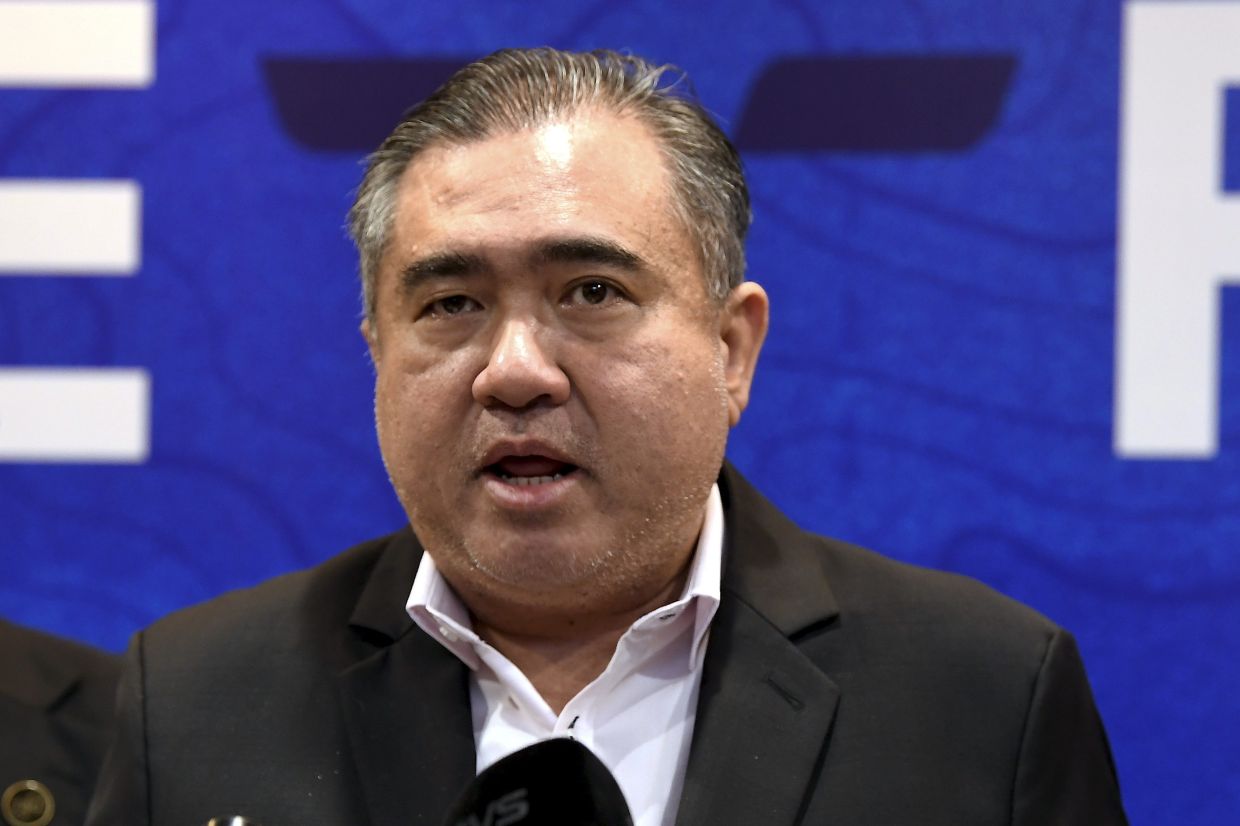
Malaysia Airports Holdings Berhad and Mitsui Fudosan are joining forces to construct an RM80 million air cargo logistics facility at Subang Airport, marking a significant expansion of the country's aviation infrastructure and underscoring government efforts to position Malaysia as a regional logistics powerhouse. Transport Minister Anthony Loke Siew Fook announced the initiative at a groundbreaking ceremony on Thursday, characterizing the venture as a strategic deployment of airport land assets paired with international operational know-how to strengthen Malaysia's competitive position in air freight.
The partnership reflects a broader strategy within MAHB to monetize its substantial landholdings across Malaysia's airport network by collaborating with experienced development partners rather than pursuing projects independently. Loke highlighted Mitsui Fudosan's credentials, pointing to its successful track record in Japan where the company has developed and operated sophisticated logistics facilities at Haneda Airport. This approach allows MAHB to access world-class expertise while distributing financial and operational risks across a capable partner with proven credentials in airport-adjacent development. The arrangement signals confidence in private-public collaboration models that can accelerate infrastructure rollout without placing excessive burden on government coffers.
The project, housed within Subang Aerotech Park, will occupy a 1.78-hectare site and encompass approximately 254,420 square feet of gross floor area. MFMA Industrial Sdn Bhd, the joint venture entity, has designed the facility to accommodate multiple tenants with varying operational specifications, offering flexibility to attract diverse aviation and aerospace-related businesses. The complex will serve as a concentration point for maintenance, repair and overhaul activities alongside general logistics operations, positioning Subang as a secondary air cargo hub complementing the national network's primary facilities.
The Subang development arrives amid intensified government focus on strengthening Malaysia's air cargo sector across multiple airports. Penang currently dominates the country's air cargo throughput, accounting for approximately 75 per cent of total volumes, a dominance reflecting its role as a global semiconductor manufacturing epicenter where time-sensitive exports drive considerable air freight demand. However, this concentration creates vulnerability and supply chain bottlenecks, compelling authorities to diversify capacity across the nation's airport system.
Kuala Lumpur International Airport is being repositioned as ASEAN's regional air cargo hub through collaborative initiatives with Chinese partners, signaling Malaysia's intent to capture growing cross-border e-commerce and manufacturing flows within Southeast Asia and beyond. The expansion targets the phenomenal growth in regional trade, particularly in electronics, automotive components, and perishables. Simultaneously, the ministry is working with Sabah's state government to develop air cargo infrastructure at Kota Kinabalu International Airport by repurposing the underutilized Terminal 2. These parallel investments indicate recognition that a distributed hub network resilient to supply shocks and equipped to serve regional nodes will generate greater economic value than reliance on a single choke point.
The Subang facility's completion timeline, targeted for the third quarter of 2027, with operations commencing in the fourth quarter of the same year, positions it to contribute meaningfully to the aviation sector's medium-term expansion. The project's location within the Klang Valley provides immediate access to established aerospace, aviation, and logistics operators concentrated across the region, facilitating integration with existing supply chains and reducing friction in tenant recruitment and service delivery. Proximity to Kuala Lumpur's population centers and transport networks amplifies operational advantages.
The presence of senior officials underscored the initiative's significance within Malaysia's economic agenda. Embassy of Japan Minister Daisuke Nihei attended the ceremony alongside MAHB managing director Datuk Mohd Izani Ghani and Mitsui Fudosan managing director Masayoshi Saito, reflecting the binational importance of the venture and Japan's deepening involvement in Malaysian infrastructure. Japanese companies have progressively expanded their footprint across Malaysian logistics and manufacturing sectors, and this partnership exemplifies the pattern of technology and capital transfer that characterizes contemporary Southeast Asian development.
For Malaysian aviation stakeholders, the Subang complex represents an opportunity to enhance service offerings and operational capacity without extensive capital outlay, as the landlord-tenant model shifts development costs to the private sector while preserving MAHB's asset base. Tenants will gain access to modern facilities designed to international standards, improving their competitiveness in regional air cargo markets where efficiency and reliability command premium positioning.
The broader implications extend beyond Subang to reshape Malaysia's role within regional logistics networks. As ASEAN countries compete for air cargo market share amid accelerating e-commerce growth and supply chain regionalization, dispersed hub infrastructure amplifies the nation's capacity to capture incremental volumes. The convergence of Subang's secondary facility with KLIA's primary hub positioning and Kota Kinabalu's emerging capability creates a tiered network architecture capable of serving diverse origin-destination pairs and reducing congestion at any single chokepoint.
Investment patterns also reflect confidence in Malaysia's medium-term economic trajectory and regulatory environment, with Japanese partners committing substantial capital to infrastructure that depends on sustained air freight demand. This vote of confidence may encourage additional foreign participation in Malaysian aviation development initiatives, creating positive momentum for capital availability and technical expertise transfer. The project exemplifies pragmatic infrastructure governance where government sets strategic direction while private partners execute and operate facilities, a model increasingly prevalent across Southeast Asian capital-intensive sectors.

