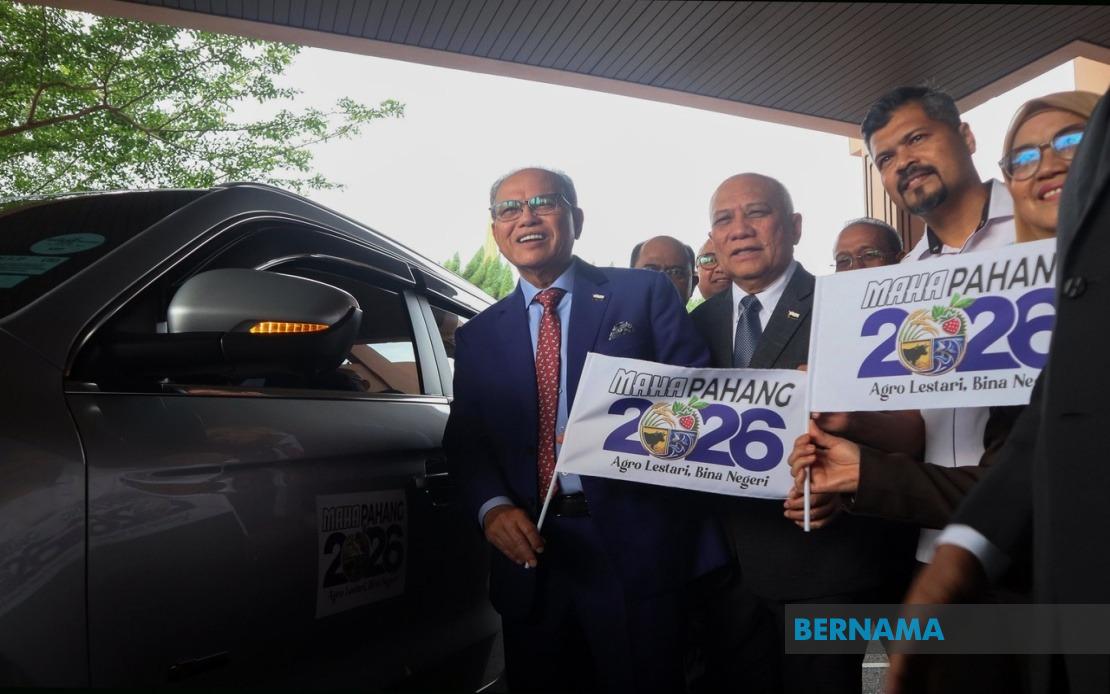
Pahang's premier agricultural showcase, MAHA Pahang 2026, is poised to become a major draw for the state when it opens its gates from July 30 to August 2 at Dataran Raub. Menteri Besar Datuk Seri Wan Rosdy Wan Ismail has set an ambitious target of attracting over 100,000 visitors to the four-day event, which will feature participation from 100 entrepreneurs representing various segments of the agricultural and agribusiness sector. The state government is projecting combined sales revenues of RM1.3 million across all vendor booths and exhibitions during the showcase period.
To build momentum ahead of the event's launch, the Pahang state government organized an official flagoff ceremony at the Bera District and Land Office, where a convoy of 20 vehicles from various government departments and agencies set out to promote MAHA Pahang 2026 across the district. This coordinated outreach effort signals the state's commitment to ensuring the event reaches a wide audience and generates strong public engagement in the weeks leading to July 30. The convoy deployment reflects a comprehensive approach to event promotion that extends beyond traditional advertising channels and leverages government resources and personnel.
Recognizing that visitor experience is central to event success, the Pahang state government has curated an attractive incentive structure to encourage attendance and spending. A lucky draw offering major prizes including a Wagyu cow and a Perodua Bezza vehicle has been specifically designed to appeal to both rural and urban visitors. Beyond these headline prizes, organizers are providing various other giveaways throughout the event duration, creating multiple touchpoints for visitor engagement and encouraging extended time spent on the grounds.
The choice of prizes reflects strategic thinking about the demographic composition of expected visitors. The inclusion of a Wagyu cow appeals directly to agricultural entrepreneurs and livestock farmers, many of whom would view such a breeding animal as a valuable investment for their operations. The Perodua Bezza giveaway, meanwhile, targets broader visitor segments and provides practical utility that resonates across income levels and occupational backgrounds. This dual-prize structure demonstrates effort to appeal simultaneously to core agricultural sector stakeholders and general public attendees.
Menteri Besar Wan Rosdy emphasized the collaborative nature of the event's organization, specifically acknowledging Agriculture and Food Security Minister Datuk Seri Mohamad Sabu and the event committee chairman for their instrumental roles in bringing MAHA Pahang 2026 to fruition. This public recognition underscores the intergovernmental coordination required to execute an event of this scale, as both federal and state agricultural portfolios contribute resources, expertise, and promotional support. Such acknowledgment also signals continuity in Malaysia's commitment to agricultural sector development and farmer support programs.
Beyond commerce, MAHA Pahang 2026 is positioned as an educational platform where visitors can access knowledge about contemporary agricultural practices and emerging crop varieties. Organizers have deliberately incorporated informational components into the event structure, recognizing that exposure to new farming techniques and crop options can drive innovation adoption among smallholder farmers and established agricultural enterprises alike. This knowledge-sharing dimension elevates the event beyond a simple marketplace transaction into a catalyst for agricultural modernization and productivity enhancement.
The selection of Dataran Raub as the venue holds particular significance for Pahang's agricultural development strategy. Raub, situated in the heart of Pahang's agricultural belt, has established infrastructure and proximity to farming communities across the state's interior regions. This geographic choice facilitates easier access for farmers and rural entrepreneurs who constitute a core target audience for the event. The venue selection also demonstrates understanding that event success depends on accessibility for primary stakeholder groups rather than prioritizing urban convenience.
The RM1.3 million sales target reflects realistic projections based on the vendor count and expected visitor volumes. With 100 entrepreneurs participating, the average revenue expectation is approximately RM13,000 per vendor across the four-day period. This figure suggests a mix of vendor types, from high-volume, lower-margin operations focused on commodity sales to specialized vendors offering premium agricultural products and services at higher price points. The diversity of vendor participation should create a shopping environment with varied offerings and price points catering to different customer segments.
For Malaysian agriculture and rural development observers, MAHA Pahang 2026 represents an important indicator of state-level commitment to sustaining and expanding the sector's economic contribution. Agricultural showcases serve multiple functions simultaneously: they provide marketing platforms for producers, facilitate networking between different supply chain stakeholders, expose consumers to locally produced goods, and generate data about market preferences and emerging agricultural trends. Events of this type have demonstrated capacity to influence purchasing decisions and create lasting relationships between producers and buyers that extend beyond the exhibition period.
The timing of MAHA Pahang 2026 in late July and early August positions it strategically within Malaysia's agricultural calendar. This period typically follows mid-year harvests in many Pahang agricultural zones and precedes the monsoon season when certain farming activities intensify. For vendors, the timing offers opportunities to move inventory and capitalize on post-harvest supply availability. For farmers considering new approaches or investments, the event provides a decision-making window before embarking on next-season planting plans.
The organizers' emphasis on attracting both established entrepreneurs and emerging agricultural ventures suggests deliberate effort to foster ecosystem development across different business scales. By providing platform access to 100 vendors, the event creates networking opportunities that can generate business partnerships, supplier relationships, and knowledge exchange that strengthen Pahang's agricultural sector holistically. This inclusive approach to participation contrasts with market-driven event models that prioritize larger, more established operators and contributes to broader rural economic development.
As anticipation builds for MAHA Pahang 2026, the event represents a convergence of state development priorities, federal agricultural sector support, and rural community engagement. The targets announced by Menteri Besar Wan Rosdy demonstrate confidence in visitor interest and vendor enthusiasm, while the event structure itself addresses multiple development objectives simultaneously. For Pahang's agricultural sector and the broader Malaysian rural economy, successful execution of MAHA 2026 could establish momentum for similar state-level initiatives and demonstrate the continued viability of experiential marketing for agricultural products and services.

