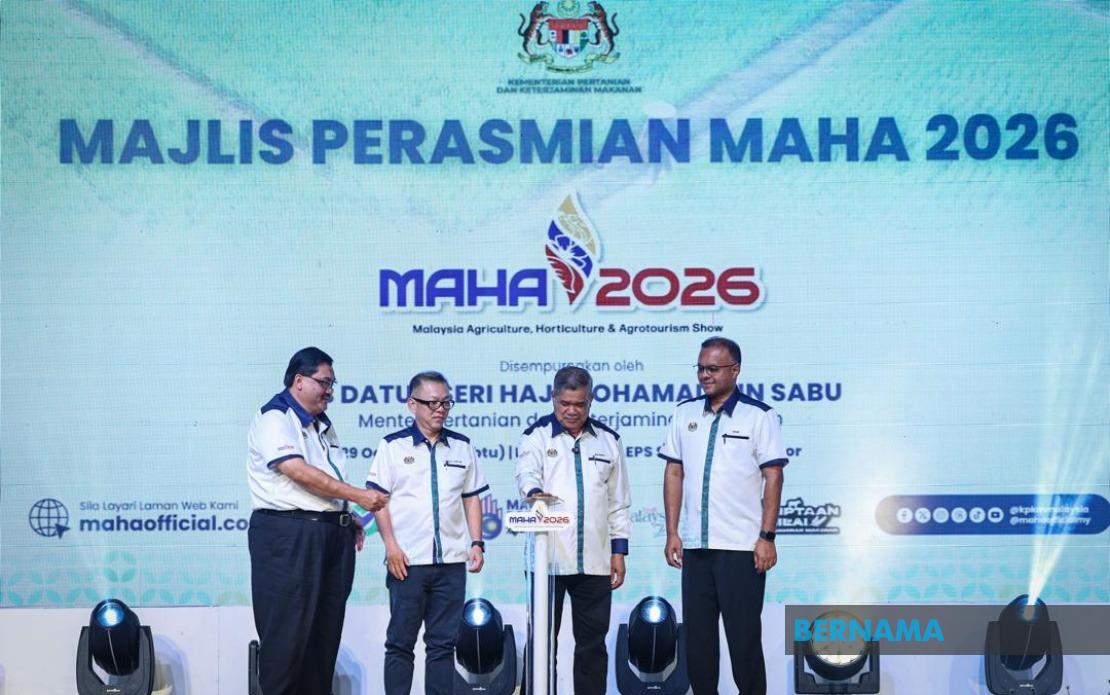
Agriculture and Food Security Minister Datuk Seri Mohamad Sabu has positioned the Malaysia Agriculture, Horticulture and Agrotourism Show 2026 as a watershed moment for transforming the nation's farming sector, declaring the event will anchor a strategic pivot toward environmentally sustainable practices across the agrifood landscape. Speaking at the opening ceremony on August 29 at the Malaysia Agro Exposition Park Serdang (MAEPS), Mohamad emphasised that sustainability must transcend theoretical discussion and become embedded in how Malaysia produces, processes, and distributes its agricultural output. The framing signals a deliberate ministerial commitment to positioning domestic farming not merely as a commercial endeavour, but as part of the broader national climate and food security agenda.
The minister articulated a multi-layered rationale for prioritising sustainability in agriculture. Reducing carbon emissions from farming operations aligns with Malaysia's international climate commitments while simultaneously addressing the creeping effects of global warming on agricultural productivity—a concern intensifying across Southeast Asia as extreme weather patterns become more frequent and unpredictable. By strengthening sustainable farming credentials, Mohamad argued, Malaysian producers can command premium positioning in both domestic and export markets, where consumer preference for environmentally responsible products continues to expand. This dual logic—environmental stewardship and economic opportunity—represents a sophisticated approach to policy messaging, positioning green farming not as a cost burden but as a competitive advantage in increasingly conscious global supply chains.
Mohamad outlined concrete sustainability dimensions that MAHA 2026 would showcase to exhibitors, industry participants, and the half-million-plus expected visitors. These encompass energy-efficient agricultural systems, structured approaches to waste and food loss reduction, minimising single-use plastic in farm operations and food packaging, regenerative farming techniques that restore soil health, and circular economy principles applied through recycling initiatives. The specificity of these measures suggests that the ministry has moved beyond rhetorical commitment to identifying actionable sustainability pillars that farming enterprises of varying scales can feasibly adopt. For Malaysian agribusinesses, particularly small and medium enterprises that dominate the rural sector, such clarity provides operational benchmarks against which they can assess their own sustainability trajectories.
Significantly, the minister invoked the Green Book Policy, initiated in 1974 under the tenure of the late Tun Abdul Razak, to root contemporary sustainability discourse in historical national precedent. That policy, designed to reduce Malaysia's reliance on food imports while managing domestic living costs through expanded local production, established a foundational principle that the ministry appears now to be revisiting. The revival carries symbolic weight, suggesting that food sovereignty remains a persistent strategic concern five decades on, and that sustainability is being framed as the modern vehicle for achieving the earlier policy's objectives. For Malaysian policymakers and observers, this rhetorical connection underscores that food security anxieties have not diminished despite intervening economic development; if anything, geopolitical volatility and climate uncertainty have amplified their urgency.
The government's strategy for fortifying fisheries and livestock production represents the operational backbone of this sustainability pivot. Modernising fishing vessels and farm infrastructure, developing high-value aquaculture sectors beyond traditional commodity production, leveraging technology in animal feed formulation, and implementing enhanced biosecurity protocols collectively address both productivity and resilience in food-producing sectors frequently vulnerable to disease outbreaks and resource depletion. These initiatives carry particular relevance for Malaysia's fishing communities and inland farming regions, where technological adoption lags urban centres and where climate variability poses mounting practical challenges. Investment in such infrastructure, when coupled with sustainability messaging, aims to position these sectors as viable, forward-looking career pathways for younger rural populations, potentially slowing urban migration from agricultural regions.
Mohamad's emphasis on translating international cooperation beyond ceremonial memoranda of understanding into tangible commercial outcomes reflects a pragmatic frustration with diplomatic processes that generate signatures but limited material change. MAHA 2026's participation of delegations from fourteen countries creates a marketplace for agricultural innovation exchange and export opportunity development. However, the minister's declaration that the ministry will not settle for MoU signing ceremonies alone signals an expectation that international agreements must culminate in measurable commercial transactions, capital flows, and market access improvements for Malaysian producers. This stance acknowledges that developing nations frequently become repositories for well-intentioned but ineffectual bilateral agreements; the minister's public insistence on tangible outcomes raises accountability expectations for both Malaysian counterparts and foreign negotiating partners.
The exhibition's projected scale—approximately two thousand exhibitors operating across MAEPS through September 6, targeting over four million cumulative visitors—positions MAHA 2026 as Southeast Asia's largest agricultural showcase. For Malaysian agritech start-ups and emerging agricultural entrepreneurs, the event offers concentrated access to domestic and international investors, foreign buyers, and technology partners. The minister's specific mention of facilitating capital injections from local and international investors into early-stage agricultural enterprises signals recognition that innovation in sustainability requires financial resources frequently unavailable through traditional agricultural financing channels. This investor-entrepreneur matchmaking function transforms MAHA from a consumer-oriented agricultural fair into a strategic platform for sector modernisation and economic transition.
The participation of Deputy Minister Datuk Chan Foong Hin and Secretary-General Datuk Seri Isham Ishak at the opening ceremony underscores ministerial-level institutional commitment to MAHA 2026's messaging and outcomes. This visible hierarchical presence communicates to international delegations, exhibitors, and domestic stakeholders that the exhibition carries genuine policy weight rather than serving as peripheral promotional activity. For Malaysian agritech companies and smallholder farmers attending the exhibition, such ministerial validation lends credibility to the sustainability narrative, potentially accelerating adoption of recommended practices and investment decisions tied to environmental performance.
The timing of MAHA 2026 intersects with broader Southeast Asian agricultural policy currents. Across the region, governments confront simultaneous pressures to enhance food production amid growing populations, adapt farming systems to climate volatility, satisfy international environmental standards demanded by trading partners, and manage rural economies buffeted by global commodity price fluctuations. Malaysia's positioning of sustainability as central to agricultural transformation rather than peripheral to it signals alignment with regional trend-setting while establishing competitive differentiation. For policymakers across Southeast Asia observing Malaysia's approach, MAHA 2026 offers both a model for integrating sustainability into agricultural promotion and a competitive benchmark against which their own national agricultural strategies may be measured.
Looking forward, the success of MAHA 2026 in catalysing genuine sector transformation will depend on follow-through mechanisms beyond the nine-day exhibition window. Whether international cooperation agreements mature into commercial partnerships, whether domestic enterprises meaningfully adopt showcased sustainability practices, and whether investor capital actually flows into agritech innovation will ultimately determine whether the minister's sustainability vision transcends rhetorical flourish to become operational reality. For Malaysia's agricultural sector and its constituent farmers, agribusinesses, and rural communities, MAHA 2026 represents both an opportunity for substantive modernisation and a test of whether government policy commitments translate into sustained institutional support and market conditions that reward environmental stewardship alongside productivity gains.

