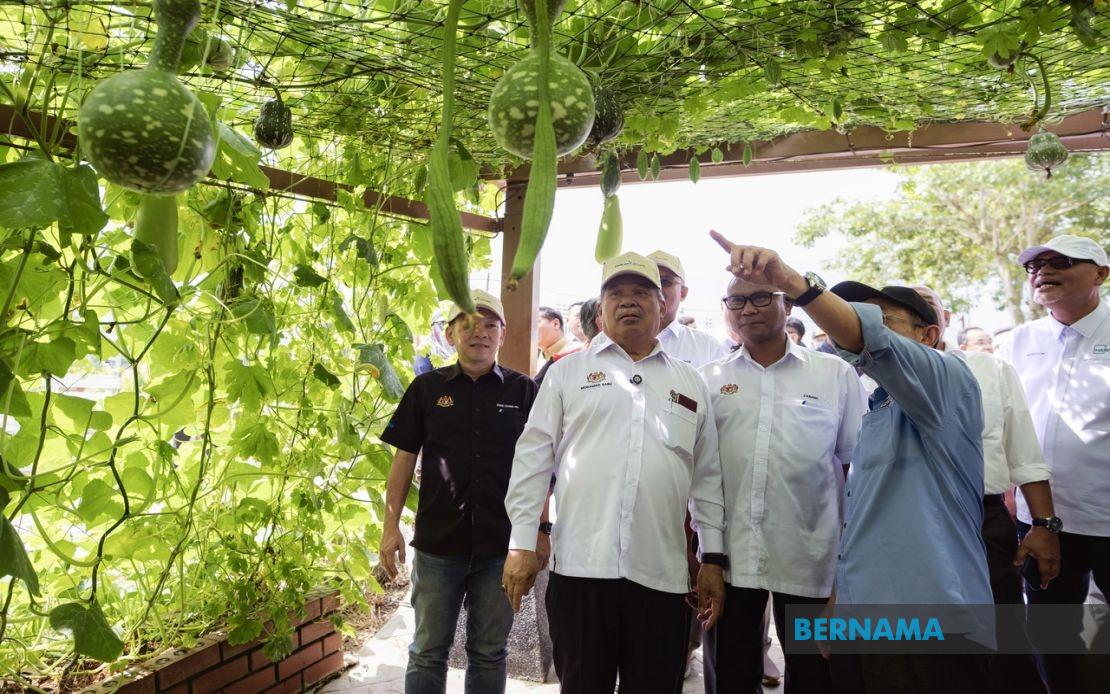
The Malaysia Agriculture, Horticulture and Agrotourism Exhibition (MAHA) 2026 is poised to open its gates on August 28, with preparations running ahead of schedule at the Malaysia Agro Exposition Park Serdang (MAEPS). Agriculture and Food Security Minister Datuk Seri Mohamad Sabu announced that construction and setup work has reached the 80 per cent milestone, with organisers confident that all remaining tasks will be completed by August 27, ensuring a seamless public opening the following day. Speaking at an inspection of the venue, the minister painted a picture of a modern exhibition space that will reflect the government's vision of technological advancement across the agricultural sector.
The infrastructure backbone of MAHA 2026 is already in place, leaving exhibitors and staff to focus on the finer details of display installation and final preparations across the various pavilions and demonstration zones. Mohamad emphasised that the core construction phase has concluded, with work now concentrated on aesthetic and operational finishing touches. This timeline suggests the event organisers have effectively managed the logistical complexity involved in assembling one of Southeast Asia's largest agricultural showcases, which will run through September 6. The minister himself will inaugurate the exhibition, with Prime Minister Datuk Seri Anwar Ibrahim scheduled to preside over the closing ceremony, underlining the political significance attached to the event.
Central to this year's MAHA is a thematic focus on modernisation and technology adoption in farming, captured in the Malay theme "Penciptaan Nilai Demi Keterjaminan Makanan" (Creating Value for Food Security). The exhibition will showcase machinery and innovations that are already transforming agricultural practices in advanced economies. Drone technology, in particular, features prominently in MAHA's showcase of practical innovations, with demonstrations planned for applications in paddy, pineapple, and melon cultivation—crops that represent significant portions of Malaysian agricultural output. The exhibition will draw explicit parallels with farming methods in China and the Netherlands, countries that have achieved high levels of mechanisation and automation. By presenting these international examples alongside domestic innovations, the organisers aim to illustrate the pathways available to Malaysian farmers seeking to enhance productivity and competitiveness.
Beyond technological spectacle, MAHA 2026 places considerable emphasis on the agricultural value chain, recognising that true economic benefit flows when farmers move beyond simple commodity production. The minister highlighted how raw agricultural products like milk, pineapple, and cassava can be transformed into diverse processed goods, creating higher-margin opportunities for local entrepreneurs. This value-chain narrative represents a strategic shift in how Malaysia frames its agricultural development, moving away from a commodity-export model toward one that captures more economic value domestically. By encouraging farmers and smallholder producers to understand downstream processing opportunities, the government seeks to foster a more integrated agri-food ecosystem where producers become processors and distributors, thereby increasing household incomes and rural economic resilience.
A distinctive feature of MAHA 2026 is Perkampungan Abang Mat, a specially designed village space that celebrates Malaysia's agricultural heritage and food traditions. Throughout the 10-day run, visitors will encounter displays of "rewang" communal cooking practices, demonstrations of traditional cuisine preparation, and opportunities to engage with heritage food customs. This cultural dimension acknowledges that agricultural modernisation need not erase traditional knowledge and practices; rather, heritage and innovation can coexist. Programming at the village precinct will vary daily to sustain visitor interest and provide fresh experiences, combining cultural education with entertainment. The inclusion of traditional games such as congkak offers leisure activities suited to extended family visits, recognising that MAHA functions as both an industry showcase and a public recreation destination.
Family-oriented attractions and incentives feature prominently in the event's visitor engagement strategy. Daily lucky draws will distribute prizes throughout the 10-day exhibition, including 20 motorcycles overall plus household electrical appliances, creating tangible reasons for repeat visits and word-of-mouth promotion. These promotional mechanisms serve a dual purpose: they generate excitement and attendance while also providing potential tangible benefits to participants. The strategy reflects an understanding that large public exhibitions must balance serious industry networking with accessible entertainment to maximise attendance and visitor satisfaction.
The scale of international participation signals MAHA's growing prominence as a regional and global forum for agricultural innovation and trade. Approximately 2,000 exhibitors from Malaysia and abroad will participate, with representation spanning 14 countries. Kenya's inaugural pavilion marks an expansion of the event's geographical reach, particularly into African agricultural markets that may offer new partnership and technology-exchange opportunities for Malaysian companies. This international dimension provides participating countries with platforms to showcase their agricultural technologies and seek bilateral cooperation agreements with Malaysian counterparts. For Malaysia, hosting such diverse international participation reinforces its position as a regional agricultural knowledge hub and trading centre.
Projections for MAHA 2026 suggest substantial economic and social impact. Organisers anticipate attracting more than four million visitors over the 10-day period, a figure that translates into significant spending in the surrounding Serdang area and broader Klang Valley economy. Beyond visitor numbers, the ministry has specifically targeted youth engagement, expecting to draw approximately 800,000 young people through programming focused on agricultural automation, modern technology, and sector modernisation. This youth focus reflects recognition that agriculture's long-term sustainability depends on attracting younger generations to farming and agri-business careers. Recognising the educational value of the exhibition, the ministry is seeking approval from the Education Ministry to integrate school students through co-curricular programmes, embedding MAHA into the formal educational experience and potentially shaping career aspirations across Malaysia's student population.
The alignment between MAHA 2026 and broader government education policy suggests a comprehensive approach to agricultural sector development. By involving school students through structured educational programmes, authorities aim to demystify farming and showcase it as a modern, technology-enabled career path rather than a declining traditional occupation. This integration into the education system could have ripple effects across rural and urban Malaysia, reshaping perceptions of agricultural work among the younger generation. As Malaysia grapples with issues of rural economic decline and agricultural labour shortages, exhibitions like MAHA that position farming as cutting-edge and economically viable may influence vocational and career decisions among young Malaysians. The convergence of infrastructure completion, thematic coherence around modernisation and value creation, international participation, and targeted youth outreach suggests organisers have assembled a comprehensive strategy to make MAHA 2026 a defining event for Malaysia's agricultural sector and its place within regional and global food systems.

