The MADANI Government has reaffirmed its dedication to sustaining the Ziarah Kasih programme, a targeted welfare initiative designed to extend immediate assistance to marginalised and vulnerable populations across Malaysia. According to Abdullah Izhar Mohamed Yusof, Political Secretary to the Communications Minister, the scheme represents a cornerstone of the administration's commitment to reducing hardship among those facing economic and health challenges. Speaking during an outreach event in Mersing, Abdullah Izhar underscored that the initiative would be rolled out on a consistent basis, aligning with the broader Malaysia MADANI vision of placing citizen welfare at the heart of national policy-making.
The identification of beneficiaries occurs through a collaborative process involving the Department of Information and Komuniti MADANI, ensuring that assistance reaches those most in need. This institutional approach reflects the government's intention to systematise welfare delivery rather than relying on ad-hoc or politically motivated distributions. By embedding the programme within established bureaucratic structures, the MADANI Government seeks to create sustainability and predictability for recipients who depend on regular support. The mechanism also aims to reduce stigma by professionalising the process through which vulnerable groups are identified and served.
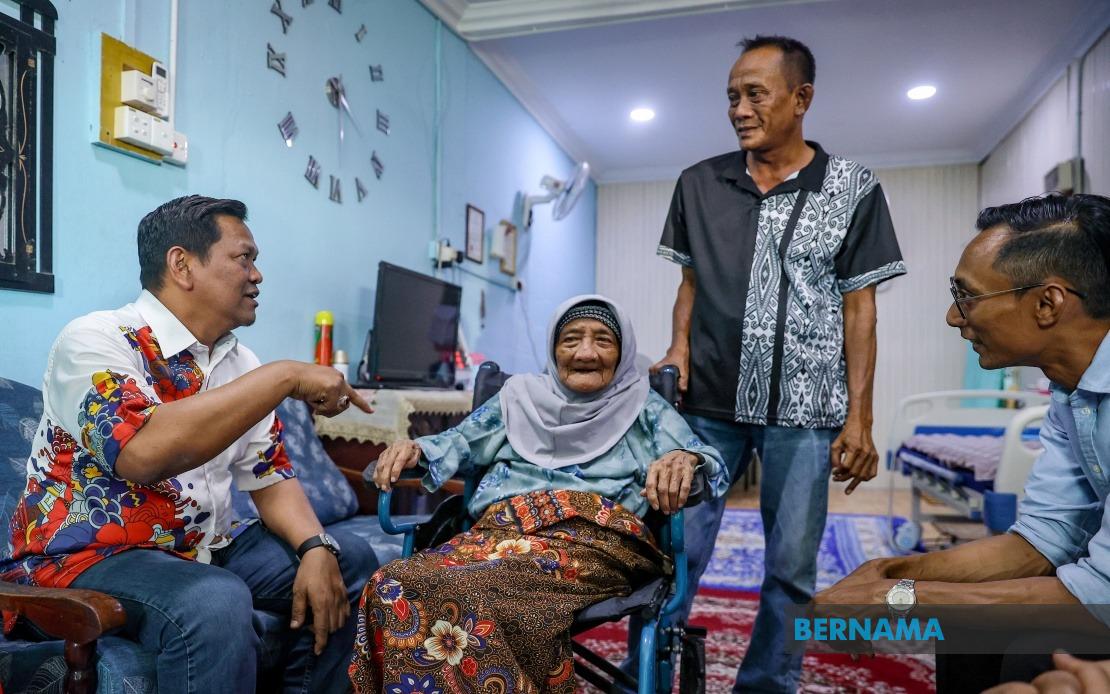
During a community engagement programme held in Endau, Abdullah Izhar visited multiple households to personally deliver financial contributions and essential healthcare equipment. This direct approach to governance—where senior officials interact face-to-face with beneficiaries—serves multiple functions: it demonstrates political accountability, provides officials with ground-level insight into citizen struggles, and offers recipients a channel to voice concerns beyond bureaucratic intermediaries. Such visibility also signals to the wider public that the administration prioritises social care, potentially strengthening public trust in government institutions.
One notable beneficiary is 71-year-old Hamdan Abd Latif, who has been bedridden for years following a catastrophic health crisis. Hamdan's journey illustrates the unpredictability of misfortune and the cascading consequences of serious illness on family finances. In 2011, just two weeks before his planned retirement as a firefighter, Hamdan suffered a fall while attempting to supplement household income through prawn fishing. Subsequent medical investigations revealed a brain tumour, necessitating surgery that temporarily arrested his condition but left him severely incapacitated. The situation deteriorated when Hamdan experienced a stroke following a bathroom accident last year, rendering him fully dependent on care.
Hamdan's wife, Meriam Abd Wahab, now 66 years old, has become his sole caregiver, a role that has fundamentally altered her own economic prospects. Previously, Meriam generated supplementary income through sewing work—an occupation she has been forced to abandon entirely to provide round-the-clock care. The family's experience encapsulates a reality facing many Malaysian households: the transition from economic productivity to dependency can occur suddenly, and caregiving responsibilities often fall disproportionately on spouses, primarily women. Government assistance in such circumstances addresses not only the immediate material needs of the ill person but also provides crucial relief to the informal caregiver who has sacrificed their own livelihood.
Another recipient, 91-year-old Zainon Ibrahim, relies on care from her son Jamaluddin Ismail, aged 64. Jamaluddin made the significant decision to leave employment approximately two years ago, transitioning from a supervisory role to full-time caregiving, supported by contributions from his siblings. This arrangement, while reflecting strong family bonds, represents a substantial economic cost to the household, as Jamaluddin's loss of income directly reduces the family's capacity to meet Zainon's escalating healthcare and living expenses. Jamaluddin's expression of gratitude for government assistance suggests that targeted welfare programmes provide tangible relief to families navigating the competing demands of employment and eldercare—a tension that will intensify across Southeast Asia as populations age.
The Ziarah Kasih programme addresses a structural gap in Malaysia's social safety net. While the country has achieved significant economic development, not all vulnerable populations benefit equally from market-driven prosperity. Elderly individuals, particularly those without substantial savings or pensions, face precarious circumstances. Single-income families dependent on informal work or low-wage employment remain exposed to sudden shocks. The programme's emphasis on direct assistance rather than purely bureaucratic welfare determinations reflects recognition that vulnerability often requires immediate intervention rather than lengthy administrative processes.
From a broader Malaysian perspective, the MADANI Government's sustained investment in community-based welfare signals a shift toward more granular, locally-focused governance. Rather than centralised, one-size-fits-all programmes, initiatives like Ziarah Kasih involve ground-level assessment and personalised assistance. This approach acknowledges that poverty and vulnerability manifest differently across regions and communities, requiring differentiated responses. For readers across Southeast Asia, Malaysia's experience offers insights into how middle-income countries can complement market mechanisms with targeted social protection as populations become more diverse and inequalities more pronounced.
The programme also carries implications for Malaysia's international standing. As affluent neighbouring countries face criticism over labour exploitation and migrant worker treatment, Malaysia's emphasis on domestic welfare provision—particularly toward marginalised citizens—represents a counterbalancing narrative. However, critics might note that such initiatives, while valuable, do not address systemic factors driving poverty and vulnerability. Observers have questioned whether targeted assistance adequately compensates for structural economic challenges or whether it risks becoming a substitute for deeper reforms in wage policy, healthcare access, and pension systems.
The sustainability of Ziarah Kasih will likely depend on several factors, including budgetary allocation, bureaucratic capacity to identify beneficiaries accurately, and political continuity beyond election cycles. Public enthusiasm for direct assistance programmes can fluctuate based on fiscal pressures and political priorities. Additionally, as Malaysia's population continues to age and urbanisation reshapes family support structures, demand for such programmes may exceed available resources. The government will need to carefully balance visible, tangible assistance with investment in preventive measures—such as strengthened social insurance, improved wages, and accessible healthcare—that reduce dependency on discretionary welfare.
Looking ahead, the MADANI Government faces the challenge of scaling Ziarah Kasih while maintaining its integrity as a needs-based, rather than patronage-driven, programme. Public confidence in the initiative depends on transparent beneficiary selection and consistent, equitable distribution across all communities. As the programme becomes more established, documenting measurable outcomes—improvements in recipients' health, financial stability, and quality of life—will be essential for demonstrating effectiveness and justifying continued investment. For Malaysian citizens and policymakers monitoring social welfare developments, the programme's evolution will signal the government's seriousness about translating development aspiration into tangible improvements in living standards for those at the economic margins.