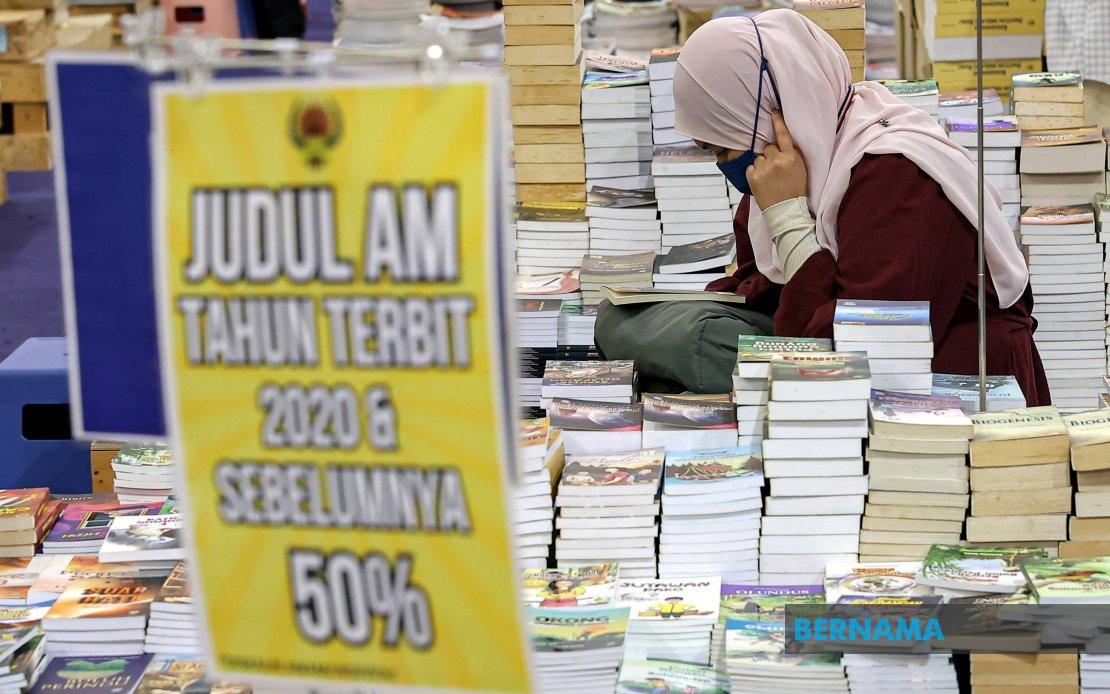
Malaysia's MADANI Book Voucher Programme enters its redemption phase tomorrow with more than 2.2 million students eligible to access RM100 e-vouchers, backed by a RM221.6 million government allocation. The initiative, representing one of Southeast Asia's largest direct literacy support schemes, extends across the full secondary education spectrum including vocational and teacher training institutions, demonstrating the government's commitment to universal access to reading materials regardless of socioeconomic background.
Deputy Education Minister Wong Kah Woh disclosed that approximately 2.22 million beneficiaries spanning Remove Class through Form Six, vocational college enrollees, matriculation students, and trainee teachers at the Malaysian Institute of Teacher Education will participate in this year's iteration. The sheer scale of participation underscores the programme's significance as a foundational pillar of Malaysia's educational equity agenda, particularly given that many recipients come from lower-income households where purchasing books would otherwise present financial barriers.
The redemption mechanism operates entirely through the BookCapital digital platform, which currently hosts 1,238 registered booksellers across the nation. This technology-driven approach eliminates geographical constraints that traditionally limited book access in rural and remote areas, a persistent challenge in Malaysia's archipelago geography. Beginning at 11 am tomorrow, the four-month redemption window closing October 31 provides adequate time for students and educators to navigate the selection process without artificial urgency.
A notable enhancement this year involves the newly introduced MADANI Special Title Focus category, curating literary classics, philosophical works, and non-fiction titles spanning history, economics, and geopolitical studies. This deliberate curation reflects recognition that student reading patterns require guided direction toward substantive intellectual material rather than purely recreational consumption. The category's explicit inclusion of technology-focused titles—artificial intelligence, information systems, STEM applications, and digitalisation curricula—aligns reading development with Malaysia's economic transformation aspirations toward high-value knowledge sectors.
Particularly significant is the mandatory requirement that each recipient purchase at least one title from the Special Title Focus portfolio, effectively leveraging government subsidy to establish foundational reading habits centred on critical thinking and future-oriented disciplines. This pedagogical positioning distinguishes MADANI from conventional book distribution programmes by embedding educational values within the purchasing mechanism itself rather than leaving selection entirely to student preference.
Evidence supporting programme efficacy emerged from an impact assessment conducted by the Darul Ehsan Institute, revealing that 97.5 per cent of surveyed recipients acknowledged MADANI vouchers substantially assisted their access to reading materials. Among students specifically, 92.2 per cent credited the programme with enhancing examination preparation capacity, suggesting direct correlation between subsidised book access and academic performance metrics. These quantitative endorsements provide empirical foundation for continuation and expansion discussions within policy circles.
The 2024 implementation cycle achieved complete redemption, an exceptional outcome rarely documented in government subsidy distribution programmes where uptake frequently falls short of allocated capacity. This perfect redemption rate indicates both effective digital platform usability and genuine student demand for book acquisition opportunities, contradicting pessimistic narratives about declining youth reading engagement in the digital era. The achievement becomes more remarkable when considering implementation across dispersed geographic regions including peninsular Malaysia, Sabah, and Sarawak with varying internet infrastructure maturity.
Wong emphasised that the purely online procurement and delivery infrastructure creates unprecedented equity conditions by providing identical reading opportunities and material access to urban-based students and their remote-area counterparts. This geographical neutrality—ensuring students in Petaling Jaya access identical books and selection conditions as those in Tawau or Limbang—represents transformative policy design addressing Malaysia's persistent regional development asymmetries through educational channels.
Transparency characteristics embedded within the MADANI framework guard against historical vulnerabilities affecting subsidy distribution programmes in developing economies. The articulated commitment to zero leakages, complete transparency, and universal participation reflects institutional acknowledgment that educational equity programmes require exemplary governance standards to maintain public confidence and political sustainability. These anti-corruption elements become increasingly vital as Malaysia navigates governance reformation and institutional credibility enhancement during the current MADANI framework period.
The programme's sustainability depends on sustained government budgetary commitment and BookCapital platform reliability as student cohorts expand across subsequent academic cycles. Regional observers—including counterparts managing similar literacy initiatives in Indonesia, Thailand, and Vietnam—likely monitor MADANI's operational effectiveness and equity outcomes as potential models for Southeast Asian educational development. Success here positions Malaysia as a regional exemplar in technology-enabled equitable resource distribution, while failures would similarly communicate cautionary lessons to neighbouring governments contemplating comparable interventions.
Looking forward, the MADANI Book Voucher Programme exemplifies how targeted subsidies combined with digital distribution infrastructure can address structural inequities in educational resource access without requiring massive capital investments in physical library infrastructure expansion. As students redeem their vouchers over coming months, measurable indicators regarding platform functionality, book selection patterns, and subsequent academic outcomes will accumulate, providing evidence base for informed policy adjustments in 2027 and beyond.

