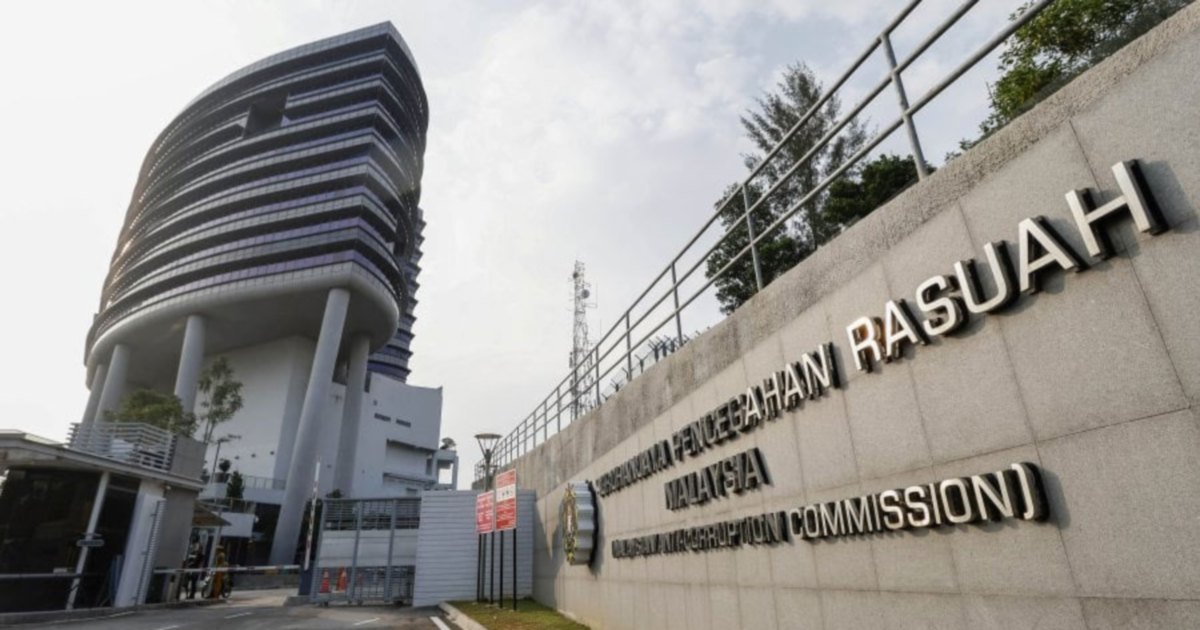
The Malaysian Anti-Corruption Commission has intensified scrutiny of the Retirement Fund Inc's troubled investment portfolio, with investigators conducting an on-site examination at KWAP's Kuala Lumpur offices this week as part of a widening probe into how the pension fund lost approximately RM200 million through its stake in Indonesian aquaculture technology company eFishery.
The visit marks an escalation in official oversight of what has become one of Malaysia's most significant institutional investment failures in recent years. KWAP, which manages retirement savings for civil servants across the country, has faced mounting questions about the decision-making processes that led to substantial capital deployment into the Indonesian startup without adequate safeguards or risk mitigation strategies. The timing of the MACC investigation underscores growing political and public pressure on Malaysian authorities to account for how public pension money—derived from worker contributions and government allocations—was depleted through what analysts describe as an inadequately vetted overseas venture.
eFishery, positioned as a pioneering digital platform for aquaculture operations in Southeast Asia, initially attracted considerable investment attention across the region. However, the venture subsequently encountered serious operational and financial difficulties, leaving KWAP and other institutional investors facing substantial write-downs. The scale of KWAP's exposure reveals how the fund pursued expansion into emerging technology sectors without establishing robust due diligence protocols that might have identified critical vulnerabilities in the business model or management team before capital commitments were finalised.
For Malaysian pension fund beneficiaries—comprising hundreds of thousands of civil servants and their families—the eFishery episode carries profound implications for long-term retirement security. Unlike private sector workers whose pension contributions flow into the Employees Provident Fund (EPF), civil servants depend on KWAP to generate returns that supplement government payouts. When substantial capital is lost through investment decisions that later appear questionable, it constrains the fund's capacity to meet projected benefit obligations and forces difficult conversations about pension adequacy across the public sector workforce.
The MACC investigation will likely focus on several critical governance questions. Authorities will examine whether proper investment committees evaluated the eFishery opportunity against KWAP's mandate and risk tolerance, whether external advisors provided independent assessment of the Indonesian company's financial health and management credibility, and whether board members discharged their fiduciary duties with appropriate rigour. The investigation may also explore whether conflicts of interest influenced investment decisions or whether certain individuals benefited from the transaction through consulting fees, kickbacks, or other financial arrangements.
Facility visits by anti-corruption investigators typically signal movement beyond preliminary information gathering toward more focused interrogation of personnel and documentation. MACC's examination of KWAP records will probably concentrate on investment committee minutes, due diligence reports, valuations, correspondence with eFishery principals, and communications documenting how concerns—if any were raised internally—were addressed or dismissed. Such records often reveal whether warning signals existed but were overlooked, suppressed, or deliberately ignored by decision-makers.
The eFishery debacle arrives at a sensitive moment for Malaysian institutional investment governance. The nation's pension and investment funds collectively manage hundreds of billions of ringgit in assets, making them critical to retirement security, capital market development, and economic stability. Successive corporate scandals involving major Malaysian institutions have eroded public confidence in governance standards, creating political demand for demonstrable accountability when large losses occur. The MACC investigation, therefore, serves dual purposes: establishing whether criminal conduct occurred and signalling to other fund managers that investment decisions will receive heightened regulatory attention.
Regionally, the eFishery episode carries lessons for other Southeast Asian pension funds and development finance institutions considering technology sector investments. While emerging digital platforms offer genuine growth potential, particularly in agricultural technology, the eFishery experience demonstrates that geographical distance, unfamiliar regulatory environments, and unproven management teams create compounding risks. Malaysian institutional investors, despite possessing substantial resources, sometimes lack sufficient expertise in rapidly evolving sectors to accurately assess technological viability or market adoption potential before deploying capital.
For KWAP specifically, the investigation creates urgency around governance reform and investment process overhaul. The fund will face pressure to strengthen investment committee composition through adding independent directors with relevant expertise, implement stricter due diligence protocols incorporating third-party verification, establish clearer decision-making thresholds for capital commitments exceeding specified amounts, and establish internal controls preventing concentration of investment authority. Such reforms, while necessary, cannot recover the lost capital or restore beneficiary confidence entirely.
The broader question underlying the MACC investigation concerns whether the eFishery investment represented a genuine governance failure—poor decision-making by well-intentioned actors—or potential misconduct involving deliberate concealment of risks, fraudulent representation, or personal enrichment at institutional expense. That distinction will fundamentally shape KWAP's accountability narrative and inform corrective measures adopted across Malaysian institutional investment management. As the investigation proceeds, pension fund beneficiaries across Malaysia will watch closely for evidence that safeguards have been implemented to prevent similar losses from recurring.

