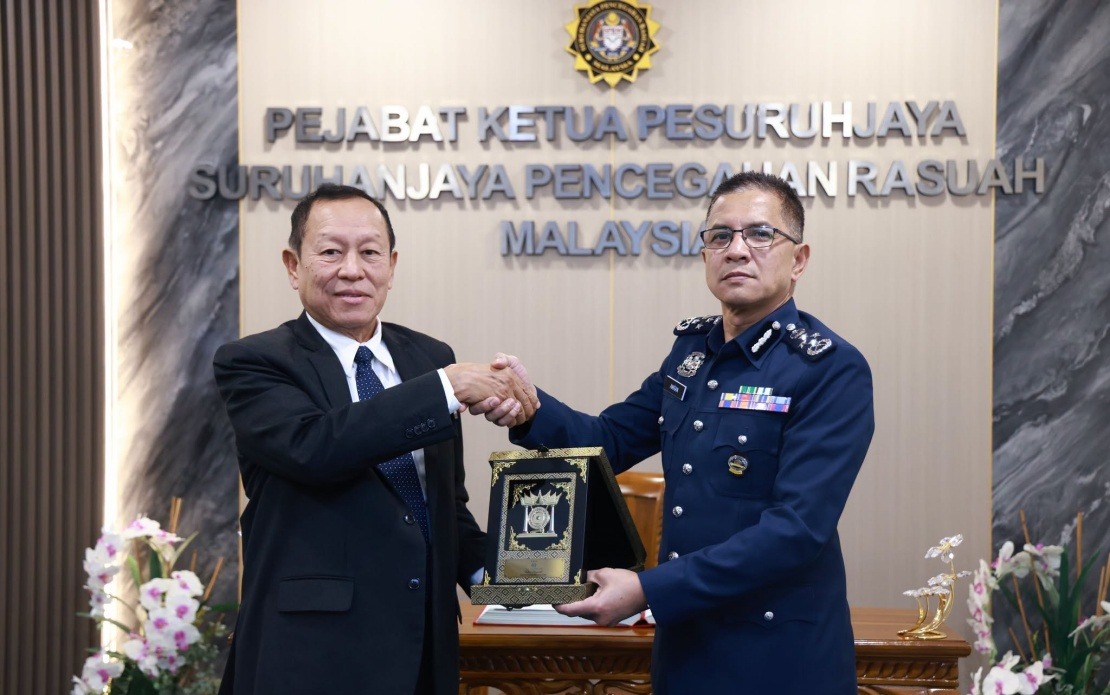
The Malaysian Anti-Corruption Commission (MACC) and the Royal Malaysian Customs Department (JKDM) are moving forward with plans to create a dedicated task force aimed at strengthening enforcement operations and improving tax collection efficiency across Malaysia's key maritime gateways. The initiative emerged from high-level discussions held in Putrajaya on July 15, during which JKDM director-general Datuk Amran Ahmad visited MACC headquarters for strategic consultations on shared operational challenges.
MACC chief commissioner Datuk Seri Abd Halim Aman outlined the rationale behind the proposal, noting that both agencies face overlapping pressures in their respective mandates. The one-hour meeting served as more than a ceremonial courtesy visit; it functioned as a substantive working session where senior officials examined the intricate problems affecting customs clearance procedures and the regulatory frameworks that govern port operations nationwide. Officials including MACC Investigation Division senior director Datuk Mohd Hafaz Nazar and JKDM Integrity branch head Azian Umar participated in these deliberations.
The collaboration addresses a critical vulnerability in Malaysia's revenue collection system. Container management at ports has long represented a weak point where financial leakage occurs, whether through deliberate evasion schemes or procedural gaps that sophisticated smuggling syndicates exploit. By pooling resources and intelligence, the two agencies hope to create a more cohesive enforcement presence that deters illegal activities whilst streamlining legitimate trade flows. This approach mirrors international best practices where customs and anti-corruption bodies work in tandem.
Customs officials have documented increasingly complex evasion tactics that require coordinated responses. Datuk Amran highlighted several methodologies that criminal networks employ to circumvent payment obligations, including the submission of falsified documentation designed to misrepresent shipment contents or values. These fraudulent declarations exploit the volume of daily container traffic, making detection difficult without systematic monitoring protocols. The Customs Department has also identified a specific modus operandi involving the false declaration of currency transfers, where individuals bring substantially larger sums into Malaysia than they formally declare to authorities.
The task force concept represents a structural response to problems that individual agencies struggle to combat independently. JKDM currently handles the initial detection and investigation of suspicious containers, but connecting customs violations to broader corruption patterns sometimes requires the investigative specialization that MACC brings to the table. Similarly, MACC's anti-corruption mandate covers government personnel across agencies, meaning customs officers engaged in collusion with smugglers fall squarely within its purview. A dedicated task force formalizes this intersection and ensures information flows seamlessly between organizations.
For Malaysian businesses and legitimate traders, the initiative carries mixed implications. Enhanced enforcement will create headaches for companies relying on regulatory arbitrage or grey-market practices, but it should simultaneously reduce unfair competition from smugglers who undercut honest operators through tax evasion. Supply chain reliability may improve as corrupt officials who previously facilitated illegal shipments face closer scrutiny. However, companies must prepare for more rigorous documentation requirements and potentially slower clearance times during the task force's implementation phase.
The strategic significance extends beyond Malaysia's borders. Southeast Asian trade corridors increasingly feature transshipment schemes where goods pass through multiple jurisdictions to obscure origins and evade tariffs. Singapore, Thailand, and Indonesia have observed similar phenomena, making Malaysia's port enforcement a regional concern. Enhanced monitoring at Malaysian gateways could discourage smugglers from routing contraband through Malaysian territory, protecting neighboring economies from revenue loss and market distortion.
MACC and JKDM's emphasis on cultivating integrity among personnel underscores recognition that enforcement fails when officers themselves are compromised. Both agencies have launched anti-corruption education programs targeting their workforces, with MACC offering integrity talks to customs staff. Corruption within customs agencies historically represents one of the highest-yield targets for organized crime syndicates, as a single compromised official can facilitate massive revenue theft. By institutionalizing integrity training alongside investigative capacity-building, the task force aims to address the human dimension of the problem.
The specific focus on major ports reflects where the greatest economic value and thus greatest temptation for illegal activity concentrates. Malaysia's major container ports at Port Klang, Port of Tanjung Pelepas, and Penang Port handle hundreds of thousands of containers annually, each representing potential tax revenue and security risks. Prioritizing these hubs allows the task force to deploy limited resources where impact will be most substantial. As trade volumes continue growing, the pressure to maintain customs integrity intensifies, particularly as e-commerce and direct-to-consumer importing fragment traditional clearance patterns.
Looking ahead, the task force's success will depend on adequate resourcing, clear operational protocols, and sustained political commitment. Previous inter-agency initiatives in Malaysia have sometimes foundered when bureaucratic turf issues or competing priorities diluted focus. The current leadership at both MACC and JKDM appears genuinely committed to collaboration, but translating strategic intent into daily enforcement effectiveness requires embedding the task force within permanent institutional structures rather than treating it as a temporary project. Malaysian stakeholders will be watching closely to see whether this initiative moves from announcement stage into meaningful operational reality.

