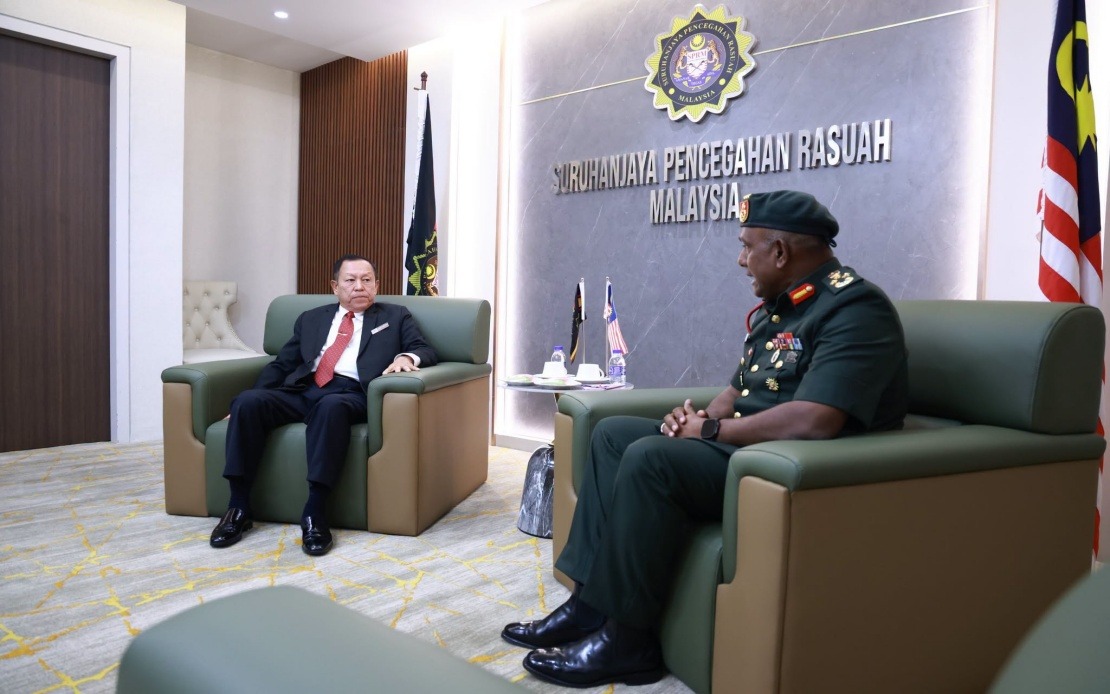
The Malaysian Anti-Corruption Commission and the Malaysian Armed Forces have renewed their commitment to working in tandem against graft, with both agencies emphasising the strategic value of coordinated efforts in preserving national integrity. The pledge emerged during a formal courtesy visit between the two organisations at MACC headquarters in Putrajaya, where senior defence and anti-corruption officials reaffirmed shared objectives in combating misconduct across the public sector.
MACC Chief Commissioner Datuk Seri Abd Halim Aman highlighted the commission's regard for the long-standing relationship with the military establishment, framing the partnership as essential to effective anti-corruption operations. His remarks during the visit by Malaysian Defence Intelligence Organisation director-general Lt Gen Datuk Fazal Abdul Rahman underscored how institutional synergies across enforcement and security agencies can amplify oversight capacity. The timing of the engagement, coinciding with Fazal's official appointment from May 21, suggests deliberate coordination to establish working relationships at leadership level.
The collaboration encompasses three primary dimensions: intelligence sharing, information exchange, and governance enhancement. These operational pillars reflect a recognition that corruption within defence institutions carries particular risks to national security and public resources. By establishing formal channels for data sharing, both agencies can identify patterns of misconduct that might otherwise remain compartmentalised within military or civilian bureaucracies. This horizontal integration of anti-corruption capabilities represents a departure from siloed approaches that have historically limited effectiveness in pursuing complex cases involving multiple agencies.
For Malaysia, the institutional deepening comes at a time when public sector accountability remains under scrutiny. The armed forces, as custodians of significant defence budgets and procurement responsibilities, have been subject to intermittent corruption allegations. Establishing robust intelligence-sharing protocols with the MACC signals intent to professionalise internal governance and demonstrate accountability to civilian oversight bodies. The presence of MACC Intelligence Division senior director Datuk Saiful Ezral Arifin and MAF Security and Counter Intelligence Directorate director Lt Col Muhamad Zainol Md Yusof at the meeting indicated that operational frameworks would be developed at working levels, not merely at ceremonial leadership level.
Lt Gen Fazal's emphasis on maintaining discipline and professional standards across military operations addresses longstanding concerns about governance in defence establishments across Southeast Asia. By tethering the armed forces' institutional culture to external anti-corruption benchmarks, the arrangement creates accountability mechanisms beyond internal military justice systems. This approach acknowledges that military autonomy, while operationally necessary, must be balanced against transparency imperatives that democratic governance demands.
The intelligence-sharing dimension holds particular significance for regional stability. Defence intelligence organisations possess sensitive information about weapons procurement, personnel movements, and strategic relationships that, if compromised by corrupt officials, could undermine security arrangements. Establishing protocols to safeguard such information while identifying corrupt actors represents a sophisticated institutional challenge. The MDIO's formal engagement with the MACC suggests that both organisations have developed confidence in each other's operational security and professionalism.
Governance enhancement as a stated objective indicates that the partnership extends beyond reactive investigation toward proactive institutional reform. This might encompass reviewing procurement procedures, strengthening financial controls, and establishing clearer accountability chains within military structures. Such preventive measures often prove more cost-effective than post-hoc investigations, as they reduce opportunities for misconduct to occur and become entrenched.
For Southeast Asian observers, the Malaysian initiative demonstrates how anti-corruption bodies can expand their reach through strategic partnerships rather than relying solely on investigative powers. Regional anti-corruption agencies in Indonesia, Thailand, and the Philippines have similarly pursued military cooperation, though with varying degrees of success. Malaysia's formalisation of these linkages through explicit commitment statements provides a potential model for others grappling with military governance challenges.
The partnership also carries implications for Malaysia's international standing on anti-corruption measures. Many bilateral and multilateral institutions assess countries partly on their institutional capacity to investigate and prosecute corruption across sectors. By visibly strengthening coordination between anti-corruption and defence bodies, Malaysia signals to international partners that it takes comprehensive governance seriously. This matters particularly in contexts involving defence technology transfers, security assistance, and intelligence sharing with external partners who evaluate institutional reliability.
Practical implementation will determine whether this cooperation translates into measurable outcomes or remains largely symbolic. Both agencies will need to establish formal memoranda of understanding that specify information-sharing protocols, confidentiality protections, and dispute resolution mechanisms. They must also define what constitutes actionable intelligence and establish procedures for referrals and case ownership. Without such operational frameworks, institutional cooperation can founder on jurisdictional ambiguities or procedural conflicts.
The success of this initiative will also depend on sustaining political support across government transitions. Anti-corruption cooperation involving security-sensitive organisations can attract scrutiny or political interference. Both the MACC and the military will need to insulate their operational partnership from partisan pressures that might undermine investigations or create selective enforcement perceptions. Establishing institutional cultures that prioritise professional integrity over political convenience remains a fundamental challenge for many developing democracies.
Moving forward, the two agencies face the challenge of translating broad cooperation commitments into specific outcomes visible to the public. Publicising cases where joint efforts have yielded results—without compromising operational security or individual privacy—could build confidence in the partnership's effectiveness. Regular public reporting on cooperation metrics, investigations initiated, and convictions secured would demonstrate that the arrangement serves tangible anti-corruption objectives rather than merely facilitating military-civilian networking.

