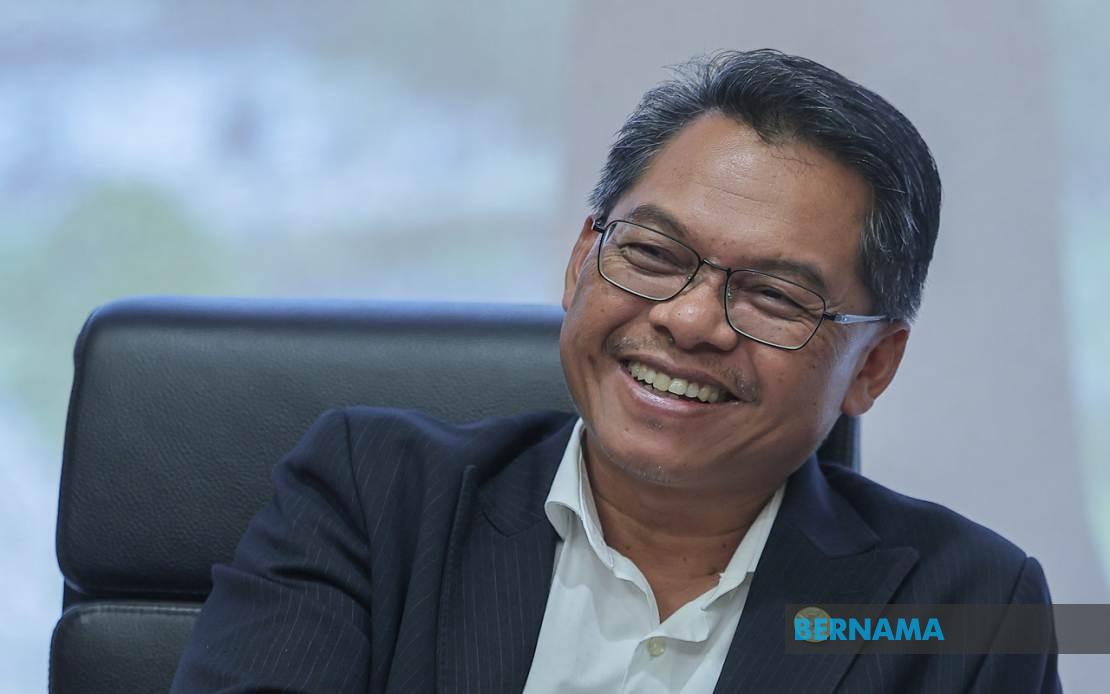
The Technical Committee overseeing implementation of the Malaysia Agreement 1963 has demanded urgent action from all federal ministries and agencies to clear outstanding constitutional matters that remain unresolved more than 60 years after the founding agreement. The directive emerged from a meeting in Putrajaya on August 3, where Datuk Mustapha Sakmud, the Minister in the Prime Minister's Department with responsibility for Sabah and Sarawak affairs, emphasised the need to accelerate progress ahead of a comprehensive review scheduled for next month.
The MA63 Implementation Action Council, known as MTPMA63, represents the government's formal commitment to addressing grievances and constitutional provisions long contentious between the federal centre and the two Borneo states. Under Mustapha's chairmanship, the Technical Committee reviewed the current status of various initiatives and identified bottlenecks impeding advancement. The committee's directive signals impatience with the pace of bureaucratic progress and reflects political pressure to demonstrate tangible results to Sabah and Sarawak voters ahead of potential electoral contests.
Prime Minister Datuk Seri Anwar Ibrahim is scheduled to chair the full MTPMA63 meeting in September, an event that will serve as a critical juncture for assessing how comprehensively the government has addressed decades-old constitutional grievances. The timing reflects the administration's strategic interest in consolidating support among East Malaysian constituencies, particularly following the 2022 return to electoral competition. For Sabah and Sarawak, the September meeting represents an opportunity to press the federal government on commitments that have been repeatedly deferred.
Among the substantive agenda items occupying the committee's attention is the Borneonisation of the public service—a long-standing demand that federal administrative positions, particularly in senior and middle ranks, should be populated by qualified candidates from Sabah and Sarawak rather than exclusively by peninsular bureaucrats. This initiative touches on concerns about regional autonomy and the equitable distribution of administrative power. Additionally, the committee has prioritised bridging healthcare service deficits that have left rural and interior regions of both states with inadequate medical infrastructure compared to more developed federal territories.
Educational advancement in Sabah and Sarawak has similarly occupied federal attention, with the committee directing efforts to strengthen institutional capacity and resource allocation to these regions. These three pillars—public service composition, healthcare accessibility, and educational quality—address fundamental aspects of governance and social equity that have historically differentiated living standards between Peninsular Malaysia and the Borneo states. The focus reflects recognition that MA63 implementation extends beyond constitutional interpretation to practical improvements in citizen welfare.
Mustapha emphasised that consensus-building among federal and state governments, grounded in mutual respect and trust, has enabled measurable advancement on MA63 matters. This rhetorical framing seeks to position collaborative federalism as the operative principle, countering alternative narratives that characterise centre-state relations as adversarial. The statement signals the government's preference for consensus-based resolution rather than litigation or confrontation over constitutional interpretation—an approach that carries both practical advantages and potential limitations in addressing longstanding structural imbalances.
Two concrete achievements demonstrate the government's capacity to deliver tangible outcomes. Sabah's Special Grant under Article 112D of the Federal Constitution has been increased to RM1.5 billion in the current fiscal year, a financial commitment that expands federal resources flowing to the state's budget. This increment represents acknowledgement of Sabah's constitutional entitlements and reflects budgetary decisions made at the federal level to honour these provisions. For a state government managing substantial infrastructure and social spending demands, such additional revenue provides discretionary capacity for priority initiatives.
The successful transfer of Bintulu Port to Sarawak on July 21 constitutes a more symbolically significant achievement, representing reversion of a strategic infrastructure asset from federal to state control. Port governance carries implications for Sarawak's economic development trajectory and commercial autonomy, particularly regarding container handling, shipping logistics, and associated industrial development. The transfer demonstrates the federal government's willingness to devolve control over key economic assets to the states, addressing historical grievances about centralised federal management of Borneo resources and infrastructure.
These dual achievements—financial and infrastructural—reflect the MADANI Government's framing of MA63 implementation as a dynamic, evolving process responsive to contemporary needs and aspirations rather than a static historical settlement. This characterisation suggests that negotiations continue and that additional outcomes remain negotiable, potentially incentivising state-level cooperation with federal initiatives. For Sabah and Sarawak audiences, the narrative emphasises that constitutional provisions are being actively honoured and that the federal government remains committed to addressing historical asymmetries in the federation's structure.
The acceleration of MA63 implementation efforts occurs within a broader context of electoral uncertainty and shifting political alignments in East Malaysia. Both Sabah and Sarawak maintain substantial parliamentary representation and electoral importance to federal stability. The government's demonstrated commitment to resolving MA63 matters and delivering tangible outcomes serves political purposes beyond constitutional compliance, functioning as evidence of responsiveness to regional constituencies whose support remains contested in contemporary Malaysian politics.
Moving toward the Prime Minister's September review, the Technical Committee's directive underscores that implementation gaps remain substantial despite progress on flagship initiatives. Ministries and agencies tasked with advancing Borneonisation, healthcare equity, and educational improvement must now demonstrate concrete capacity to execute these directives within defined timeframes. The committee's insistence on expedited resolution reflects awareness that outstanding MA63 matters continue generating political friction and that prompt, visible progress serves federal government interests in maintaining coalition stability and electoral competitiveness in East Malaysia.
The September MTPMA63 meeting will ultimately assess whether the government's acceleration of implementation efforts has genuinely narrowed the gap between constitutional commitments and operational reality, or whether familiar patterns of deferred resolution will persist. For Malaysian federalism, this assessment carries implications extending beyond Sabah and Sarawak, touching fundamental questions about how constitutional provisions governing centre-state relations are interpreted and honoured.

