The fashion industry's relationship with perfection has undergone a curious inversion. What once represented the pinnacle of luxury—immaculate tailoring, pristine finishes and flawless construction—now competes for prominence with collections deliberately engineered to look aged, soiled and structurally compromised. Major houses including Chanel, Prada, Coach, Louis Vuitton and Valentino have all embraced this aesthetic contradiction, offering customers the opportunity to purchase intentional imperfection at decidedly premium prices. This reversal forces observers to reconsider what luxury actually signifies in contemporary consumer culture and what messages designers are communicating to their clientele.
The mechanics of this trend operate at multiple levels across the luxury market. Chanel's revered 2.55 handbag, an icon synonymous with structured elegance since its 1955 debut, now arrives in deliberately warped configurations as though subjected to violent compression. Prada's recent collections feature what the house presents as age spots and oxidation marks, simulating the appearance of garments extracted from long-neglected storage. Coach took this concept further by introducing its "Loved Leather" line—a euphemism for pre-scuffed accessories—which achieved such commercial success that the brand has committed to expanding the range with additional colorways. These are not isolated experiments but rather calculated strategic responses to shifting consumer psychology, particularly among demographics seeking authenticity and imperfection as rebellion against algorithmic perfection.
The practical implications for consumers extend beyond simple aesthetics. This trend fundamentally alters purchasing logic by suggesting that wardrobe staples need not be discarded when they show signs of wear. A jacket with visible creasing, jeans bearing permanent stains, or leather surfaces marked by daily use now represent desirable characteristics rather than depreciation. For Malaysian and Southeast Asian consumers navigating rapidly rising incomes and aspirational consumption, this development presents both opportunity and complexity. It reframes the concept of value proposition—paying premium sums for clothes that previously would have been considered damaged goods requires a philosophical shift about what justifies expenditure on luxury items.
Designer interpretations of this aesthetic reveal how differently fashion houses approach deliberate deterioration. Ralph Lauren's Spring 2027 offerings subvert his own brand heritage by pairing elaborately ripped denim with traditionally formal tailoring—waistcoats, blazers, neckties and crisp white shirts—creating a visual contradiction that speaks to contemporary anxieties about maintaining appearances. The juxtaposition is completed with penny loafers and structured totes, elements that reference prep school tradition while the distressed denim undermines that very establishment sensibility. Burberry pivots toward nostalgic prep-punk aesthetics through stonewashed pink denim ensembles layered with argyle sweaters, creating a calculated collision between different eras of youth culture. Sandro's approach emphasizes embellishment atop degradation, adding gold and silver studs to faded vests and pairing them with suede-trimmed shorts—luxury materials adorning impoverished-looking construction.
The more extreme interpretations push beyond mere wrinkles and fading into explicit contamination. Louis Vuitton's Spring/Summer 2027 denim jacket appears literally splattered with mud and grit, as though the wearer has recently engaged in outdoor disaster. Acne Studios presents jeans coated in mud-like patina alongside deliberately crumpled denim jackets, normalizing the appearance of actual dirt as a design feature. This escalation suggests that designers are testing how far consumer tolerance extends—whether wealthy buyers will indeed pay significant sums to appear as though they have neglected personal maintenance or engaged in physically demanding activities. The boundary between artistic statement and absurdity blurs considerably when considering these offerings in practical context.
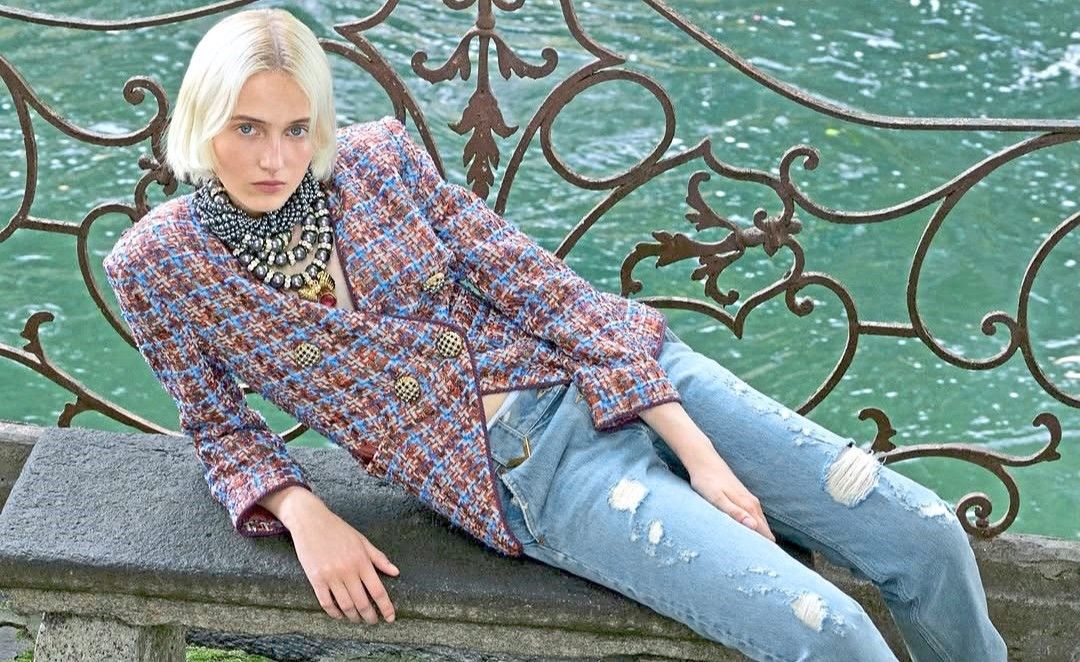
Valentino's Cruise 2027 contributions articulate perhaps the most sophisticated argument for this trend. The Italian house, historically associated with meticulous elegance and refined glamour, introduces tweed jackets with gold buttons deliberately paired with shredded denim—combining its signature polish with aggressive deconstruction. Adding multi-strand black pearl necklaces and golden studded heels further complicates the visual message, suggesting that extreme wealth permits the luxury of appearing simultaneously polished and undone. This contradiction becomes itself the statement—that those with sufficient resources can afford apparent contradiction, that perfection no longer signals status, and that complexity or paradox better communicates contemporary sophistication than uniformity or pristine execution.
The commercial success of these collections indicates something significant about contemporary luxury consumer psychology. Coach's "Loved Leather" line sold out extensively enough to warrant expansion, suggesting genuine market appetite rather than mere novelty interest. Growing waiting lists for deliberately damaged designer items reveal that this represents more than passing fashion whimsy but rather a substantial reorientation of luxury desirability markers. Manufacturers are investing in techniques to simulate wear, developing production methods to achieve consistent degradation, and building supply chains around intentional imperfection. This requires equal technical sophistication as traditional high-end manufacturing—perhaps more, given the precision required to make damage appear organic while maintaining structural integrity.
Contextualizing this trend within broader cultural movements illuminates its deeper significance. The rise of sustainability discourse in fashion has created cognitive dissonance around disposability and consumption, leading some consumers to embrace items that already appear worn as though legitimizing continued use of older pieces. Simultaneously, social media culture's documentation of unfiltered, authentic moments has created backlash against the curated perfection that dominated visual culture throughout the early twenty-first century. Consumers increasingly value perceived authenticity and imperfection as markers of genuineness. Luxury brands, recognizing this shift, have strategically repositioned their offerings to appear less artificially perfect, less digitally enhanced, less removed from human reality. The irony that this calculated authenticity comes at premium prices represents a fundamental paradox in contemporary capitalism.
For Malaysian readers specifically, this trend carries particular resonance given the region's historical relationship with luxury goods and rapid economic development. As Southeast Asian markets have emerged as increasingly significant luxury consumers, international brands have tailored offerings to local preferences. The embrace of deliberately aged and damaged aesthetics may appeal to younger, more globally connected consumers who seek to distinguish themselves from older generations' pursuit of pristine designer goods. Yet it simultaneously creates opportunity for counterfeiters, who now face the peculiar challenge of producing convincingly damaged replicas—a technical hurdle that may actually work in favor of legitimate manufacturers.
The philosophical dimension warrants consideration beyond commercial analysis. What does it signify when the world's most expensive fashion houses profit by making clothing appear inexpensive, damaged and poorly maintained? Does this represent genuine artistic innovation or sophisticated marketing manipulation that exploits consumer desire for authenticity while maintaining premium pricing? The answer likely encompasses both perspectives simultaneously. Designers are genuinely exploring new aesthetic territories and challenging assumptions about what constitutes luxury, yet they simultaneously exploit consumer aspirations and insecurities. The trend demonstrates fashion's remarkable capacity for self-reinvention—for transforming yesterday's flaws into tomorrow's virtues—a characteristic that makes the industry perpetually compelling and perpetually suspect.

