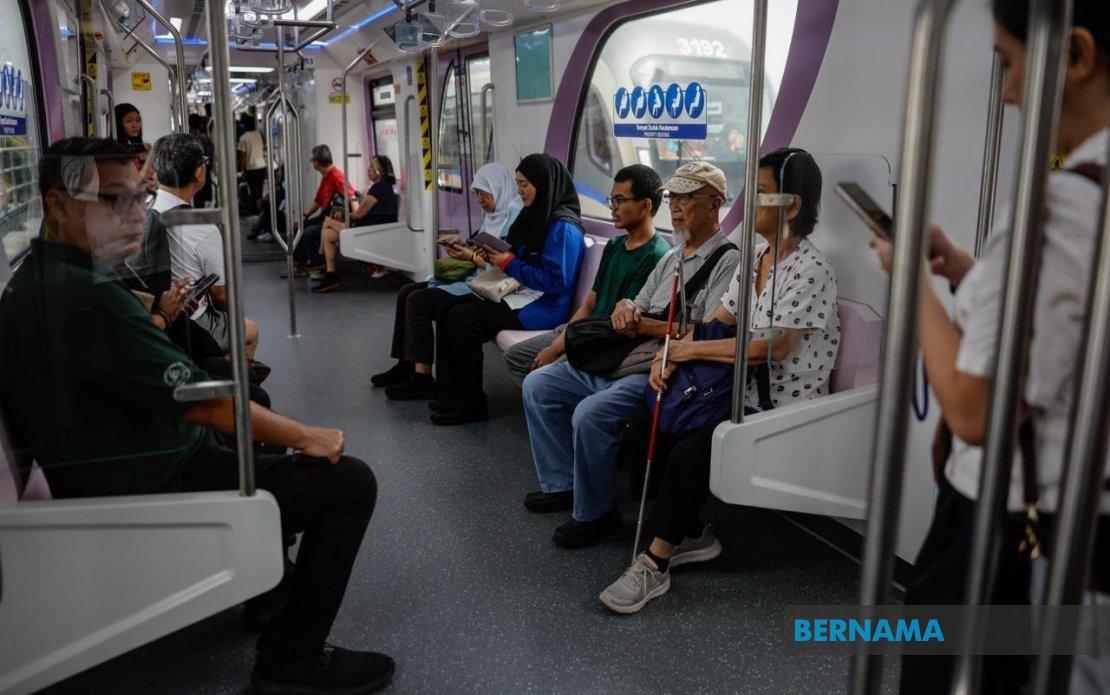
The LRT3 Shah Alam Line commenced operations on June 29 to an encouraging response from early passengers, who highlighted its role in streamlining journeys across the Selangor region while reducing commute times. The RM16.63 billion infrastructure project represents a substantial government commitment to expanding the country's rail transit network and addressing long-standing connectivity gaps in the Klang Valley. Prime Minister Datuk Seri Anwar Ibrahim's announcement of free rides through July 31—extending to feeder bus services operated by Prasarana Malaysia Berhad—has created a window for potential users to evaluate whether the new route aligns with their transport needs without financial commitment.
Commuters from various demographics reported positive initial impressions during opening-day operations. Private sector worker Samantha Fong, 26, characterised the travel experience as more efficient than previous alternatives, citing the elimination of unnecessary interchanges between Bandar Utama and Glenmarie 2 stations as a significant practical benefit. Similarly, colleague Rainchie Lee, 26, described the journey as smooth and comfortable, emphasising that the one-month complimentary period serves an important function by allowing workers and students to assess long-term suitability before committing financially to the service.
Despite the generally positive reception, accessibility considerations for persons with disabilities have emerged as a priority area requiring attention. Visually impaired commuter Razlan Ibrahim, 40, whose journey from Kajang to Glenmarie 2 provided an overall favourable impression of the line's inclusive design philosophy, identified specific gaps in information accessibility that warrant prompt remediation. His assessment carries particular weight given his direct experience navigating the system's current capabilities and limitations.
Razlan's feedback highlighted the effectiveness of tactile pathways—particularly the guiding system at Bandar Utama Station—in facilitating independent movement for disabled passengers. The carefully designed tactile accessibility infrastructure successfully directs users toward crucial facilities including persons-with-disabilities toilets, prayer rooms segregated by gender, and lift access points. This element of the design demonstrates thoughtful implementation of universal design principles at the operational level.
The critical gap identified concerns information accessibility rather than physical navigation. Razlan advocated for enhanced Braille signage at key location markers, specifically at PwD facilities, gender-designated surau spaces, and lift entrances. Without such signage, visually impaired users remain dependent on verbal assistance or pre-existing familiarity with station layouts, reducing their ability to travel with full independence. This observation underscores how comprehensive accessibility extends beyond physical infrastructure to encompass informational systems.
Razlan's balanced assessment—acknowledging genuine improvements while identifying remaining gaps—reflects the nuanced reality facing newly launched transit systems. His observation that "everything is good" regarding physical accessibility, combined with recognition that "there is still room for enhancement" regarding information access, suggests the line launched with partially completed accessibility measures. This pattern frequently emerges in large infrastructure projects where physical construction deadlines may not align with specialised accessibility implementation timelines.
Among conventional commuters, additional suggestions emerged beyond accessibility considerations. Samantha Fong raised the prospect of dedicated women-only coaches, a feature increasingly adopted in regional transit systems to address safety concerns and enhance passenger comfort for female travellers. This proposal reflects evolving expectations regarding gender-sensitive public transport design, particularly in urban Malaysian contexts where female commuter populations have grown substantially.
The timing of the LRT3 launch carries significance within Malaysia's broader transport infrastructure narrative. The project's completion represents tangible progress on government commitments to comprehensive rail transit development, particularly in high-density urban corridors. The Selangor region, which encompasses diverse communities with varying transport needs, stands to benefit from improved connectivity options that reduce road congestion and provide alternatives to private vehicle dependency.
The one-month free-ride period serves a dual purpose beyond simple promotional strategy. For commuters like Rainchie Lee, the elimination of financial barriers during the trial period removes cost as a decision variable, enabling genuine assessment of route utility and service quality. For the transit operator and government stakeholders, this period generates valuable usage data, feedback regarding bottlenecks, and evidence regarding demand patterns—intelligence essential for optimising schedules and resource allocation.
The infrastructure represents substantial capital deployment during a period of competing budgetary demands. At RM16.63 billion, the investment reflects strategic prioritisation of public transport enhancement in recognition that private vehicle growth cannot sustainably accommodate the Klang Valley's expanding population. The line's successful operationalisation demonstrates project delivery capability, though the accessibility feedback suggests ongoing refinement will be necessary to fully realise inclusive design aspirations.
For Malaysian and Southeast Asian transit observers, the LRT3 experience offers instructive lessons regarding launch-phase planning. The positive reception for core functionality—reliability, comfort, and journey time efficiency—indicates that commuters respond positively to fundamental service quality. Simultaneously, the identified accessibility gaps highlight how universal design implementation benefits from sustained post-launch attention rather than one-time design certification.
Moving forward, the transport ministry and Prasarana would benefit from treating Razlan Ibrahim's feedback as a template for systematic accessibility auditing. Engaging persons with disabilities in formal testing protocols before major transit launches could identify information-accessibility gaps during design phases rather than post-commissioning. Such approaches align with international best practice and would strengthen Malaysia's positioning as a regional leader in inclusive infrastructure development.
The LRT3 Shah Alam Line's reception suggests commuters in the Klang Valley embrace expanded transit options that genuinely reduce travel burden. Success of this line—measured through ridership, cost recovery, and service reliability over coming months—will substantially influence future transit investment decisions. For now, the opening-phase enthusiasm, combined with constructive user feedback on enhancement opportunities, positions the line favourably for operational success and iterative improvement.

