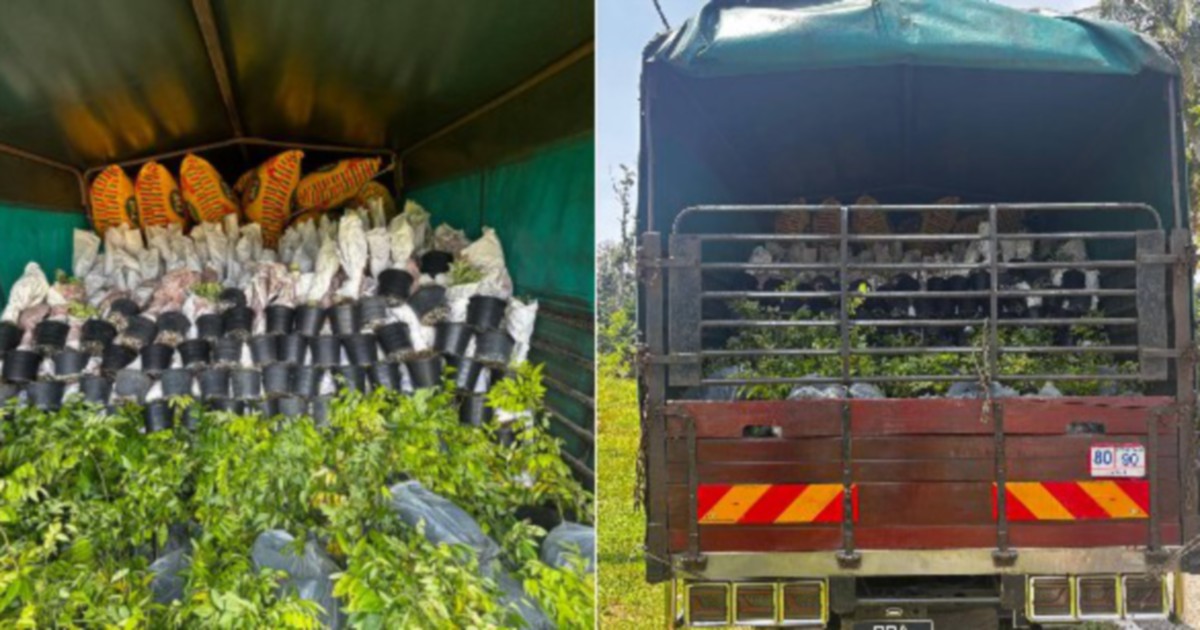
A commercial driver faces arrest procedures after authorities uncovered one of the larger ornamental plant smuggling operations along the Malaysia-Thailand border, with the haul intercepted at Kampung Padang Licin in Rantau Panjang, Kelantan. The seizure of 6,000 saplings, estimated to be worth RM200,000, represents a significant disruption to what appears to be an organised smuggling network moving prohibited vegetation across international boundaries.
The operation reflects a growing problem in Southeast Asia where the commercial demand for rare and exotic ornamental species drives sophisticated cross-border trafficking. Unlike narcotics operations, plant smuggling often receives less law enforcement attention, yet it generates substantial illegal revenue and poses biosecurity risks to receiving countries. Malaysia's porous land borders with Thailand remain vulnerable points where such contraband regularly transits, exploiting gaps in surveillance and inspection infrastructure at smaller border crossings.
Ornamental plants command premium prices in legitimate horticultural markets across Malaysia, Singapore, and the broader region, but the availability of certain prized species in home countries creates incentives for operators to source saplings illegally from neighbouring jurisdictions at lower cost. Thailand's biodiversity and established plant nursery sector make it a natural source point, though authorities cannot confirm at this stage whether the saplings originated from legal Thai operations that were then redirected illegally, or from wild collection.
The Kelantan border region has emerged as a focal point for such smuggling in recent years, partly because the state's agricultural economy and rural communities create both supply chains and consumer demand for horticultural products. Rantau Panjang's status as a significant trading town means vehicle traffic remains high, potentially providing cover for contraband operators who mix illicit shipments among legitimate commercial goods.
What complicates enforcement is the often-opaque regulatory framework governing which plant species require permits or are prohibited entirely. Many operators may not fully grasp which varieties violate import restrictions, while others knowingly circumvent regulations. The RM200,000 valuation suggests this consignment targeted serious commercial resale rather than personal consumption, indicating a profit-motivated enterprise with distribution networks already established within Malaysia.
Biosecurity authorities in Malaysia have legitimate concerns about unvetted plant imports, which can introduce pests, diseases, or invasive species that damage local agricultural and natural ecosystems. Thailand and Malaysia maintain different phytosanitary standards and approved species lists, and smuggled plants bypass mandatory inspection protocols designed to protect Malaysian flora and fauna. A single contaminated sapling could theoretically harbour pathogens with agricultural or environmental consequences far exceeding the immediate commercial value.
The arrest demonstrates that border enforcement agencies continue targeting such operations, though resource constraints and the sheer volume of cross-border traffic limit their capacity to intercept all smuggling attempts. Customs and quarantine personnel at smaller crossings like Rantau Panjang often juggle competing priorities, from narcotics interdiction to counterfeiting suppression, leaving plant smuggling relatively deprioritised in resource allocation.
Moving forward, the case underscores the need for Malaysian authorities to strengthen intelligence-sharing with Thai counterparts on known smuggling networks and source points. International cooperation on horticultural contraband remains underdeveloped compared to mechanisms targeting drugs or weapons, yet the same transnational investigation techniques could dismantle these supply chains. Developing countries across Asia collectively lose substantial tax revenue and legitimate commerce to organised smuggling, making coordination increasingly important.
For Malaysian consumers and legitimate nursery operators, crackdowns like this one theoretically support market integrity by reducing unfair competition from illegal imports. However, enforcement impact depends on consistency and meaningful penalties that deter repeat offenders. Cases often conclude with minimal sentences, sending weak deterrent signals to operators calculating risk versus profit.
The seized saplings will likely face destruction or quarantine assessment depending on species identification and phytosanitary protocols. Some may be retained as evidence for proceedings against the arrested driver, whose formal charges and court dates remain pending at the time of reporting.
This seizure fits a broader pattern of contraband interceptions across Malaysia's land borders, where vigilance by agencies like the Royal Malaysian Customs Department continues yielding results. However, preventing future smuggling requires not just reactive border enforcement but also addressing underlying market incentives and regulatory gaps that enable these operations to function profitably across Southeast Asia.

