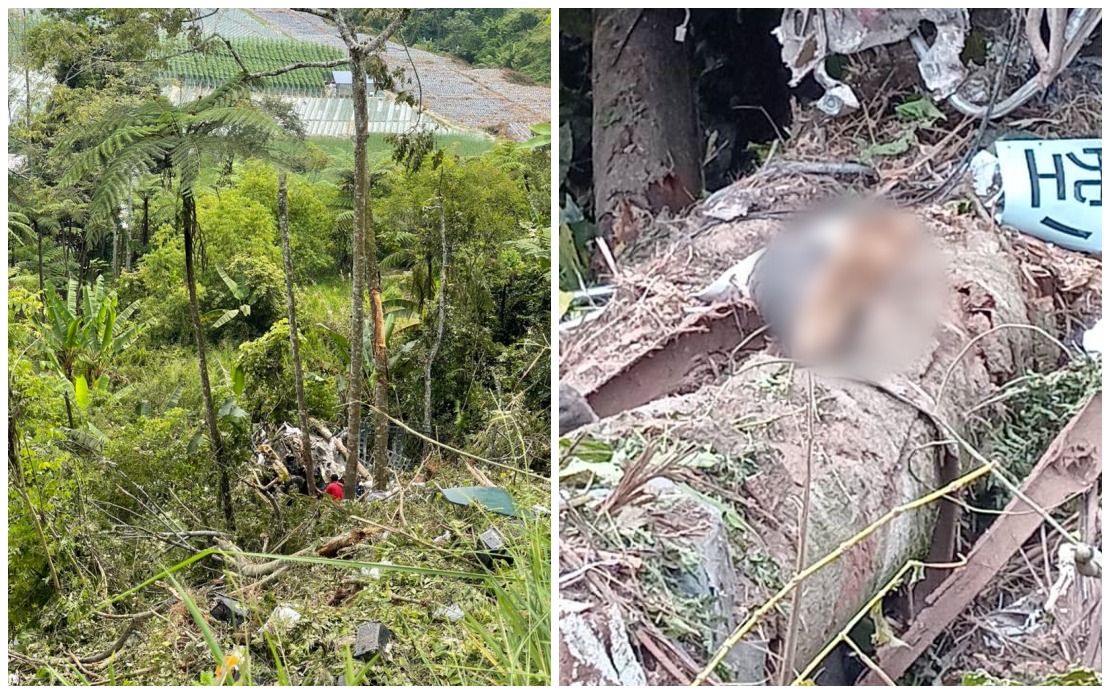
A man in his 40s was killed on Thursday when the 10-tonne lorry he was operating careened off a mountain road and plummeted approximately 150 feet into a deep ravine near the Pos Blau-Lojing Bridge in Gua Musang, Kelantan. The incident highlights the ongoing safety challenges on Malaysia's remote highland routes, where challenging terrain and narrow mountain passes continue to pose significant hazards to commercial drivers operating in these regions.
Emergency responders received notification of the accident at 11.58 am, but the remoteness of the location created substantial delays in the rescue effort. The Gua Musang Fire and Rescue Station, situated nearly 98 kilometres from the crash site, did not arrive at the scene until 1.59 pm—more than three hours after the initial distress call. This extended response time underscores the infrastructural challenges facing rescue services in Kelantan's interior districts, where vast distances and limited road access can significantly impede emergency operations.
Upon reaching the ravine, firefighting personnel discovered the vehicle had come to rest at the bottom of the gorge, with the driver trapped beneath a substantial tree trunk that had fallen during the vehicle's descent. The crash site, located adjacent to an orchard, presented complex extraction challenges for the rescue team. Firefighters had to undertake careful and methodical work to safely remove the heavy tree trunk before they could reach the driver and assess his condition.
Unfortunately, by the time rescue personnel freed the trapped driver from beneath the tree, medical examination confirmed that he had already succumbed to his injuries. The victim was pronounced deceased at the scene, and no resuscitation efforts were initiated. Emergency medical teams were unable to revive the casualty despite the subsequent arrival of paramedics, indicating the severity of the trauma sustained during the vehicle's violent descent into the ravine.
Following protocol, the deceased's body was transferred to police custody for the standard investigative procedures and arrangements for family notification. The Gua Musang district police authority took charge of the incident scene and commenced preliminary inquiries into the circumstances surrounding the crash. Police units conducted initial interviews with any available witnesses and began gathering evidence at the location to establish a factual timeline of events.
Gua Musang district police chief Supt Sik Choon Foo acknowledged the incident when contacted by media outlets and confirmed that a comprehensive investigation was underway. The police force indicated that identifying the precise cause of the accident remained the primary investigative objective at that stage. Officers were examining potential contributing factors, including mechanical failure of the vehicle, driver error, adverse weather conditions, or road surface defects that may have led to the lorry losing control and veering into the ravine.
The crash raises broader concerns about safety management on Malaysia's highland transport corridors, particularly in Kelantan where the terrain becomes increasingly treacherous as one moves away from coastal urban centres. The Pos Blau-Lojing area sits at considerable elevation, with the road network featuring numerous sharp curves, steep gradients, and inadequate barriers in many sections. Drivers traversing these routes face significant occupational hazards, and fatigue resulting from long operating hours on demanding terrain may be a contributing factor in such incidents.
Commercial lorry operators in Malaysia frequently encounter pressure to complete deliveries on tight schedules, potentially encouraging excessive speed or extended driving shifts without adequate rest. The high frequency of heavy-vehicle accidents in mountainous regions suggests that driver training and safety enforcement may require strengthening, particularly for operators working on routes known for challenging road conditions. Industry-wide initiatives focused on fatigue management and vehicle maintenance standards could help reduce tragic outcomes in these vulnerable transport corridors.
The incident also highlights the vulnerability of Malaysia's emergency services infrastructure in peripheral areas. The three-hour response delay reflects resource constraints and geographic realities that persist in many rural districts. Expanding pre-positioning of rescue equipment at strategic high-risk locations, improving communications infrastructure, and enhancing training programmes for local emergency response teams could help reduce both response times and fatality rates in remote accident scenarios.
As investigators continue their examination of the crash circumstances, the incident serves as a sobering reminder of the risks inherent in Malaysia's transport sector. Fatal accidents involving commercial vehicles remain a persistent public safety challenge, particularly on routes passing through elevated or geographically isolated terrain. Enhanced safety protocols, better road design standards, and more rigorous driver accountability measures may be necessary to prevent similar tragedies in Kelantan and other interior regions of peninsular Malaysia.

