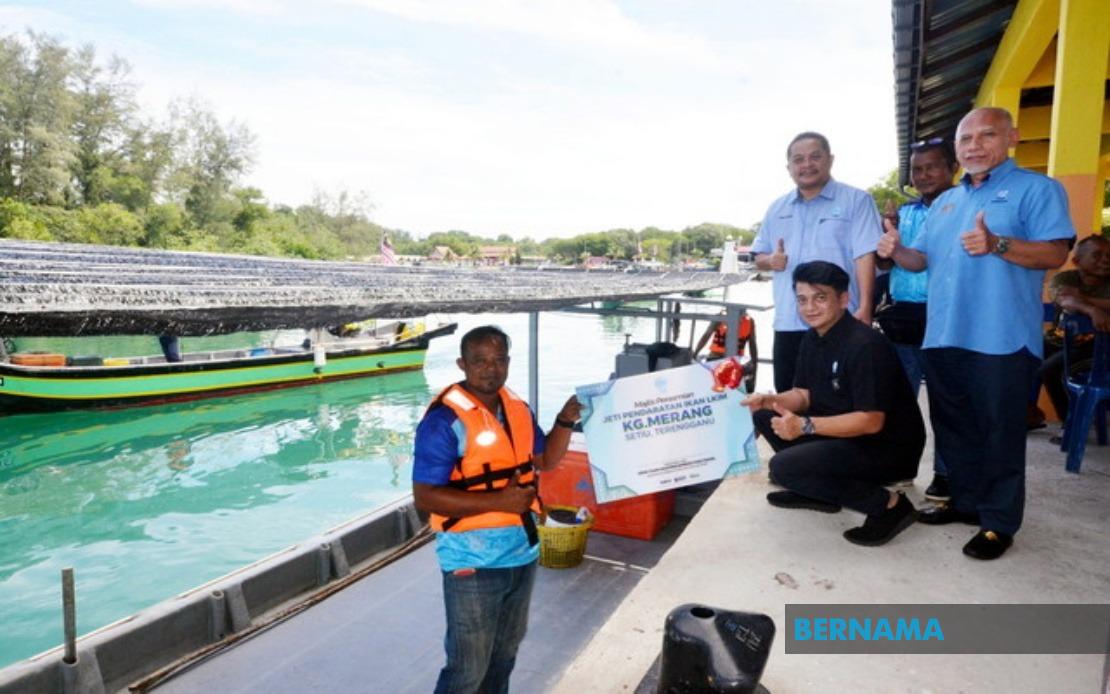
Malaysia's fisheries sector received a boost this week as the Malaysian Fisheries Development Authority (LKIM) unveiled its commitment to modernising the country's landing infrastructure through a RM2 million investment programme launched over the past year. The initiative addresses long-standing challenges facing fishing communities, who have relied on increasingly inadequate facilities to process and market their daily catches. LKIM chairman Muhammad Faiz Fadzil inaugurated the newly completed Kampung Merang Fish Landing Jetty in Bandar Permaisuri, marking a tangible step towards revitalising the nation's fisheries infrastructure.
The Kampung Merang facility, constructed at a cost of RM500,000, represents the kind of targeted intervention that the authority believes can transform fishing communities' economic prospects. Replacing a decades-old structure that villagers had built and maintained themselves, the new concrete jetty formally commenced operations following the handover ceremony. The facility is designed to serve 124 fishermen who collectively operate 68 vessels in the locality, providing them with safe, modern infrastructure that meets contemporary safety and operational standards. This replacement eliminates hazards associated with ageing structures while introducing efficiencies that should streamline the entire fish-handling process from landing to sale.
Within the broader strategy, LKIM has pursued an ambitious expansion agenda. Muhammad Faiz disclosed that beyond the Merang completion, two further jetty projects are progressing through administrative channels in Perak and Labuan, with both initiatives currently navigating documentation requirements and tender procurement procedures. The staggered approach reflects the complexities involved in securing sites, securing approvals, and managing construction timelines across Malaysia's diverse coastal regions. These projects underscore LKIM's recognition that infrastructure deficits exist across multiple states, each presenting distinct logistical and engineering challenges.
The authority's current asset base demonstrates the scale of its operational responsibility. LKIM oversees 372 fish landing jetties distributed nationwide, supplemented by 48 fisheries complexes and port facilities. This sprawling network requires continuous maintenance, strategic upgrades, and selective new construction to meet evolving demands. However, Muhammad Faiz acknowledged that existing funding allocations impose genuine constraints on the pace of improvement. The chairman explicitly called upon the government to consider significantly enhanced budgetary provisions in the upcoming year, recognising that the current RM2 million tranche, whilst meaningful, falls short of meeting comprehensive national infrastructure needs.
For Setiu district in Terengganu, where Kampung Merang is situated, the new jetty holds particular significance. Current landing records indicate approximately 243 metric tonnes of fish are brought ashore annually across Setiu's operations. LKIM projects that this volume will increase materially once fishermen fully adapt to the improved facility and expand their operations in response to enhanced efficiency. The authority's confidence rests on the premise that better infrastructure removes bottlenecks that currently constrain fishing activity, allowing vessels to land catches more rapidly, reduce spoilage, and access markets with fresher product.
The economic logic underpinning the investment programme is straightforward yet compelling. Fishermen fundamentally depend on their catches for household income and financial security. When landing facilities are inadequate, unsafe, or inefficient, multiple problems cascade through the value chain. Delays in processing increase spoilage rates, reducing the proportion of catch available for sale. Safety concerns deter younger community members from entering the profession, exacerbating workforce shortages. Marketing inefficiencies mean fish may be sold through intermediaries at unfavourable prices, diminishing fishermen's returns. Modern jetties address these interconnected challenges by providing safe working conditions, reducing processing time, and enabling direct market access.
Muhammad Faiz emphasised that improved landing infrastructure extends beyond operational convenience to encompass the commercial dynamics of fish marketing. With efficient facilities, fishermen can more readily establish direct buyer relationships, negotiate prices based on product quality rather than desperation to move perishable inventory, and potentially pursue value-added opportunities such as processing or branding. These market efficiencies translate into tangible income improvements, thereby addressing poverty and economic vulnerability within fishing communities. The Merang jetty, serving 124 fishermen, thus represents not merely a construction project but an intervention with potential multiplier effects throughout the local economy.
The initiative also reflects LKIM's acknowledgement of the particular challenges facing Malaysia's traditional fishing sector. Many coastal communities have historically invested in infrastructure using community labour and materials, creating structures adequate for historical catch volumes but inadequate for contemporary safety standards or modern fishing methodologies. The transition from community-built facilities to professionally engineered installations improves working conditions, reduces accidents and injuries, and positions fishing as an economically viable long-term career path. For communities like Kampung Merang, the new jetty therefore represents a modernisation milestone with generational implications.
Looking forward, the authority's funding appeal to government carries implicit urgency. Malaysia's coastal regions contain numerous fishing communities where infrastructure remains below optimal standards. The current RM2 million allocation, spread across repair, upgrade, and new construction activities nationwide, demonstrates commitment but also illustrates how swiftly available resources become exhausted when distributed across 372 existing facilities plus new projects. Perak and Labuan's pending jetties will absorb significant additional resources once construction commences. Without enhanced budget allocations, LKIM faces difficult prioritisation choices, potentially leaving lower-profile communities without the infrastructure investments that could meaningfully improve livelihoods.
The Merang jetty handover thus arrives at a moment when Malaysia's fisheries sector confronts broader structural questions about investment, sustainability, and rural development. As global seafood demand rises and regional fishing pressures intensify, the nation's ability to support productive, prosperous fishing communities increasingly hinges on infrastructure quality. Modern jetties, whilst unglamorous compared to policy announcements or technological innovations, provide the operational foundation upon which sustainable fisheries management and fisher prosperity depend. LKIM's RM2 million commitment and the authority's amplified appeal for enhanced funding reflect recognition that this foundation requires sustained, substantial investment to maintain Malaysia's fisheries competitiveness and support the livelihoods of communities whose ancestors have harvested the sea for generations.

