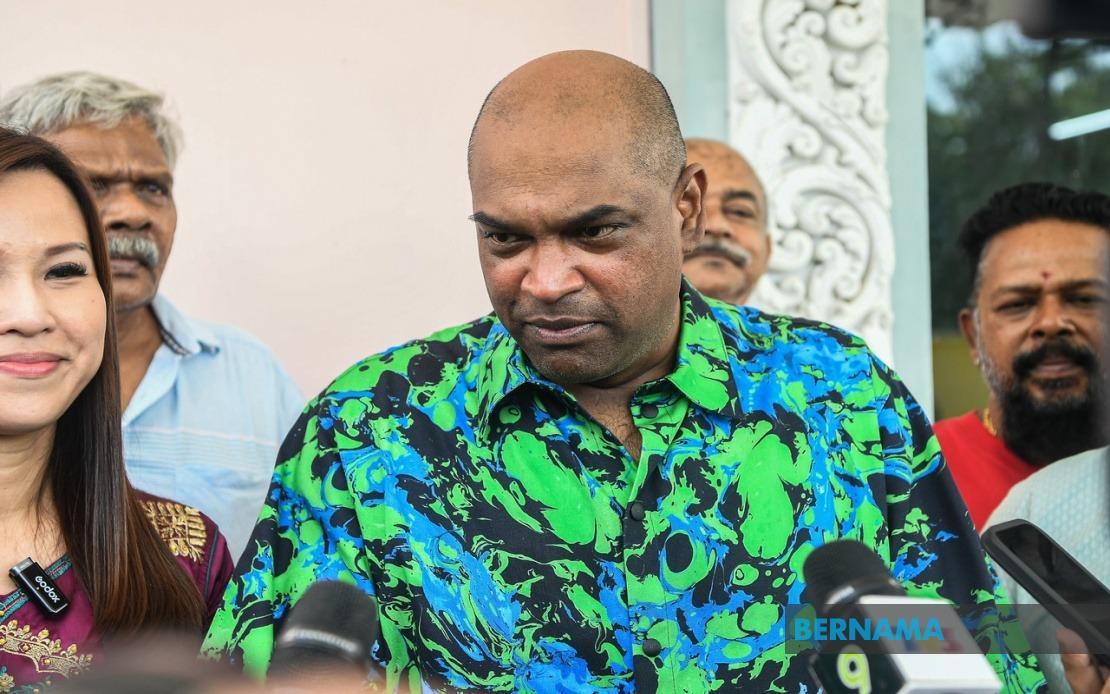
The Malaysian government has fundamentally restructured how local workers participate in the LINDUNG 24 Jam non-employment injury protection scheme, removing the compulsory requirement that has applied since its introduction. Human Resource Minister Datuk Seri Ramanan Ramakrishnan announced that employees now have discretion over whether to contribute to the programme administered by the Social Security Organisation (PERKESO), with the policy taking effect immediately following a Cabinet decision that weighed extensive public commentary on the scheme's operation.
The shift represents a significant policy recalibration driven by concerns raised across various worker constituencies regarding the mandatory nature of the contributions. The government's decision to grant local workers autonomy over participation reflects recognition that a one-size-fits-all approach to social security protection may not align with the diverse financial circumstances and risk profiles of Malaysia's workforce. This voluntary framework grants individuals the flexibility to assess their own circumstances and determine whether coverage aligns with their needs and capacity to pay.
In marked contrast, the government has maintained the mandatory requirement for foreign workers employed within Malaysia to continue contributing to LINDUNG 24 Jam. This differentiated approach suggests that policymakers view foreign worker protection through a distinct lens, potentially reflecting concerns about ensuring baseline coverage for a potentially more vulnerable segment of the labour force. The continued mandatory status for migrant workers underscores the government's commitment to maintaining standardised safety net protections across this demographic, whose employment circumstances may differ significantly from citizen workers.
The LINDUNG 24 Jam scheme itself provides coverage for accidents occurring outside normal working hours and away from workplace premises, extending protection to incidents that arise during everyday activities and personal time. This broad scope distinguishes it from conventional workplace injury insurance, which typically covers only incidents occurring during employment. The scheme thus addresses a gap in social security by protecting workers against the financial consequences of non-occupational accidents that could render them unable to work and generate income.
PERKESO will shortly announce the procedural mechanisms and administrative processes through which local workers may opt into or out of the scheme, addressing practical implementation questions that have likely emerged following the announcement. The transition from mandatory to voluntary participation requires establishing clear registration processes, contribution payment options, and communication pathways to ensure workers can make informed decisions about their coverage. How effectively PERKESO executes this administrative transition will significantly influence uptake rates and the scheme's long-term financial sustainability.
Minister Ramanan indicated that the Human Resource Ministry intends to conduct a comprehensive evaluation of the scheme's operation by year's end, examining multiple dimensions including the effectiveness of implementation, the adequacy of funding mechanisms, and the long-term policy direction. This review represents a structured approach to assessing whether the voluntary framework achieves desired outcomes or requires further adjustment. The outcomes of this evaluation may ultimately inform legislative amendments to the Employees' Social Security Act 1969, potentially reshaping the scheme's legal foundations and operational parameters.
For Malaysian workers, the policy shift provides welcome flexibility, particularly for those whose employment situations, income levels, or personal circumstances make mandatory contributions burdensome. However, this flexibility introduces a corresponding risk: workers who underestimate their exposure to non-occupational accidents or who prioritise immediate income over future protection may rationally choose not to contribute, potentially leaving themselves vulnerable should accidents occur. The scheme's effectiveness ultimately depends on achieving adequate voluntary participation rates to maintain both financial viability and meaningful coverage across the worker population.
The government's concurrent commitment to maintaining mandatory participation among foreign workers reflects the particular vulnerability of migrant labourers, who often work in sectors with elevated accident risks and possess fewer alternative safety nets. Foreign workers frequently cannot access their home country's social security systems and typically lack established family support networks within Malaysia, making mandatory protection especially important. This dual-track approach acknowledges that different worker populations require tailored policy responses reflecting their distinct circumstances and vulnerabilities.
PERKESO's announced plans to enhance public education regarding scheme benefits and the broader importance of social security protection become more critical under a voluntary framework. Without robust awareness campaigns explaining the value proposition of coverage against non-occupational accidents, workers may fail to recognise the scheme's relevance to their circumstances. Effective communication about typical accident scenarios, benefit levels, and cost structures will be essential in driving sufficient voluntary participation to maintain the scheme's financial health and protective impact.
For Malaysia's broader social security architecture, this policy pivot reflects evolving thinking about the balance between universal protection and individual choice. While mandatory schemes ensure comprehensive coverage and cross-subsidisation, voluntary frameworks respect worker autonomy and reduce government-imposed financial burdens. The government's decision to test voluntary participation among local workers while preserving mandatory requirements for foreign workers provides a natural experimental framework for assessing which approach better serves different worker populations. The outcomes will likely inform future policy decisions affecting other social security programmes and government-mandated worker protections.

