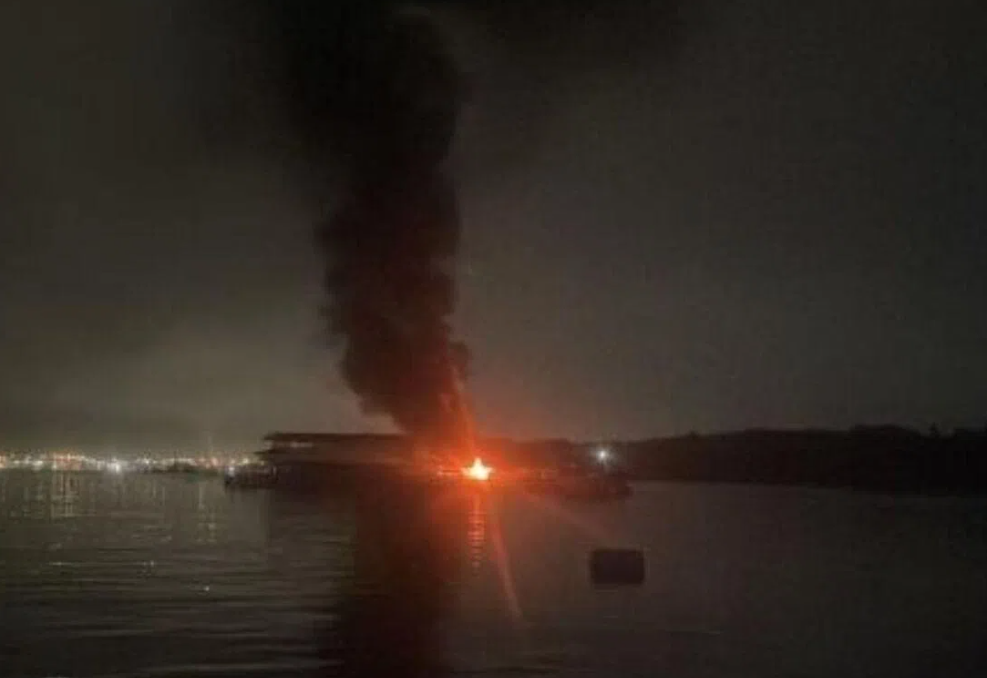
A fierce overnight fire ripped through at least two floating fish farms anchored near Pulau Ubin on June 24, with firefighters taking hours to bring the blaze under control. The Singapore Civil Defence Force (SCDF) received distress calls at approximately 8.10pm and mobilised multiple vessels to combat the flames at the aquaculture facilities positioned off the Lorong Halus jetty in the Pasir Ris vicinity. Investigators believe a lightning strike made contact with the farms' solar panel systems, igniting the initial fire before it spread to neighbouring operations. The incident underscores the vulnerability of Singapore's marine farming sector to severe weather and the operational challenges posed by remote installations.
The sequential spread of fire across multiple farm units suggests the facilities were positioned in close proximity, creating a cascade effect once ignition occurred. Initial reports indicate the blaze erupted at one installation before jumping to at least two adjacent farms, compounding the scale of the emergency response required. The SCDF's deployment of marine vessels from the Maritime and Port Authority of Singapore and Airport Emergency Service proved critical in accessing the floating structures, which sit some distance from conventional shore-based fire suppression capabilities. Local fishing operators from neighbouring farms also mobilised their own resources to contain the conflagration, reflecting the tight-knit nature of Singapore's aquaculture community and the mutual aid protocols that develop in isolated maritime working environments.
Financial devastation from the incident was substantial and unevenly distributed across affected parties. One farm proprietor estimated personal losses at approximately S$120,000, encompassing destroyed or damaged critical infrastructure including solar panels, diesel generators, fishing vessels, and trap systems. Beyond equipment destruction, the fire destroyed stored fish feed and catalysed the escape of at least half the farm's live stock inventory after damaged netting compromised containment. The proprietor's revelation that insurance coverage proved unavailable for fire damage exposes a significant gap in risk management options available to Singapore's aquaculture operators, particularly those relying on innovative offshore farming methodologies that may fall outside conventional marine insurance categories. This protection deficit means individual operators bear catastrophic losses entirely, undermining the financial sustainability of smaller enterprises operating in this sector.
The farm owner disclosed a troubling pattern of prior lightning damage to the solar panel installations, though previous incidents had been managed more effectively due to staff presence onsite. His testimony revealed that when personnel were deployed at the facilities during earlier weather events, they successfully detected and mitigated incipient fires before they could escalate into major conflagrations. The absence of workers at the time of this incident proved catastrophic, allowing the initial ignition point to develop unchecked into a rapidly spreading emergency. This operational reality highlights a tension inherent in offshore aquaculture economics: maintaining 24-hour onsite staffing provides safety benefits but imposes substantial labour costs that operators strive to minimise, particularly for facilities located in relatively protected waters perceived as lower-risk environments.
Pulau Ubin and the surrounding waters represent a strategically important zone for Singapore's domestic food production, with multiple aquaculture installations concentrated in this region. The proximity of the affected farms to Pulau Ubin and Pulau Ketam positions them within an established farming corridor that supplies fresh seafood to local markets and restaurants. Lightning events during the monsoon seasons represent a genuine occupational hazard in Southeast Asian maritime environments, yet regulatory frameworks and industry standards may not adequately address the specific vulnerabilities of moored floating installations with exposed electrical infrastructure. The Straits Times inquiry to the Fish Farmers Association of Singapore and Singapore Food Agency suggests these regulatory bodies are now evaluating whether enhanced safety protocols or infrastructure standards should be mandated for similar operations.
The incident carries implications extending beyond immediate property damage into broader conversations about Singapore's food security strategy and the role of local aquaculture in meeting demand. As the city-state pursues its ambition to produce 30 percent of its own food by 2030, expanding and intensifying offshore and nearshore farming operations becomes increasingly necessary. However, incidents such as this fire underscore the environmental and infrastructural hazards associated with concentrating aquaculture assets in limited geographic zones, particularly in tropical waters subject to powerful convective storms. The lightning strike mechanism also invites scrutiny of electrical safety standards on floating platforms, where traditional grounding and surge protection systems may require adaptation for marine applications.
Insurance coverage gaps identified by this incident warrant systematic examination across Singapore's aquaculture sector. Commercial marine policies typically cover vessel and hull damage but may not extend comprehensive protection to farming equipment, inventory, and business interruption losses on floating installations. This ambiguity creates perverse incentives where operators may under-invest in safety infrastructure or early warning systems if they perceive losses as largely uninsurable. The development of tailored insurance products designed specifically for offshore aquaculture operations could simultaneously improve risk mitigation incentives and enhance financial stability for operators, creating a more resilient sector capable of contributing meaningfully to Singapore's food production targets.
The June 24 incident also raises questions about emergency response coordination and early warning systems for maritime incidents in Singapore's farming zones. Rapid identification and reporting of the fire by nearby operators proved crucial in summoning professional firefighting resources before the situation deteriorated further. Establishing formalised communication networks, perhaps through mobile applications or automated alert systems tied to meteorological monitoring, could enable faster incident detection and response in future weather events. Such systems would benefit from integration with real-time lightning strike data, allowing operators to implement proactive protective measures or temporary facility shutdown procedures when atmospheric conditions become hazardous.
Broader maritime safety protocols governing aquaculture operations may require recalibration in light of this incident. Current guidelines may address fire suppression, vessel safety, and environmental protection, but may not adequately prescribe measures specifically targeting lightning strike prevention on installations with extensive electrical infrastructure. Retrofitting solar panel systems with enhanced surge protection, installing automated shutoff mechanisms, or developing shelter structures for critical equipment represents potential mitigation strategies worthy of regulatory consideration. The regulatory agencies' ongoing investigations will likely inform updated industry standards that balance operational efficiency with worker safety and infrastructure protection.
Looking forward, the convergence of Singapore's food production ambitions with the environmental realities of tropical maritime operations demands a comprehensive risk management approach. Individual operators cannot bear sole responsibility for catastrophic losses arising from natural phenomena beyond practical human control, particularly when insurance markets have failed to develop adequate coverage mechanisms. Policy interventions addressing insurance accessibility, infrastructure standards, emergency response capabilities, and perhaps government-backed catastrophe insurance mechanisms could strengthen the sector's foundation. The fish farming community's demonstrated willingness to assist neighbours during the June 24 emergency reveals underlying social capital that, combined with improved regulatory frameworks and financial instruments, could transform isolated incidents into learning opportunities that collectively raise safety and resilience standards across Singapore's entire aquaculture sector.

