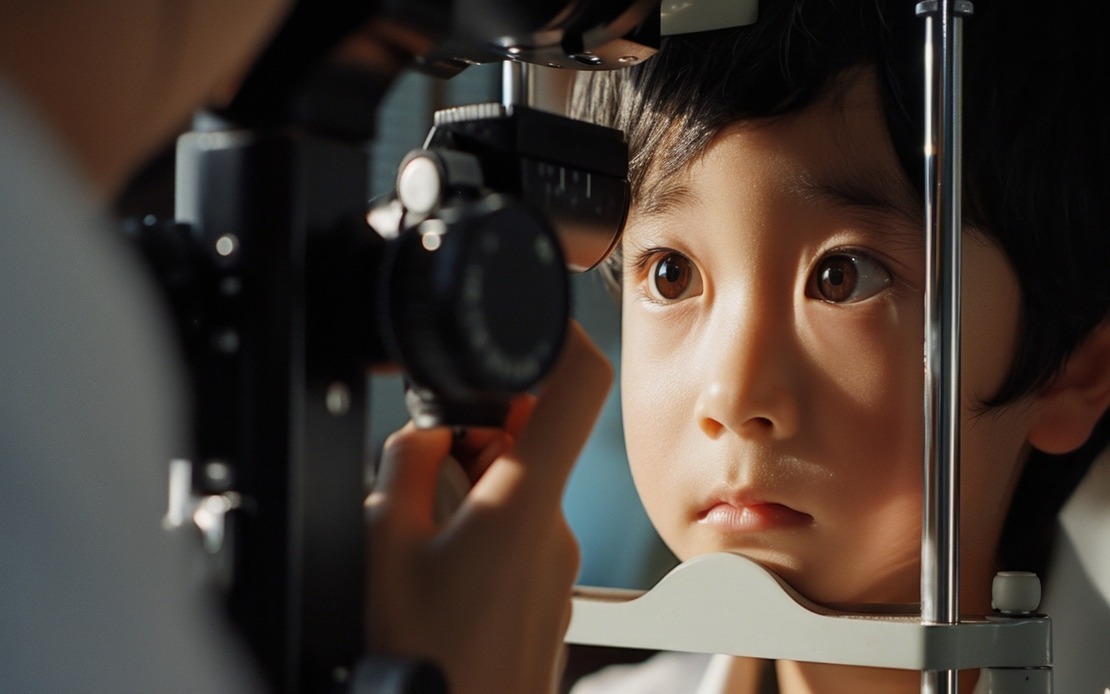
Early detection of eye problems represents one of the most effective yet underutilised strategies for maintaining vision health across Malaysia's population, according to Dr Fazilawati A Qamarruddin, a consultant ophthalmologist specialising in paediatric eye care at Sunway Medical Centre. Conditions such as squinting and cataracts routinely escape detection until they have already caused significant damage to a patient's sight, particularly when screening occurs late or not at all. The consequences of delayed intervention can prove devastating, affecting not only physical vision but also cognitive development, educational achievement, and social integration.
Squinting, medically termed strabismus, represents one of the most prevalent yet overlooked eye conditions affecting Malaysian children and adults. The disorder manifests when the eyes become misaligned, with one eye deviating from the direction of the other. This misalignment disrupts the coordinated visual input that the brain relies upon to construct a unified image of the world, subsequently impairing depth perception and the ability to judge spatial relationships accurately. Beyond the physical aspects of vision, the condition carries psychological ramifications, particularly for children whose peer relationships and self-confidence may suffer as a result of visible eye deviation.
The origins of squinting vary considerably across the population. In many cases, uncorrected refractive errors—such as myopia, hyperopia, or astigmatism—serve as the primary culprit, as the eyes strain to compensate for focusing difficulties. However, more serious underlying causes occasionally emerge, including nerve damage, neurological deficits resulting from trauma, or neoplastic growths within the brain or orbital structures. Adults experiencing sudden onset of squinting accompanied by double vision warrant immediate medical evaluation to exclude potentially serious pathologies such as brain tumours or orbital masses. The critical distinction between benign and serious causes underscores the importance of professional diagnosis rather than assumption that the problem represents merely a cosmetic concern.
Global epidemiological data suggests that between two and four per cent of children worldwide develop strabismus, a figure that translates into thousands of Malaysian children when applied to the domestic population. The seemingly modest percentage masks a substantial public health issue, as many affected children remain undetected throughout their critical developmental years. Educational performance frequently declines before detection occurs, as visual impairment undermines learning capacity. Similarly, social confidence erodes as children encounter peer commentary regarding their visible condition. Intervention during these years, before permanent damage accumulates, offers opportunities for successful treatment that later intervention cannot provide.
Untreated strabismus frequently progresses toward amblyopia, colloquially known as lazy eye, a condition representing one of the most significant preventable causes of monovision in childhood. The mechanism underlying amblyopia reflects the brain's adaptive response to conflicting visual input from misaligned eyes. Faced with double images, the brain progressively suppresses input from the weaker eye, eventually establishing a pattern of neural dominance favouring the stronger eye. Once this neural pathway becomes established, restoring vision to the weaker eye becomes progressively more difficult with advancing age, as the critical period for visual development closes. This cascade of events renders early detection and correction not merely beneficial but essential to preventing permanent unilateral visual loss.
Recommendations from eye care professionals call for vision assessment by age three, a critical juncture in visual development when interventions prove most effective, with subsequent screening before school commencement. Refractive errors—the most common eye problems encountered in Malaysian populations—respond readily to correction with prescription spectacles when identified sufficiently early. Parents should remain alert to warning signs including head tilting, frequent squinting, unusually close positioning to television screens, and complaints of headaches. Rather than awaiting school identification of visual problems, which risks valuable developmental time, parents should initiate comprehensive eye examination upon observing such indicators. The difference between simple spectacle correction and permanent visual impairment may hinge upon the timing of professional evaluation.
Cataracts, while typically associated with ageing and predominating among individuals over sixty years, increasingly appear in younger populations subject to particular risk factors. Diabetes mellitus accelerates cataract formation through metabolic disruptions affecting lens biochemistry. Smoking compounds this risk substantially. Excessive cumulative ultraviolet radiation exposure during outdoor activities contributes to lens opacity over decades. The symptoms patients experience—cloudy vision, glare sensitivity, diminished colour perception, and nocturnal driving difficulty—progressively impair independence and quality of life, yet many regard these changes as inevitable consequences of ageing rather than treatable medical conditions.
Modern surgical approaches to cataract management have evolved substantially from historical techniques, offering substantially improved outcomes and recovery profiles. Phacoemulsification employs ultrasonic energy to fragment the opacified lens through a comparatively small corneal incision, typically measuring three to four millimetres. This minimally invasive approach permits same-day surgical procedures with rapid visual rehabilitation. The majority of patients return to light activities within one week, with full visual recovery typically occurring within two weeks. Such marked improvement in surgical efficiency represents a paradigm shift from previous generations, when cataract surgery entailed larger incisions, hospitalisation, and extended recovery periods measured in months. Despite these advances, public awareness of modern cataract surgery's safety and effectiveness remains limited, with many individuals accepting preventable visual decline.
Screening protocols should adapt to age-related risk profiles across the population. Children require vision assessment before formal schooling commences, establishing baseline ocular health and identifying refractive errors early in the learning process. Adults should initiate regular eye examination from age forty, when presbyopia emerges and age-related conditions begin their initial manifestations. Individuals with diabetes warrant annual eye screening, as diabetic retinopathy can progress with alarming rapidity once established, yet responds favourably to early detection and treatment. This stratified approach acknowledges that different populations face distinct threats and require proportionately intensive monitoring.
Contemporary lifestyle patterns introduce novel threats to ocular health, particularly among younger demographics. Prolonged digital device usage, spanning hours daily in educational and recreational contexts, contributes to progressive short-sightedness, a phenomenon gaining recognition among public health researchers. The accommodation strain and reduced blink rate accompanying focused screen viewing create immediate eye discomfort and potentially influence long-term refractive development. Practitioners recommend the 20-20-20 rule—directing visual attention to objects approximately twenty feet distant for twenty-second intervals following each twenty-minute screen session—as a practical strategy for reducing accumulated eye strain. This simple intervention requires minimal behavioural modification yet offers meaningful protection against progressive myopia acceleration.
The overarching principle unifying eye care recommendations across age groups emphasises that prevention and early detection represent far more effective strategies than management of established impairment. Vision supports every dimension of human experience—educational achievement, occupational productivity, social engagement, and independence in daily living. Permitting preventable visual loss to develop through delayed screening constitutes a public health failure with cascading consequences across individual, family, and societal levels. Dr Fazilawati's advocacy for comprehensive screening reflects recognition that ocular health requires proactive engagement rather than passive acceptance of declining sight as an inevitable consequence of ageing or circumstance.

