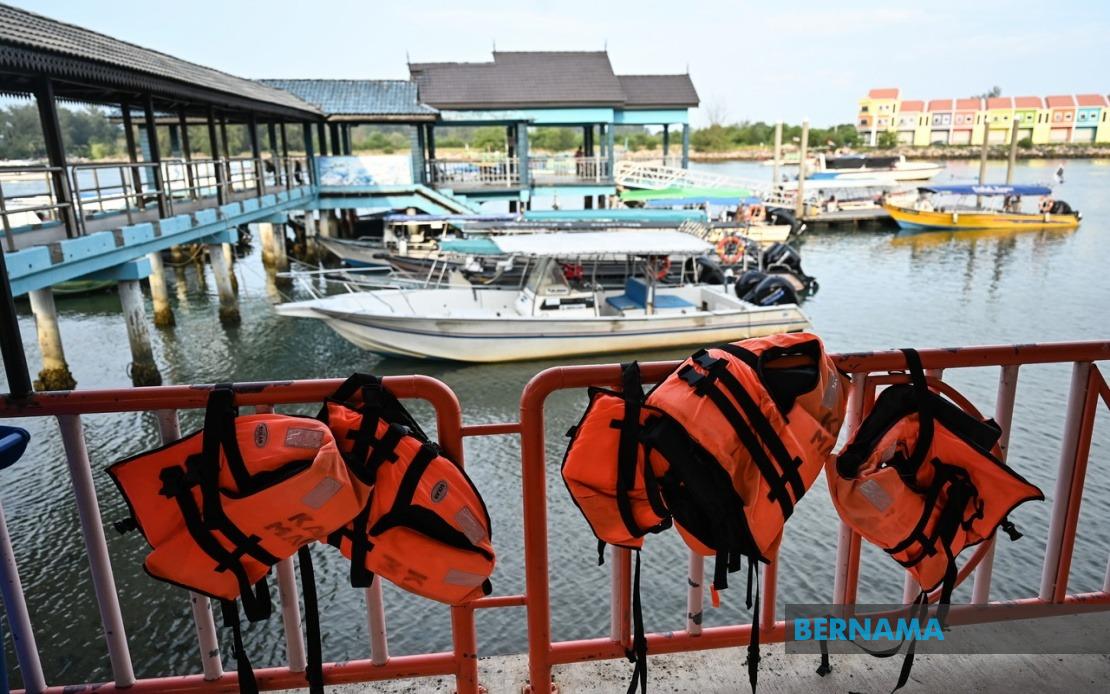
A maritime tragedy off the coast of Kuala Terengganu has reignited concerns about safety standards in recreational sea activities, with state officials now emphasizing that life jackets must remain on throughout every voyage, regardless of crew comfort or vessel conditions. The incident, which occurred approximately nine nautical miles from Dataran Kuala Nerus at around 9 pm, resulted in one fatality and three injuries among the twelve occupants aboard a squid jigging vessel.
Datuk Razali Idris, chairman of the Terengganu State Committee on Tourism, Culture, Environment and Climate Change, has outlined comprehensive safety recommendations designed to prevent similar accidents. His comments underscore growing recognition among maritime authorities that complacency during rest periods or calm conditions represents a critical vulnerability in current safety practices. The emphasis on continuous life jacket use reflects international maritime best practices, though enforcement remains challenging in sectors where commercial pressures may encourage cost-cutting or procedural shortcuts.
Razali's call for mandatory safety briefings before departure represents a practical measure that can be implemented immediately across all water-based activities. Such briefings should address specific hazards unique to each voyage, including actual sea conditions, expected weather patterns, trip duration, and proper life jacket positioning. The Terengganu official noted that tourist boat operators ferrying passengers to islands routinely conduct these presentations, establishing a proven model that squid jigging vessels could readily adopt. This standardization across maritime sectors would create consistency in safety culture and passenger expectations.
The deceased crew member, Ahmad Nasaruddin Mohmad Jalil, aged 37, was among those wearing a life jacket at the time of capsizing, yet remained unable to survive the incident. Three participants—Faris Ibrahim, 33, Ahmad Danial Iman, 24, and Fatin Fariesya Rohaizan, 26—sustained injuries, with two receiving outpatient treatment at Hospital Sultanah Nur Zahirah while a third continued under medical observation. The mixed outcomes despite life jacket usage suggest that equipment alone cannot guarantee safety; additional systemic improvements prove necessary.
Investigations into the capsizing have established that the vessel had been maintained in good working order and operated by an experienced skipper, yet water ingress into the engine compartment ultimately triggered the sinking. Razali reported that while sea conditions were rough, no storm was actively occurring at the time, indicating that even moderate weather can present unexpected hazards. This distinction carries significance for maritime policy, as it demonstrates that accidents need not result from extreme conditions or operator negligence alone; structural vulnerabilities or mechanical failure can emerge unpredictably during what operators might consider routine voyages.
Boat operators and skippers hold particular responsibility as gatekeepers of maritime safety, Razali emphasized, noting that these professionals possess superior knowledge of actual sea conditions and should exercise authority to postpone or cancel departures when conditions deteriorate. Most Terengganu squid jigging skippers operate responsibly and willingly provide refunds when safety concerns prevent departure, though financial pressure on operators and expectations from paying participants can create tension. Regulatory frameworks must therefore support skippers' authority to make safety-conscious decisions without fear of commercial penalty or customer disputes.
The Malaysia Marine Department maintains primary jurisdiction over boat licensing and operational approvals, including decisions to restrict vessels from departing during adverse weather. Razali acknowledged that the state government can only issue advisories, creating a potential enforcement gap where recommendations lack legal backing. This jurisdictional division, while operationally logical, requires seamless coordination between state authorities and the federal maritime regulator to ensure comprehensive safety oversight across all commercial sea activities.
Regarding squid jigging specifically, Razali stated that the Terengganu government views existing standard operating procedures as sufficient, seeing no immediate need for comprehensive revision. This position reflects confidence in current frameworks but may warrant reconsideration given recurring maritime incidents in the sector. A targeted review examining life jacket deployment practices, crew training standards, vessel maintenance protocols, and passenger briefing effectiveness could identify incremental improvements without requiring wholesale regulatory overhaul. Regional comparison with neighboring states' squid jigging operations might reveal best practices worth adopting.
The squid jigging industry represents a significant economic activity throughout Malaysia's coastal regions, employing hundreds of skippers, crew members, and guides while providing income supplementation for fishing communities. Safety improvements must therefore balance risk reduction against operational feasibility and economic viability for participating communities. Equipment mandates prove straightforward to implement, while procedural enhancements like mandatory briefings require minimal investment beyond operator training and passenger time allocation. Cultural shifts toward safety prioritization, however, require sustained commitment from regulators, industry participants, and the public seeking these experiences.
For Malaysian tourists and recreational participants considering squid jigging or similar maritime adventures, this incident underscores the importance of verifying safety practices before embarking. Inquiring whether operators conduct pre-departure briefings, maintain current life jackets for all passengers, and display proper licensing provides tangible means of assessing vessel safety. Participants should also resist pressure to proceed if skippers express reservations about weather conditions or sea state, recognizing that cancellations serve protective rather than obstructive functions. Regional tourism operators increasingly recognize that safety reputation directly affects customer confidence and repeat business.
Southeast Asian maritime industries broadly face challenges in implementing and maintaining consistent safety standards across commercial and recreational sectors. Economic pressures, limited regulatory resources, and cultural factors sometimes create environments where safety protocols receive secondary consideration. Terengganu's response to this incident, emphasizing practical measures like continuous life jacket use and mandatory safety briefings, offers a replicable model for neighboring states and countries addressing comparable concerns. Sustained implementation requires regulatory reinforcement, operator compliance, and passenger education initiatives working in concert.
The investigation into the capsizing continues under authorities' direction, potentially revealing additional factors contributing to the incident. Authorities have confirmed that Kuala Terengganu police chief ACP Azli Mohd Noor oversaw initial response efforts, coordinating rescue operations that ultimately retrieved all twelve vessel occupants despite the sinking. This successful rescue outcome, contrasted against the fatality and injuries sustained, highlights both the effectiveness of existing emergency response systems and the critical importance of preventive safety measures that eliminate the need for rescue interventions altogether.
Looking forward, Terengganu's maritime sector and state policymakers must balance regulatory prescriptions with industry stakeholder engagement, ensuring that safety improvements gain genuine acceptance rather than grudging compliance. Investing in skipper training programs, conducting public awareness campaigns highlighting life jacket importance, and establishing clear consequences for safety violations create comprehensive frameworks addressing behavioral, technical, and enforcement dimensions simultaneously. The maritime tragedies occurring across Southeast Asia serve as recurring reminders that safety excellence requires continuous commitment rather than one-time interventions.

