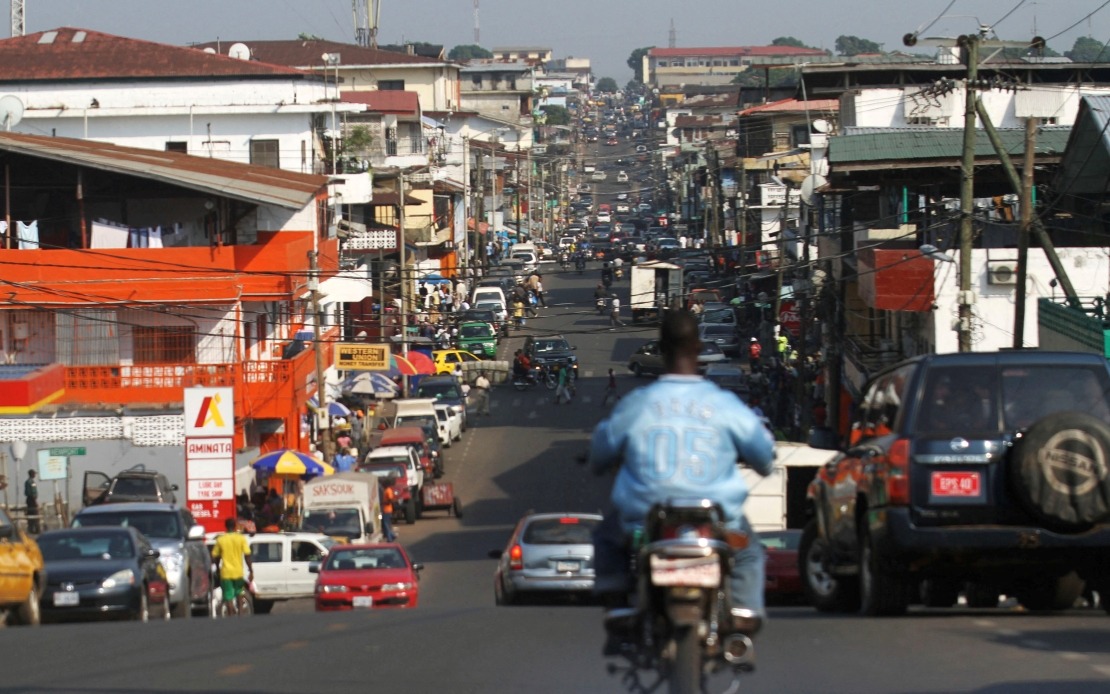
Liberia is poised to welcome its opening shipment of deportees from the United States this week, marking the beginning of a substantial population transfer programme negotiated between Washington and Monrovia. The initial cohort of 20 individuals, drawn from a total commitment of 1,200 third-country nationals, is scheduled to arrive at Roberts International Airport in the Liberian capital on Thursday, where they will be greeted by representatives from the government, according to an official statement released on Tuesday.
The broader deportation framework, which took shape following discussions completed last year, represents a strategic approach by the US administration to manage migration pressures by distributing deportees across willing partner nations in Africa and the Caribbean region. The individuals slated for transfer encompass citizens of various African nations as well as countries throughout the Western Hemisphere, with each deportee having received medical clearance for international travel. A portion of these relocated individuals have expressed interest in pursuing asylum claims within their new host nations.
Liberia's participation in this programme sits within the country's established identity as a destination for displaced persons and those escaping violence or political turmoil. The West African nation has historically maintained an open stance toward refugee populations, a tradition rooted in its unique founding history. In its official characterisation, Liberia has framed its willingness to accept these deportees as a purely humanitarian undertaking, emphasising that the decision was made on grounds of compassion rather than geopolitical calculation or material incentive.
Government officials in Monrovia have taken pains to clarify that the nation receives no financial compensation or explicit rewards for accepting the deportees. Instead, Liberia's benefit from the arrangement centres on capacity-building assistance aimed at enhancing the country's migration management infrastructure. The US has pledged to provide technical and material support to strengthen Liberia's ability to process, accommodate, and integrate the incoming population, thereby improving the broader governance of migration flows within the country.
The agreement encountered uneven acceptance across the African continent when it was first proposed. Nigeria, Africa's most populous nation, declined to participate, reflecting broader concerns about how such programmes might be perceived domestically or the administrative burdens they could impose. However, seven nations ultimately signalled their willingness to cooperate, demonstrating that strategic partnerships on migration remain possible despite the contentious nature of deportation policies. Ghana, Sierra Leone, Cameroon, the Democratic Republic of the Congo, the Central African Republic, Equatorial Guinea, and Liberia collectively agreed to receive portions of the deportee population.
For Malaysia and other Southeast Asian nations monitoring international migration trends, Liberia's role in this arrangement offers instructive lessons about how developing countries navigate pressures from wealthier nations seeking to externalize their deportation burdens. The decision by some African states to participate, while others refused, underscores the fact that negotiations over responsibility-sharing in migration are increasingly complex and reflect specific national circumstances. Southeast Asian countries, which face their own substantial irregular migration challenges and frequently host significant displaced populations, may view these developments with particular attention.
The staggered arrival of deportees—beginning with this initial batch of 20—suggests that both the US and Liberia anticipate a phased implementation rather than sudden mass transfer. This measured approach allows Liberia time to establish reception procedures, conduct initial interviews regarding asylum eligibility, and begin coordinating longer-term integration or onward placement. Such phasing is essential for countries with limited resources, as it prevents overwhelming existing government and humanitarian infrastructure.
The humanitarian framing employed by Liberia's government merits examination within the context of contemporary global migration debates. While some observers view third-country deportation agreements as practical mechanisms for burden-sharing, others criticise them as devices through which wealthy nations evade direct responsibility for adjudicating asylum claims. Liberia's emphasis on its humanitarian tradition appears designed to position the country as acting from principle rather than necessity, though the provision of US support for migration systems suggests mutual strategic interest undergirds the arrangement.
For people slated for deportation from the United States who originate in countries other than America, such arrangements represent a complex outcome. These individuals, who have been apprehended on US soil or at borders, face deportation but may ultimately find themselves in nations offering pathways to asylum or permanent residence that might not exist in their countries of citizenship. The medical screening requirement suggests that individuals seriously ill or incapacitated are not part of the transfer, addressing potential humanitarian criticisms.
The programme's long-term success will likely depend on how effectively Liberia integrates the incoming population and whether employment, education, and social services can accommodate the newcomers without creating tension with existing residents. Regional observers will be watching whether the initial batch of 20 establishes a successful model that facilitates smoother processing of subsequent cohorts, or whether complications emerge that complicate the full implementation of the 1,200-person commitment.
As global migration patterns intensify and pressure on traditional destination countries increases, arrangements like the one between the United States and Liberia may become more common. However, they also highlight the asymmetrical power dynamics inherent in migration governance, where nations with capacity to enforce deportations effectively shift responsibility onto less wealthy partners. Liberia's decision to participate, framed around humanitarian values rather than compensation, represents one response to these pressures, though whether such approaches prove sustainable for the receiving countries remains an open question.

