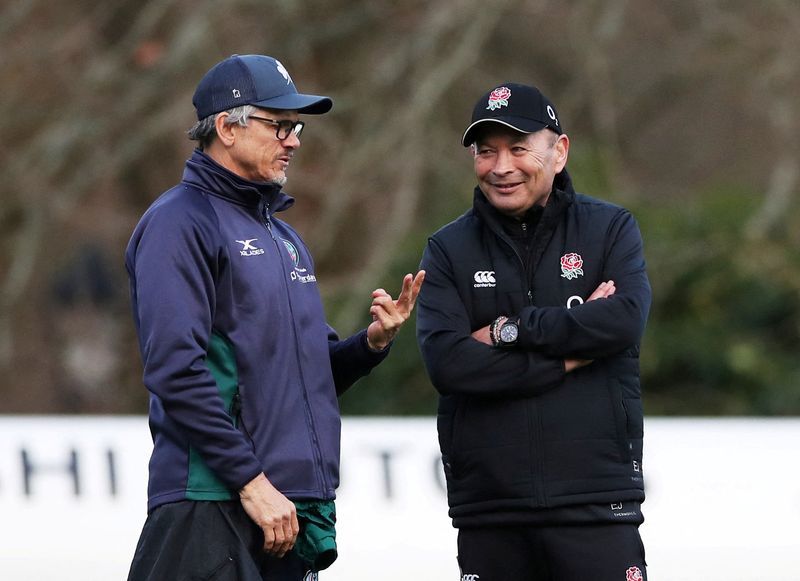
Les Kiss has signalled a willingness to overturn Australia's established player recruitment boundaries as he settles into his role as Wallabies head coach, indicating that the national rugby union side will cast a wider net in pursuit of talent ahead of the World Cup. Speaking at his inaugural press conference in Sydney, the 61-year-old coach made clear that geographical location would not constrain his selection decisions if overseas-based athletes could provide the competitive advantage Australia desperately needs. This represents a notable shift from the conservative stance adopted by his predecessor Joe Schmidt, who rarely exercised the discretionary powers available to him under Rugby Australia policy when considering players operating outside the domestic competition.
Kiss's inaugural squad announcement for next month's two-test engagement against Japan, coached by Eddie Jones, largely maintained continuity with Schmidt's selections, retaining most fit players who featured during the recent Nations Championship campaign. However, the new coach's public statements suggest this cautious start masks a more flexible underlying philosophy. The incoming Wallabies mentor revealed he has already held preliminary discussions with several international-based athletes, including outside back and centre Jordan Petaia, who currently recovers from injury while based in Japan. These proactive outreach efforts underscore Kiss's determination to explore every avenue for squad improvement rather than remain bound by convention or institutional policy.
Ragby Australia's formal regulations restrict Wallabies selectors from freely accessing overseas-based players, a constraint designed to encourage talented athletes to remain in the domestic Super Rugby competition and strengthen the local professional ecosystem. Schmidt honoured this framework throughout his two-year tenure, deploying his discretionary picks sparingly and maintaining a predominantly domestically-focused squad. Kiss's more expansive interpretation of these restrictions reflects a pragmatic acknowledgement that Australia's recent performance trajectory—the side has lost nine of its last eleven matches and currently occupies eighth position in world rankings—demands comprehensive examination of all available options. The coach's willingness to challenge institutional norms suggests he has secured sufficient organizational backing to pursue this approach.
The Wallabies' strategic identity traditionally emphasises ball-in-hand attacking rugby and creative expansive play, a philosophy that delivered World Cup success during the 1990s but has struggled to deliver consistent victories in recent decades despite periodic tactical refinement. Kiss stressed that he intends to restore emphasis on authentically Australian playing principles, advocating for a team identity centred on innovation and competitive intensity. "I think there is an Aussie spirit that comes through in our game," he observed, acknowledging that contemporary Australia sides have often departed from foundational strengths. The coach's framing suggests he views tactical authenticity and cultural identity as integral to performance restoration, rather than pursuing foreign coaching methodologies or contradictory strategic approaches.
The immediate focus of Kiss's tenure will involve integrating young talent with proven performers while evaluating high-profile recent acquisitions. Joseph Suaalii represents the most visible symbol of Rugby Australia's investment in youth potential, the 22-year-old centre having been recruited from the National Rugby League at significant financial investment reported at A$5 million. Suaalii's transition to rugby union remains incomplete; whilst his early performances during last year's Northern Hemisphere tour generated considerable excitement, subsequent appearances in the gold jersey have demonstrated only inconsistent brilliance. Considerable speculation surrounds his optimal playing position, with debate persisting over whether he functions more effectively at fullback or in midfield roles. Kiss has indicated he will maintain Schmidt's approach of deploying Suaalii at outside centre despite acknowledging the player's demonstrated capacity to perform adequately at fullback.
Australia's recent Nations Championship performance offered limited encouragement despite opportunities to face established opponents at home. The Wallabies suffered a narrow defeat to Ireland, experienced a comprehensive loss against France, and secured only a victory over a visibly fatigued Italian side. These results underscore the scale of the reconstruction task confronting Kiss, who inherits a squad requiring substantial development before confronting World Cup pressures. The coach's initial selections suggest he recognizes the need to balance continuity with measured experimentation, maintaining faith in existing performers whilst signalling openness to disruptive changes if circumstances warrant.
The policy framework governing overseas selection represents a continuing tension within Australian rugby administration. Defenders of current restrictions contend that domestic competition strength depends upon retaining world-class talent within Super Rugby franchises, arguing that unrestricted overseas recruitment would inevitably weaken the local professional ecosystem. Conversely, critics maintain that artificial restrictions disadvantage the national team relative to competing nations without comparable limitations, placing Australian performers at a competitive disadvantage when selection decisions are made. Kiss's pragmatic stance suggests he intends to navigate this tension by selectively deploying overseas options when genuine competitive advantage exists rather than systematically bypassing domestic talent.
For Malaysian and Southeast Asian rugby observers, Australia's squad composition decisions carry broader regional significance. The Wallabies remain the established standard-bearer for Southern Hemisphere rugby excellence and serve as competitive reference points for developing regional programmes. Australia's strategic approach to player availability and selection philosophy influences how neighbouring nations conceptualize their own talent development frameworks. Furthermore, the Asia-Pacific region hosts increasing numbers of professional rugby players, some of whom previously represented or might potentially represent test nations. Kiss's willingness to engage seriously with overseas-based athletes acknowledges this emerging geographical reality.
Kiss's opening weeks will establish the practical boundaries of his selection flexibility and test whether organizational support for overseas recruitment genuinely exists or remains rhetorical. The Japan test series provides opportunity to evaluate squad depth and individual player development without exposing the side to maximum competitive pressure. Performance against Jones's Japanese team will offer preliminary evidence regarding whether Kiss's philosophical orientation translates into practical improvement or represents merely cosmetic adjustment to established patterns. The coach's initial squad choices emphasize continuity, yet his public statements establish clear parameters for potential evolution as his tenure develops.

