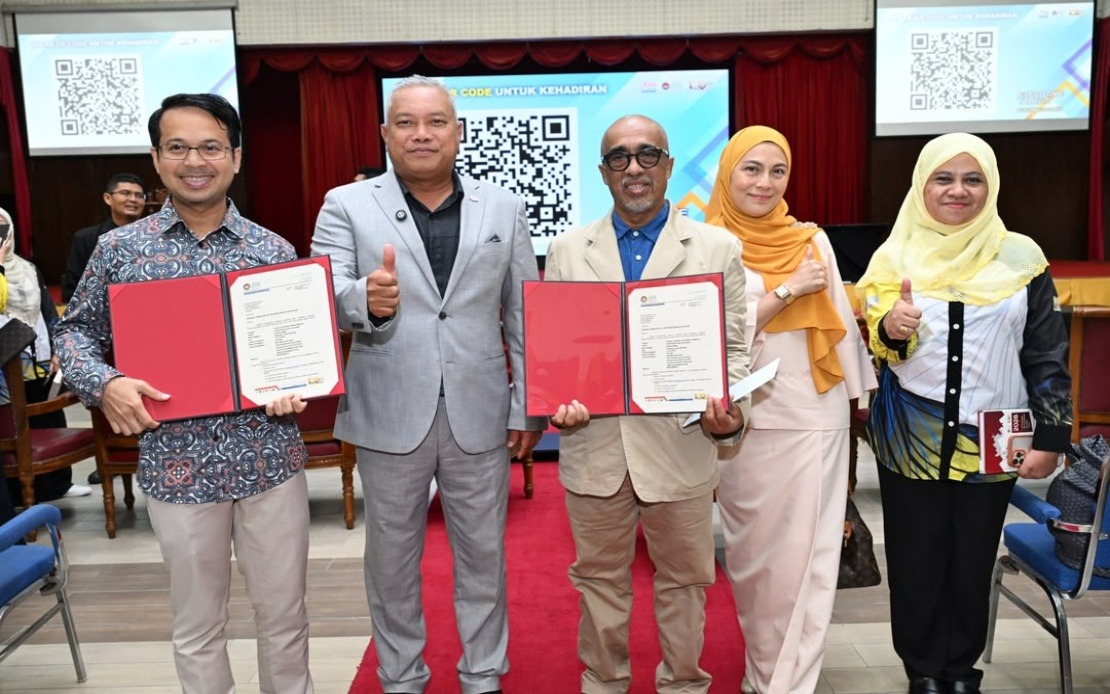
Two prominent Malaysian figures—veteran actor and director Mohd Sabri Yunus and television personality Ahmad Fedtri Yahya—have been admitted to postgraduate studies at Universiti Pendidikan Sultan Idris (UPSI) in Perak, marking a significant moment in the institution's efforts to recognise prior learning and life experience as legitimate pathways to higher education. Both will pursue Master of Education degrees through the Accreditation of Prior Experiential Learning for Award of Qualifications (APEL.Q) programme, a mechanism increasingly important for working professionals and established figures seeking to formalise their expertise through academic credentials.
At 65 years old, Mohd Sabri's enrolment in the Master of Education (Malay Literature) programme culminates a decades-long aspiration to return to formal tertiary education. His journey reflects the experience of many Malaysians from older generations who prioritised employment stability over university credentials, a common pattern during the nation's earlier decades of development. The actor previously attempted to pursue university studies twice during his tenure at Dewan Bahasa dan Pustaka (DBP) beginning in 1982, when he worked as an illustrator, but career obligations made this impossible at the time.
Mohd Sabri's willingness to revisit his educational aspirations after four decades underscores a growing recognition among Malaysian professionals that continuous learning need not follow conventional timelines. His perspective on knowledge acquisition—viewing every person encountered as a potential teacher—aligns philosophically with experiential learning frameworks. Through his UPSI research, he intends to focus on specific aspects of pantun, the traditional Malay verse form, bringing his decades of cultural engagement into rigorous academic investigation.
Ahmad Fedtri Yahya, 45, brings a different trajectory as a media professional and contemporary public figure. His selection for the Master of Education (Malay Language) programme reflects the growing concern among Malaysian educators and cultural advocates about linguistic preservation amidst technological disruption. Fedtri's stated rationale—that language use directly reflects societal civilisation and knowledge levels—positions his research within broader debates about cultural maintenance in Southeast Asia, where rapid digitalisation and English dominance have pressured vernacular languages.
The two will serve as pioneer cohort members for these newly developed postgraduate programmes within UPSI's Faculty of Languages and Communication. This pioneering status carries symbolic weight beyond their personal achievements; their visibility as established public figures pursuing formal credentials may normalise and encourage other accomplished professionals to seek advanced qualifications, particularly within cultural and educational fields where practical experience often exceeds formal certification. For Malaysian society, where celebrity endorsement influences public perception, their participation lends credibility to lifelong learning principles and alternative educational pathways.
Fedtri's emphasis on younger Malaysians' evolving communication patterns—specifically the influence of social media and digital technology on language use—addresses a genuine pedagogical challenge facing Malaysian educators. As a teacher-training institution preparing approximately 25,000 future educators, UPSI benefits from having practitioners actively researching contemporary language issues. Fedtri's platform as a television personality means his academic findings could reach audiences beyond traditional academic circles, potentially influencing public discourse about language preservation.
UPSI's vice-chancellor, Professor Datuk Dr Md Amin Md Taff, framed the recruitment of these figures as strategically beneficial for the institution's broader mission of cultural and national identity-building. He emphasised that their presence would facilitate knowledge-sharing across the UPSI community, particularly with the substantial student body who will eventually influence Malaysian educational practices and youth development. This perspective treats the two celebrities not merely as individual beneficiaries of APEL.Q but as cultural ambassadors who can model engagement with traditional Malaysian arts and language within an institutional context.
The APEL.Q pathway itself represents institutional innovation within Malaysian higher education. Traditional university entry typically privileges formal qualifications and sequential academic progression, potentially excluding accomplished professionals whose expertise developed through practice rather than coursework. By recognising prior experiential learning, UPSI acknowledges that significant knowledge and competency exist outside credential systems. For Malaysia, where many skilled practitioners lack formal qualifications despite substantial real-world expertise, such mechanisms could eventually broaden access to postgraduate studies and research opportunities.
Cultural preservation emerges as a connecting thread between both candidates' research interests. Mohd Sabri's focus on Malay poetry and Fedtri's concern about linguistic erosion address complementary aspects of how traditional Malaysian cultural forms survive and adapt in contemporary contexts. Their simultaneous pursuit of Master's degrees in these areas suggests UPSI anticipated demand among culturally-engaged professionals to formalise their expertise, particularly as global forces increasingly threaten regional linguistic and literary traditions.
For Malaysian readers, the development has implications beyond individual achievement narratives. It signals that postgraduate education increasingly accommodates non-traditional students with substantial professional credentials. The APEL.Q pathway potentially opens opportunities for accomplished journalists, artists, entrepreneurs, and practitioners across sectors to pursue further qualifications without abandoning established careers. This flexibility aligns with regional and global trends toward flexible, lifelong learning frameworks responsive to rapidly changing labour markets and knowledge demands.
The institutional visibility surrounding their enrolment—including their participation in campus events and media coverage—also reflects strategic university marketing. UPSI's focus on these high-profile candidates highlights its commitment to language and cultural studies precisely when these fields face resource constraints at many Malaysian institutions. By positioning itself as welcoming experienced practitioners pursuing advanced credentials in Malay studies, UPSI reinforces its distinctive institutional identity within Malaysian higher education.
Their presence may also prompt broader reflection about how Malaysian society values different forms of expertise. A 65-year-old actor seeking formal credentials in a field related to his lifetime work acknowledges that practical mastery and academic qualification serve different purposes and audiences. For Sabri and Fedtri, Master's degrees will formalise their knowledge within systems that influence teacher training, curriculum development, and official recognition of expertise—domains where academic credentials carry particular weight in Malaysia's education system.
Looking forward, the trajectories of these two pioneering APEL.Q students will likely influence perceptions of alternative educational pathways among other established professionals in Malaysia. Whether their research produces significant contributions to Malay literary and linguistic scholarship, and whether they complete their programmes successfully, will shape institutional credibility for the APEL.Q mechanism and potentially influence uptake among other qualified candidates seeking to formalise their expertise within formal academic structures.

