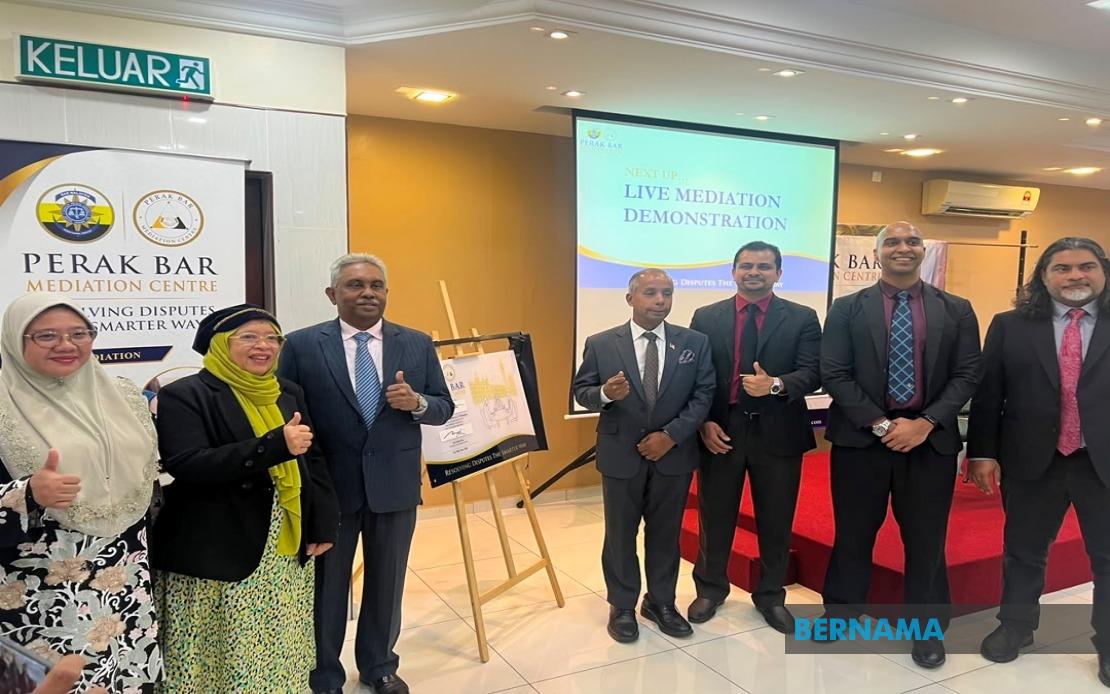
One hundred and fifty-eight pro bono mediators have signed up for the Asian International Arbitration Centre's free commercial mediation initiative, signalling robust backing from Malaysia's legal community for a government-backed effort to democratise access to justice. Deputy Minister M. Kulasegaran, who oversees law and institutional reform in the Prime Minister's Department, disclosed the uptake figure during his remarks at the Perak Bar Mediation Centre launch in Ipoh on Thursday, underscoring how the legal profession is rallying behind the MADANI Mediation Centre framework introduced in May.
The AIAC Pro Bono Commercial Mediation Initiative targets a significant gap in Malaysia's dispute resolution landscape by providing entirely free mediation services across more than two dozen categories of commercial disagreement where claims fall below RM250,000. This threshold encompasses a substantial portion of small and medium-sized business disputes that would otherwise require costly litigation. The programme's scope reflects a recognition that many Malaysians and local businesses face genuine barriers when considering formal court proceedings, effectively locking lower-value disputes into prolonged and expensive legal processes.
Since the initiative went live in May, the AIAC has begun processing cases with tangible momentum. Approximately ten dispute cases have been formally registered and are currently moving through mediation channels, suggesting the framework is resonating with business owners and individuals genuinely seeking faster resolution paths. This early adoption rate, though modest, provides a foundation for scaling operations if awareness and stakeholder confidence continue building. Kulasegaran indicated he plans to instruct AIAC officials to coordinate directly with the Malaysian Bar Council to amplify promotional efforts and deepen partnerships that could extend the initiative's reach into communities and small business networks currently unaware of the service.
The deputy minister's framing of mediation as a superior alternative to courtroom litigation carries particular weight given his own legal background. He articulated how traditional civil disputes are often mired in protracted appeals and procedural delays, with cases he personally managed consuming ten to fifteen years before final resolution. Mediation offers a fundamentally different resolution model where both parties work collaboratively toward mutually acceptable outcomes rather than adversarial winner-take-all verdicts. This approach delivers tangible time savings—disputes can potentially settle within months rather than years—and reduces the emotional and financial toll on litigants, particularly critical for cash-strapped small businesses operating on thin margins.
The composition of attendees at the Perak centre opening underscores the institutional weight behind this initiative. Malaysian Bar president Anand Raj, along with vice-president and Malaysian International Mediation Centre chairperson Murshidah Mustafa, lent their presence alongside government officials and provincial bar leaders. This constellation of legal establishment figures signals that mediation is transitioning from a niche practice into mainstream dispute resolution doctrine within Malaysia's legal circles. The deliberate establishment of a dedicated Perak Bar Mediation Centre in Ipoh also demonstrates commitment to geographic decentralisation, ensuring that states beyond Kuala Lumpur can access professional mediation infrastructure.
For Malaysian businesses and entrepreneurs, particularly those operating at small and medium scale, this initiative addresses a genuine pain point in commercial dispute handling. Many businesses have avoided formal dispute resolution entirely because litigation costs exceed the value being disputed, leaving contractual breaches and commercial disagreements festering unresolved. The free mediation option removes this economic barrier and provides a structured yet flexible pathway to settlement. Companies can preserve business relationships by working through mediators rather than antagonising partners through court action, preserving social capital and future commercial possibilities.
The government's commitment to strengthening the pro bono framework through Bar Council engagement signals that policymakers recognise mediation's potential as part of broader judicial efficiency reforms. Malaysia's courts face persistent backlog challenges, with cases queuing for years before trial dates are assigned. Every dispute successfully resolved through mediation theoretically reduces pressure on the judicial system, freeing court resources for complex litigation requiring adjudication. From a systemic perspective, embedding mediation culture into commercial practice serves as a pressure relief valve for an overburdened court infrastructure.
Kulasegaran's acknowledgement that he will personally oversee expansion coordination between government entities and the legal profession suggests political prioritisation at a senior level. This hands-on ministerial engagement, while it may seem procedural in description, often determines whether initiatives gain sustained institutional momentum or stall through bureaucratic inertia. His directive to AIAC and the Bar Council to develop joint promotional strategies and outreach campaigns indicates that increasing volunteer mediator recruitment remains an active priority, with targets for future registration numbers likely driving performance metrics.
The initiative also reflects evolving regional thinking about alternative dispute resolution across Southeast Asia. Neighbouring jurisdictions including Singapore and Thailand have developed robust mediation ecosystems that now handle significant case volumes, reducing litigation pressure while improving access to justice metrics. Malaysia's embrace of pro bono mediation aligns with this regional trajectory, positioning the country as competitive within ASEAN frameworks for commercial dispute resolution infrastructure.
However, the initiative's success ultimately depends on sustained awareness-building and trust-development among Malaysia's business community and individual disputants. Ten cases in the opening months, while encouraging, represents minimal market penetration. Small businesses and individual entrepreneurs must be convinced that mediation genuinely offers faster, more affordable and more preserving outcomes than court proceedings. This requires targeted outreach beyond legal professional circles into chambers of commerce, industry associations and small business networks. The Bar Council's engagement, if properly resourced, could unlock access to these constituencies.
Looking forward, the metrics that will determine this initiative's trajectory include case volume trends, settlement success rates, and user satisfaction feedback from parties who have engaged mediation services. If the AIAC can demonstrate that most cases settle within reasonable timeframes at minimal cost, organic growth through word-of-mouth recommendations should accelerate mediator recruitment and case referrals. Conversely, if cases stall or settlement rates prove disappointing, confidence could erode quickly. Kulasegaran's prominence in championing the framework suggests the government will monitor outcomes closely.

