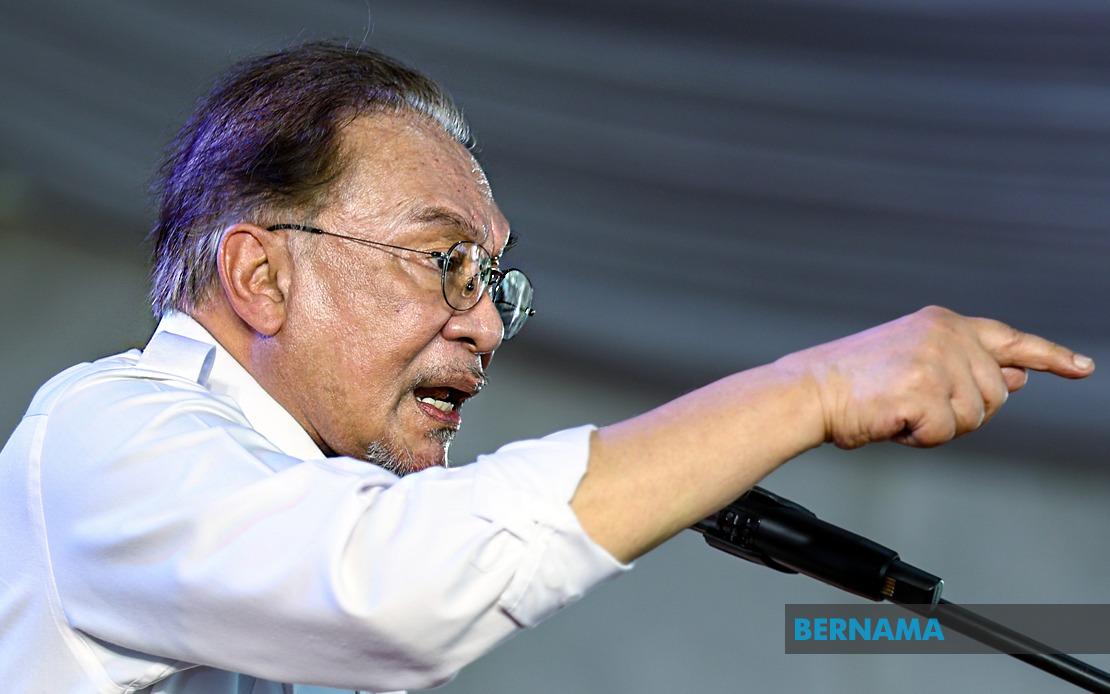
Prime Minister Datuk Seri Anwar Ibrahim has urged political leaders across federal, state and local governments to maintain open and equitable engagement with all communities, underscoring that such an approach is fundamental to maintaining Malaysia's social cohesion and institutional resilience. Speaking during a community leaders gathering in Johor Bahru on July 4, Anwar acknowledged that while the MADANI Government has implemented policy reforms at the national level, meaningful translation of these commitments into practical outcomes at the state and municipal tiers remains an ongoing challenge that requires sustained attention and institutional discipline.
The Prime Minister articulated a nuanced vision of administrative fairness that extends beyond merely approving every petition or application submitted by citizens. Instead, he emphasized that governance excellence demands creating genuine space for diverse voices to articulate concerns, present substantive arguments, and experience decision-making processes that demonstrably uphold both procedural transparency and substantive equity. This framing reflects growing recognition within Malaysia's political establishment that perceptions of unfair treatment—regardless of whether they reflect objective reality—can erode public trust and exacerbate existing social divisions in a multiethnic democracy.
Anwar's emphasis on state and local government accountability addresses a critical governance gap in Malaysia's federal system. While national-level policies may articulate progressive principles, their implementation frequently encounters resistance, selective interpretation, or outright obstruction at subnational levels where different political coalitions hold sway. The Prime Minister's implicit acknowledgment that the MADANI Government cannot unilaterally impose compliance suggests recognition of the constitutional autonomy enjoyed by state governments, creating a coordination challenge that demands political persuasion rather than administrative coercion.
The Prime Minister departed from conventional development discourse by arguing that Malaysia's progress cannot be reduced to purely economic metrics. While economic growth remains important, Anwar contended that the nation's true measure of advancement encompasses its capacity to nurture unity, foster compassion, and cultivate mutual respect across its ethnically and religiously diverse population. This perspective carries particular significance in a region where rapid economic transformation has sometimes exacerbated social fragmentation and communal tensions rather than alleviating them.
Anwar highlighted the geographic broadening of Malaysia's economic expansion as evidence of inclusive development, pointing to the emergence of investment opportunities in traditionally marginalized states including Negeri Sembilan, Melaka, and Johor through the Johor-Singapore Special Economic Zone (JS-SEZ), alongside parallel development initiatives in Sabah and Sarawak. This geographic diversification potentially addresses longstanding regional disparities that have historically fueled inter-state resentment and contributed to perceptions of unfair resource distribution, though questions remain regarding whether these initiatives will generate meaningful employment and wealth creation for local populations or primarily benefit established corporate entities.
The Prime Minister articulated a distinctive position on technological advancement and economic modernization, contending that Malaysia's engagement with artificial intelligence, digital transformation, and renewable energy transitions must remain grounded in moral frameworks, cultural sensitivity, and religious principles. This stance reflects the political reality that Malaysia's diverse constituencies—encompassing Muslim-majority populations alongside significant Christian, Buddhist, Hindu and other faith communities—require assurances that modernization will not erode cultural or religious values. The caveat carries particular weight given ongoing public anxieties about technological disruption and Western cultural influence in Southeast Asia.
Anwar expressed explicit concern regarding the persistent invocation of racial and religious narratives that have become increasingly prominent in Malaysian political discourse, characterizing such appeals as fundamentally corrosive to national cohesion. Rather than attributing these divisive narratives solely to malicious intent, he implicitly recognized their appeal to constituencies experiencing economic anxiety or cultural displacement, suggesting that addressing their underlying causes requires more than rhetorical condemnation.
The Prime Minister assigned religious leaders a more expansive responsibility than conventional secular governance frameworks typically envision, calling upon faith communities to champion compassion, justice, and interfaith understanding within their respective constituencies. This positioning reflects Malaysia's hybrid governance model in which religious institutions and leaders exercise significant social influence, particularly within Muslim communities where Islamic councils and scholars enjoy quasi-governmental status. By enlisting religious authority in service of national unity, Anwar adopted a strategy that acknowledges rather than confronts the religious dimensions of Malaysian political identity.
Anwar stressed that government leaders bear responsibility for ensuring information accuracy and systematically rejecting narratives that instrumentalize race and religion for narrow political advantage. This framing places administrative accountability squarely on state institutions rather than attributing the problem to civil society actors or opposition movements, implying that the government itself must model the fairness and transparency it demands from others. The implicit acknowledgment that divisive narratives sometimes originate from or receive tacit support from state actors introduces an element of self-criticism often absent from official government communications.
The Prime Minister grounded his appeal for unity in the aspirational universalism of everyday concerns—access to quality education, healthcare for family members, reliable infrastructure, and the constitutional freedom to practice one's faith. This rhetorical strategy deliberately strips away the competing ideological frameworks that characterize Malaysian political debate, instead invoking the shared material interests and fundamental freedoms that ostensibly transcend communal divisions. By anchoring his argument in constitutional provisions established during Malaysia's founding era, Anwar implicitly contended that pluralism and inter-communal fairness represent not novel demands imposed by contemporary activists but foundational commitments embedded in the nation's founding compact.
The attendance of Deputy National Unity Minister R Yuneswaran at the event underscored the government's institutional commitment to the unity agenda, though the minister's limited role in the proceedings suggests that Anwar retains primary ownership of the unity portfolio. The Prime Minister's direct engagement with Johor community leaders also carried strategic significance given the state's economic importance, its role as a gateway to Singapore, and the complex multiethnic composition of its populations, which includes significant migrant worker communities alongside established indigenous populations.
Anwar's message reflects an evolving approach to Malaysia's unity challenge that moves beyond the top-down imposition of consensus toward a more participatory model emphasizing inclusive governance processes. Whether state and local leaders will embrace this framework or continue prioritizing narrow factional interests remains uncertain, particularly in states governed by opposition coalitions with limited incentive to cooperate with federal initiatives. The ultimate test of whether fair engagement becomes normalized across Malaysia's governance structures will emerge through observable changes in administrative practice rather than rhetorical commitment.

