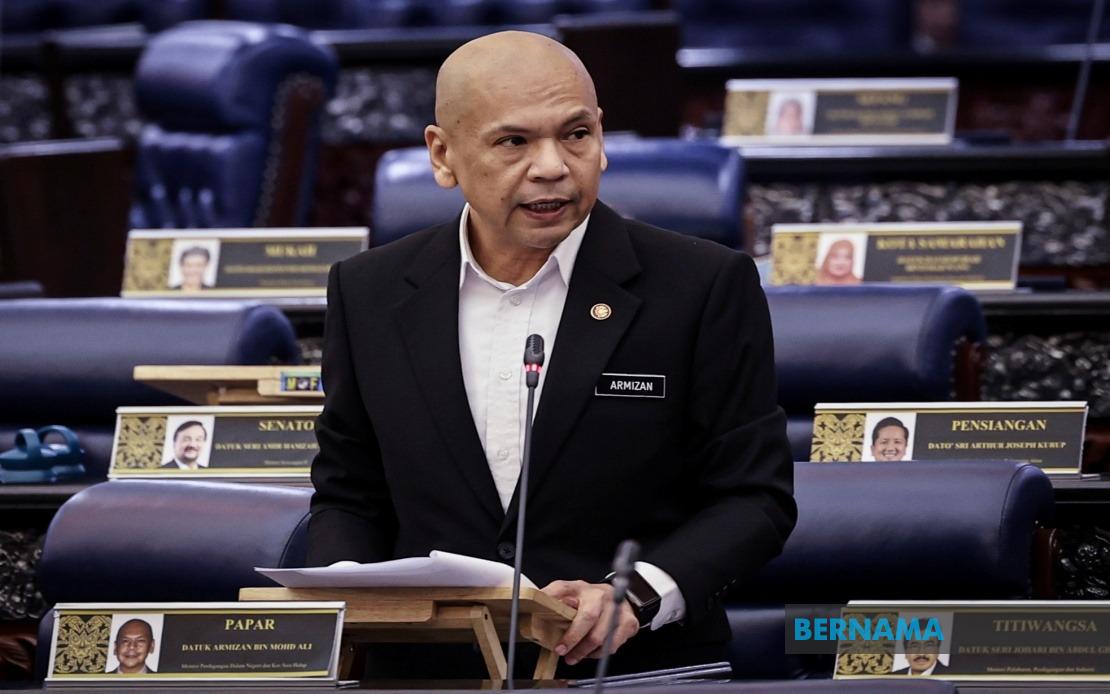
The Royal Commission of Inquiry report into Tabung Haji's operations has prompted urgent calls from lawmakers for a rigorous, transparent investigation into the pilgrimage fund's management failures between 2014 and 2020. During a special parliamentary sitting dedicated to examining the RCI findings made public on 29 July, members across the chamber emphasised that any subsequent probe must prioritise both procedural integrity and substantive justice for the millions of Malaysians who entrust their savings to the institution.
Minister of Domestic Trade and Cost of Living Datuk Armizan Mohd Ali articulated a concern resonating throughout parliament: the TH controversy has descended into a cacophony of conflicting accusations, with various stakeholders trading allegations of slander and defamation. This toxic atmosphere has left ordinary Malaysians bewildered about the true nature of the failures and who bears responsibility. Armizan stressed that professional enforcement agencies must step in to establish facts independently of the partisan disputes that have clouded public discourse.
The core challenge identified by lawmakers relates to separating legitimate accountability from the noise of political blame-shifting. When actors from different quarters simultaneously claim victimhood and accuse others of misconduct, the public's ability to discern what actually went wrong becomes severely compromised. Armizan underscored that moving beyond this impasse requires investigations conducted with rigorous adherence to factual assessment and legal standards, insulating the process from the sectional interests that have thus far dominated discussion of the RCI report.
Beyond investigation, parliament has recognised that implementing the 25 recommendations contained in the RCI report represents an equally critical phase of institutional recovery. As of 30 July, Tabung Haji had already actioned 75 per cent of suggested improvements, signalling management commitment to reform. However, lawmakers caution that mechanical compliance with recommendations must be accompanied by deeper governance restructuring to prevent recurrence of the mismanagement patterns documented during the seven-year period under review.
The question of institutional oversight has emerged as particularly contentious. Minister of Women, Family and Community Development Datuk Seri Nancy Shukri defended the current arrangement whereby haj affairs remain under the Minister in the Prime Minister's Department (Religious Affairs) while financial and investment matters fall under the Finance Ministry. She framed this division as a rational specialisation of duties according to expertise rather than an arbitrary fragmentation of responsibility. This delineation aims to reduce jurisdictional overlap and ensure that technical financial decisions benefit from specialist knowledge.
Yet the governance debate extends beyond mere administrative choreography to encompass the composition of Tabung Haji's board of directors. Concerns have been raised about the prevalence of political appointees in positions of fiduciary responsibility. Nancy rejected the notion that political background automatically disqualifies an individual from board service, arguing instead that merit, qualifications, experience and demonstrated capability should predominate in selection decisions. Her stance acknowledges the reality that many political figures possess genuine expertise and professional credentials relevant to institutional leadership.
However, she drew a crucial distinction between recognising the legitimate contributions of qualified political appointees and allowing political affiliation to substitute for rigorous fit-and-proper criteria. This nuance reflects broader concerns across the region about governance capture, wherein board seats become sinecures for political loyalists regardless of competence. Nancy advocated for establishing explicit appointment criteria, transparent selection methodologies and clearly defined expertise requirements to anchor board composition in considerations of suitability and merit.
The implications of this parliamentary discourse extend beyond Tabung Haji itself, resonating across Malaysia's broader institutional landscape. The fund manages assets belonging to millions of ordinary Malaysians, predominantly those engaged in modest income-earning activities. Its mismanagement represents not merely a financial failure but a breach of public trust in institutions designed to serve vulnerable populations. The RCI report's findings of operational and management weaknesses have accordingly triggered wider examination of governance standards across government-linked institutions.
Southeast Asia faces persistent challenges in ensuring that government-controlled entities maintain professional standards insulated from political interference. The Tabung Haji case demonstrates both the risks of insufficiently regulated political influence and the potential for transparent, evidence-based reform processes to restore institutional credibility. Malaysia's parliamentary response indicates appetite for strengthening accountability mechanisms, though implementation of more stringent governance requirements faces practical and political obstacles.
For Malaysian depositors specifically, the pathway forward hinges on whether investigating authorities can maintain genuine independence while navigating the political sensitivities surrounding institutional failures. The lawmakers' emphasis on transparent, professional investigation reflects recognition that public confidence in Tabung Haji's future depends not merely on financial recovery but on demonstrable accountability for past misconduct. This concern carries particular weight given that the institution serves predominantly Muslim Malaysians whose participation is compulsory for certain income categories.
The parliamentary discussion also illuminated tensions inherent in managing religious and financial functions through separate administrative channels. While Nancy's functional specialisation argument has merit, coordination failures between haj affairs and financial oversight may have contributed to governance gaps during the period under review. Future reform must ensure that institutional boundaries do not create accountability vacuums or impede effective supervision of decisions affecting depositor interests.
Looking forward, the true test of Malaysia's commitment to institutional reform will manifest in how thoroughly the RCI recommendations are implemented and whether new governance frameworks genuinely elevate merit-based selection over political patronage. The current parliamentary engagement suggests political will exists for substantive change, though translating commitment into durable institutional practice requires sustained vigilance beyond the initial reform phase. For regional observers, the Tabung Haji case offers instructive lessons about both the vulnerabilities of government-controlled financial institutions and the potential for transparent accountability processes to rebuild public trust.

