Commercial activity between Laos and Vietnam has accelerated sharply, with two-way trade reaching US$1.47 billion during the opening seven months of 2026—a figure that underscores the deepening economic interdependence between the two Southeast Asian neighbours. The substantial trade volume reflects not merely transactional exchange but a strategic realignment of how both economies view their relationship, increasingly viewing cross-border commerce as foundational to regional development ambitions. According to data released during recent high-level discussions in Vietnam, Laotian exporters shipped approximately US$1 billion in goods across the border, while Vietnamese suppliers delivered an estimated US$420 million in imports to Laos, revealing an asymmetrical but complementary trading dynamic that speaks to the complementary nature of their respective economies.
This trading expansion emerged as the centrepiece of deliberations at the 2026 mid-term gathering of the bilateral Cooperation Committees, a forum where officials from both governments assess progress against jointly established targets and recalibrate their approach to outstanding challenges. Held on August 27 in Danang City, the meeting assembled senior policymakers including Laos's Deputy Prime Minister and Finance Minister Santiphab Phomvihane and his Vietnamese counterpart Ngo Van Tuan, each chairing their respective sides of the institutional machinery designed to shepherd cooperation forward. The inclusion of delegations spanning multiple ministries, sectoral agencies, and subnational authorities from both capitals signalled the whole-of-government character of this endeavour—a signal that Vientiane and Hanoi view bilateral economic deepening as transcending narrow commercial interests to embrace political stability and shared security concerns.
Central to this expanding relationship is a constellation of transformative infrastructure investments that will fundamentally reshape how people, goods, and energy move across the frontier. The proposed Vientiane-Hanoi Expressway represents perhaps the most symbolically potent project, promising to compress travel times and logistics costs between the Laotian capital and Vietnam's northern heartland, thereby knitting together two previously semi-isolated urban economies into a seamlessly integrated economic corridor. Equally consequential is the planned Vientiane-Vung Ang Railway, which would create a direct rail artery linking landlocked Laos to Vietnam's central coast—transforming Vung Ang's potential as a logistics hub into a genuine gateway through which Laotian minerals, agricultural products, and manufactured goods could reach deeper into Southeast Asia and beyond. These pathways matter enormously for Laos, a country perpetually disadvantaged by geography and lacking direct maritime access; Vietnam's willingness to invest in such connectivity reflects not charity but enlightened self-interest in cultivating a prosperous, stable, and integrated neighbour.
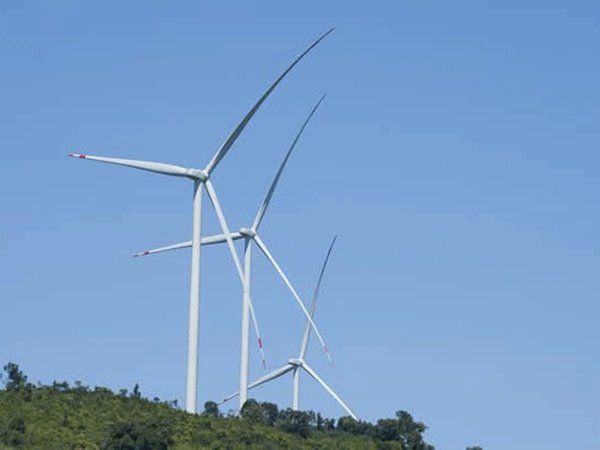
Beyond transport infrastructure, the two countries are pursuing an ambitious energy integration strategy that signals their intent to position themselves as a unified bloc within ASEAN's emerging energy architecture. Research into a 500-kilowatt transmission line capable of shuttling electricity between the two nations remains in its exploratory phases, yet such a facility would represent a watershed moment in Southeast Asian infrastructure development. Laos, blessed with hydroelectric potential along the Mekong River, could serve as an energy exporter, while Vietnam's industrial demands could absorb that output efficiently. Warehouse facilities, oil pipelines, and cross-border electricity trading mechanisms round out a comprehensive approach to economic integration that treats the Laos-Vietnam relationship not as episodic commercial exchanges but as a permanent, structurally embedded partnership. Officials characterised the progress achieved during the first eight months of 2026 as largely consonant with their cooperation blueprint, suggesting that implementation risks remain manageable and momentum is building.
The infrastructure investment strategy is not merely about moving goods faster or cheapening energy; it represents a deliberate effort to embed Laos into Vietnamese-led regional supply chains and investment flows. By facilitating smoother connections to Vietnamese ports, railways, and electricity systems, Laotian businesses gain vastly improved access to export markets and input suppliers, making the country a more attractive destination for foreign direct investment. Vietnamese enterprises gain privileged access to Laotian mineral deposits, agricultural land, and hydroelectric resources while simultaneously positioning Vietnam as the regional hub through which external investors can reach landlocked markets. This asymmetry does not necessarily disadvantage Laos; rather, it reflects the economic reality that one partner possesses greater capital, technical capacity, and market sophistication—conditions that can be mutually beneficial if structured carefully.
Beyond commerce, the two governments have demonstrated commitment to human capital development and institutional capacity-building through a series of secondary initiatives. Vietnamese support has been channelled into establishing the Xaysomboun Provincial Agricultural Technical Centre, establishing the Savannakhet Provincial Technical and Vocational School, and underwriting expansion of Vangvieng district hospital alongside the Laos-Vietnam Friendship University. These investments in Laotian people and institutions carry strategic importance extending beyond immediate economic returns; they foster goodwill, deepen personal networks across borders, and create constituencies within Laos favourably disposed toward deepened ties with Vietnam. Educational exchange and technical cooperation have historically proven more durable than commodity trade cycles, suggesting that contemporary Vietnamese investment in Laotian human capital may yield stability dividends extending across decades.
Looking forward, both nations have committed to honouring the Laos-Vietnam Cooperation Plan spanning 2026 to 2030, a framework that translates high-level political agreements into granular work programmes capable of driving implementation at ministerial and subnational levels. Priority domains for this extended planning horizon encompass political and diplomatic coordination, creation of regulatory environments conducive to major Vietnamese investment projects within Laos, acceleration of strategic infrastructure connectivity, and sustained expansion of bilateral merchandise trade. The designation of certain initiatives as priority sectors signals political will and resource allocation, whereas the omission of others implies deferral to subsequent planning cycles. The particular emphasis on facilitating Vietnamese enterprise expansion in Laos requires scrutiny from a Laotian perspective; such openness to foreign investment can catalyse development but also risks creating dependencies or crowding out local entrepreneurship if not carefully managed through appropriate industrial policy.
For Malaysian observers and policymakers, the Laos-Vietnam deepening carries important ramifications. It demonstrates how a smaller, less developed economy can strategically leverage partnerships with a more capable neighbour to accelerate development while maintaining political autonomy. It also illustrates the infrastructure-centric approach to regional integration increasingly favoured within ASEAN, where connectivity investments are viewed as foundations for prosperity and stability. Finally, it suggests that Vietnamese economic heft and investment capacity will continue projecting outward across mainland Southeast Asia, potentially shaping competitive dynamics within ASEAN that Malaysian firms and policymakers must navigate carefully. The Laos-Vietnam model offers lessons in how deliberate, sequenced infrastructure development combined with institutional coordination can transform bilateral relationships from episodic to systematic, generating compounding benefits over time.

