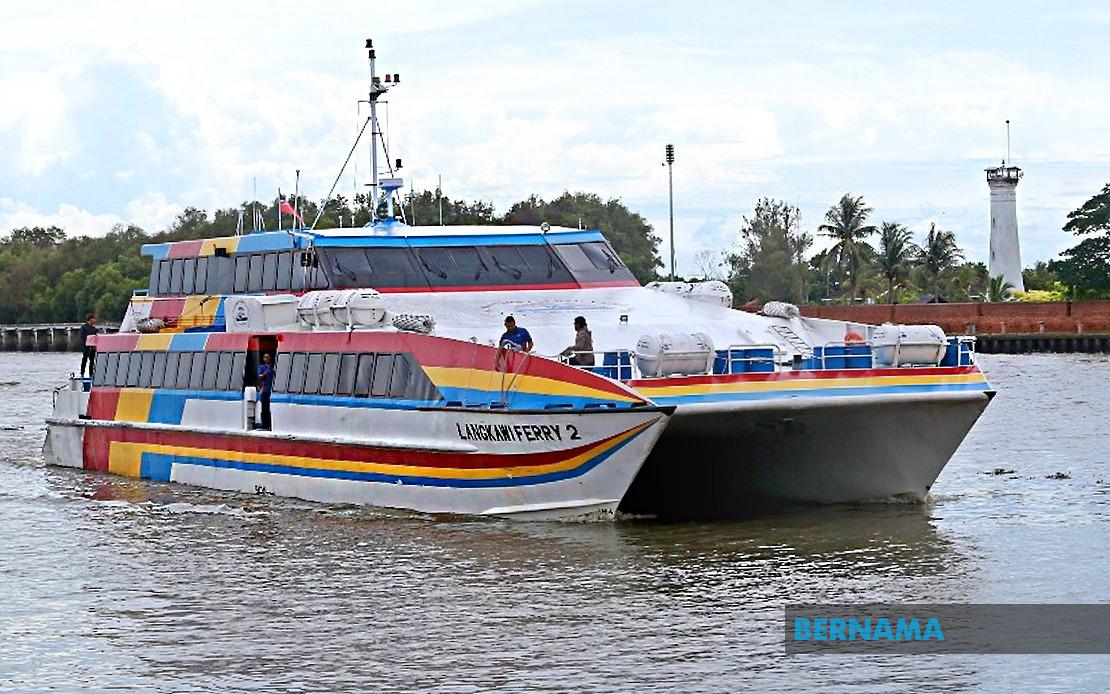
Ferry operators serving the Langkawi route have intensified calls on the federal government to prioritise dredging operations in the shipping lanes of Kuala Kedah and Kuala Perlis, warning that progressive silting threatens both passenger safety and the reliability of services crucial to the island's tourism economy. The deteriorating conditions in these two strategic waterways have become increasingly problematic for vessels navigating the routes, with shallow passages creating operational constraints that extend beyond mere inconvenience to represent genuine maritime hazards.
Lieutenant Commander (Retired) Norhafiz Abdul Wahid, operations manager of Ferry Line Ventures Sdn Bhd, articulated the severity of the situation during a statement in Alor Setar, emphasising that shrinking water depths compound risks for passenger ferries while simultaneously generating cascading service interruptions. The accumulation of sediment fundamentally undermines the capacity of operators to maintain reliable timetables, a critical consideration given the sector's role as the primary transport lifeline connecting Langkawi to the peninsular mainland. When ferry schedules slip, the consequences ripple through tourism-dependent businesses and communities relying on predictable connectivity.
The operational significance of these maritime routes cannot be overstated within Malaysia's broader economic context. Ferry services represent the singular most important transportation method for reaching Langkawi, effectively functioning as the gateway for visitors accessing one of the nation's premier tourist destinations. During high-season periods, these ferries have demonstrated the capacity to move approximately 25,000 tourists daily, a substantial volume that directly translates into visitor spending across accommodation, dining, retail, and recreational sectors throughout the island. Any degradation in service reliability therefore represents a direct threat to tourism revenues and employment across multiple economic sectors.
The timing of the dredging requirement carries additional urgency given the scheduled hosting of the Langkawi International Maritime and Aerospace Exhibition (LIMA) next year, a prestigious international event that will draw global attention and visitors to the destination. Should shipping lane conditions remain unaddressed, the government risks undermining Malaysia's reputation for efficient tourism infrastructure and professional maritime operations precisely when international stakeholders will be observing the nation's capabilities. The reputational stakes extend beyond a single event, potentially influencing future decisions by international conferences and exhibitions regarding Malaysia's suitability as a host venue.
Norhafiz emphasised that resolving this infrastructure challenge requires not merely ad-hoc intervention but rather a comprehensive and sustained maintenance programme. Periodic dredging must become embedded within standard port operations management, ensuring these critical navigation channels remain consistently accessible and safe for vessels of all designated classes. This approach reflects international maritime best practice, where channel maintenance constitutes an essential baseline responsibility of port authorities and government maritime agencies rather than an exceptional requirement triggered only during crises.
The immediate operational context underscores the urgency of the situation. Between late August and early September, coinciding with the Malaysian school holiday period and National Day celebrations, ferry operators have scheduled 176 regular trips augmented by an additional 66 services to accommodate anticipated surge demand. Conservative projections indicate approximately 90,000 passengers will utilise the two primary routes—Langkawi-Kuala Perlis and Langkawi-Kuala Kedah—during this compressed timeframe. Already, advanced ticket sales have reached 86,978 units through online platforms, dedicated mobile applications, and reservation counters, demonstrating robust public demand.
The logistical coordination required to manage such passenger volumes highlights the vulnerability created by silted channels. Any vessel experiencing navigational difficulties due to shallow water depths—whether requiring reduced speed, partial load capacity constraints, or increased transit times—cascades through the entire system, stranding passengers and necessitating service cancellations or deferrals. Ferry Line Ventures has implemented high-level operational readiness protocols throughout the holiday period, yet these internal measures cannot compensate for infrastructure deficiencies beyond the operator's control.
The broader policy implications merit consideration from the federal government's perspective. Infrastructure investment in maritime transport, particularly for routes serving as economic lifelines to major tourism destinations, represents sound public investment that generates multiplier effects throughout dependent sectors. Conversely, allowing critical infrastructure to deteriorate imposes substantial opportunity costs through foregone tourism revenues, reduced competitiveness against regional competitors, and diminished investor confidence in Malaysia's commitment to maintaining essential services. The dredging requirement should be evaluated not as an isolated maintenance expense but as foundational infrastructure spending essential to realising the revenue potential of established tourism assets.
For Malaysian readers and stakeholders invested in tourism recovery and maritime sector health, this situation exemplifies how seemingly technical infrastructure requirements ultimately determine the practical accessibility and reliability of major destinations. The ferry services connecting Langkawi to Kuala Kedah and Kuala Perlis do not merely transport passengers; they connect Malaysia's tourism strategy to its execution, making dredging works fundamentally political decisions about national priorities and resource allocation rather than purely technical matters.

