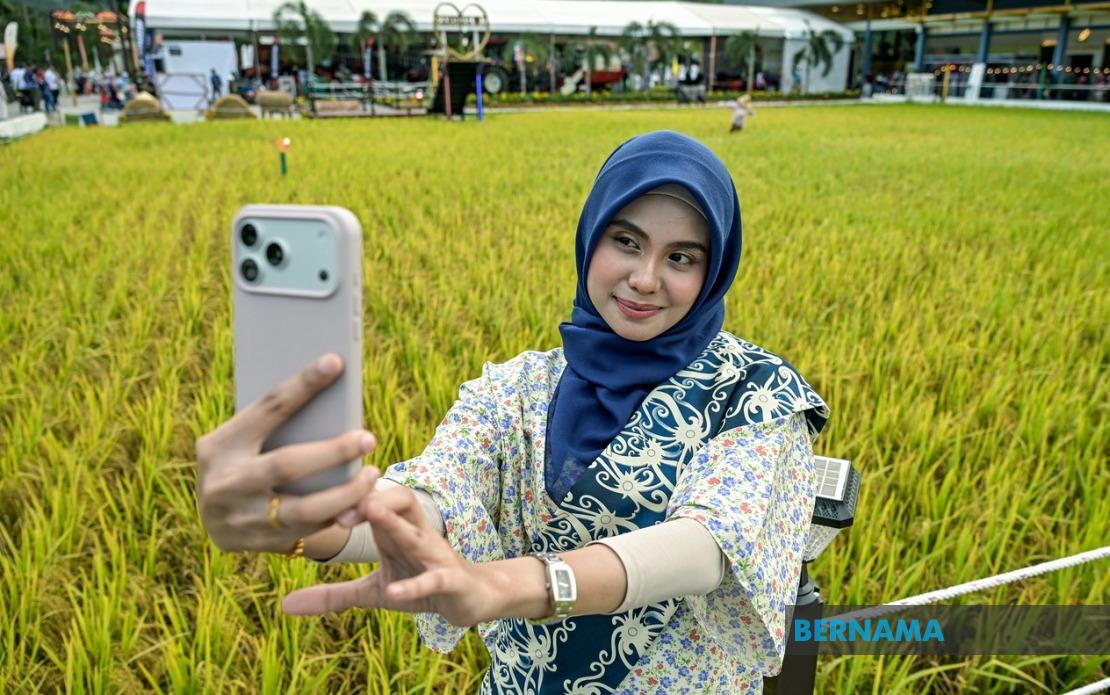
Malaysia's agricultural sector has achieved a distinctive milestone with the inauguration of Laman Padi at the 2026 Malaysia Agriculture, Horticulture and Agrotourism Exhibition, where a monumental paddy art installation has earned recognition from the Malaysia Book of Records as 'The Largest Paddy Art Formation'. The artwork, located within the Malaysia Agro Exposition Park Serdang, represents a bold reimagining of how traditional rice cultivation can serve contemporary purposes beyond grain production, incorporating patriotic imagery through depictions of the Jalur Gemilang alongside heart and hand motifs and the word 'Jati', collectively expressing national identity through agricultural canvas.
The creation of this record-breaking paddy art involved sophisticated agricultural choreography, employing the MR284 paddy variety arranged through staged planting techniques that capitalise on natural colour variations emerging from differing crop maturity levels. This approach demonstrates how precision in agricultural timing and planning can yield artistic outcomes, requiring coordination between technical farming knowledge and creative vision. The initiative represents a public-private partnership model, with Malaysia's Minister of Agriculture and Food Security Datuk Seri Mohamad Sabu emphasising that such collaborations exemplify the sector's capacity to generate culturally significant outputs whilst maintaining agricultural productivity.
For Malaysian policymakers and industry observers, the Laman Padi project signals a strategic pivot in how the government perceives paddy cultivation within the broader economic landscape. Minister Mohamad Sabu articulated this conceptual shift explicitly, noting that rice-growing areas possess dormant potential for technology integration, education delivery, employment generation, and value creation through agrotourism mechanisms. This reframing addresses demographic realities in Malaysia, where urbanisation has created generational distance from agricultural practices, particularly among younger cohorts with minimal exposure to farming methodologies or rural lifecycles.
The seven-hectare Laman Padi installation itself functions as a multifaceted educational and commercial ecosystem rather than a conventional exhibition. The complex incorporates seven distinct paddy plots alongside two comprehensive information centres and galleries, each deliberately designed to communicate different narratives about Malaysian rice agriculture and offer varied visitor experiences. This architectural approach facilitates layered engagement, accommodating diverse audience interests from casual tourists seeking photogenic moments to educators importing students for pedagogical experiences and industry professionals exploring value-chain innovations.
Agrotourism has emerged as a growth sector attracting Malaysia's increasingly urbanised population, particularly younger demographics seeking experiential engagement with rural production systems they seldom encounter in daily life. The Laman Padi initiative capitalises on this demand by transforming working agricultural landscapes into experiential destinations, generating supplementary income streams for farming communities whilst simultaneously building social connection to primary production. This dual-purpose model addresses persistent agricultural sector challenges, including farmer income diversification and rural economic sustainability, through mechanisms that leverage existing landholdings and seasonal cycles.
Visitation projections for Laman Padi suggest considerable market demand for such installations. The Paddy Industry Development Division projects approximately 10,000 daily visitors throughout the ten-day MAHA 2026 exhibition window, with preliminary figures indicating 4,000 visitors achieved on the opening day alone. These numbers indicate receptiveness among Malaysian consumers and regional tourists to agricultural-themed attractions that combine educational substance with entertainment value and cultural messaging, validating the investment thesis underlying agrotourism development strategies.
Educational programming constitutes a deliberate component of the Laman Padi experience, with approximately ten schools participating in hands-on paddy-related activities that provide students direct exposure to cultivation processes. This pedagogical integration addresses a systemic challenge within Malaysia's education system, where agricultural knowledge transmission has declined alongside rural-to-urban population shifts, creating knowledge gaps about food production fundamentals. By embedding experiential learning within an exhibition context, Laman Padi democratises agricultural education access across socioeconomic strata whilst normalising farming knowledge within urban youth consciousness.
The conceptual framework underlying Laman Padi deliberately synthesises traditional and contemporary dimensions of Malaysia's rice and paddy industries, presenting production evolution through infotainment approaches that balance information delivery with entertainment engagement. This methodology acknowledges shifting audience preferences, particularly among younger demographics who increasingly expect interactive, multimedia-enriched experiences rather than passive information presentation. The integration of demonstrations, promotions, interactive showcases, and performance elements creates dynamic rather than static engagement models, substantially expanding the exhibition's appeal beyond conventional agricultural sector audiences.
Private sector participation comprises an integral structural element of Laman Padi's functionality, with industry entities spanning the paddy and rice value chain—including BERNAS and comparable operators—utilising the platform for product promotion and market showcasing. This commercial dimension transforms Laman Padi from a purely governmental exhibition into a genuine industry collaboration mechanism, distributing promotional costs across participants whilst creating authentic product demonstration opportunities. The inclusion of diverse culinary concepts sourced from across Malaysia further extends the attraction's reach, converting agricultural education into comprehensive leisure experiences that appeal to broader demographics beyond traditional agrotourism constituencies.
From a regional perspective, Malaysia's Laman Padi initiative may establish precedential models for other Southeast Asian agricultural economies confronting comparable urbanisation pressures and farmer income challenges. Nations including Thailand, Vietnam, and Indonesia, which maintain substantial rice-producing sectors, may observe Malaysia's agrotourism approach as a replicable strategy for generating agricultural value beyond commodity grain sales whilst simultaneously strengthening social connections between increasingly urbanised populations and primary production systems. This export of experiential models represents potential soft power dimension for Malaysian agricultural innovation, positioning the nation as a thoughtful administrator of rural development integrating economic sustainability with cultural preservation.
The Malaysia Book of Records recognition carries practical significance beyond ceremonial acknowledgment, functioning as third-party validation of Malaysia's agricultural sector's capacity for innovative, competitive production methodologies. Within competitive agrotourism markets spanning Southeast Asia and extending into East Asia, such certifications serve marketing functions, differentiating Malaysian attractions within international travel markets and supporting tourism promotion agencies' positioning strategies. The record designation thus generates tangible commercial value, distinguishing Laman Padi within regional agrotourism landscapes and potentially influencing destination selection decisions among leisure tourists seeking distinctive experiences within Malaysia.

