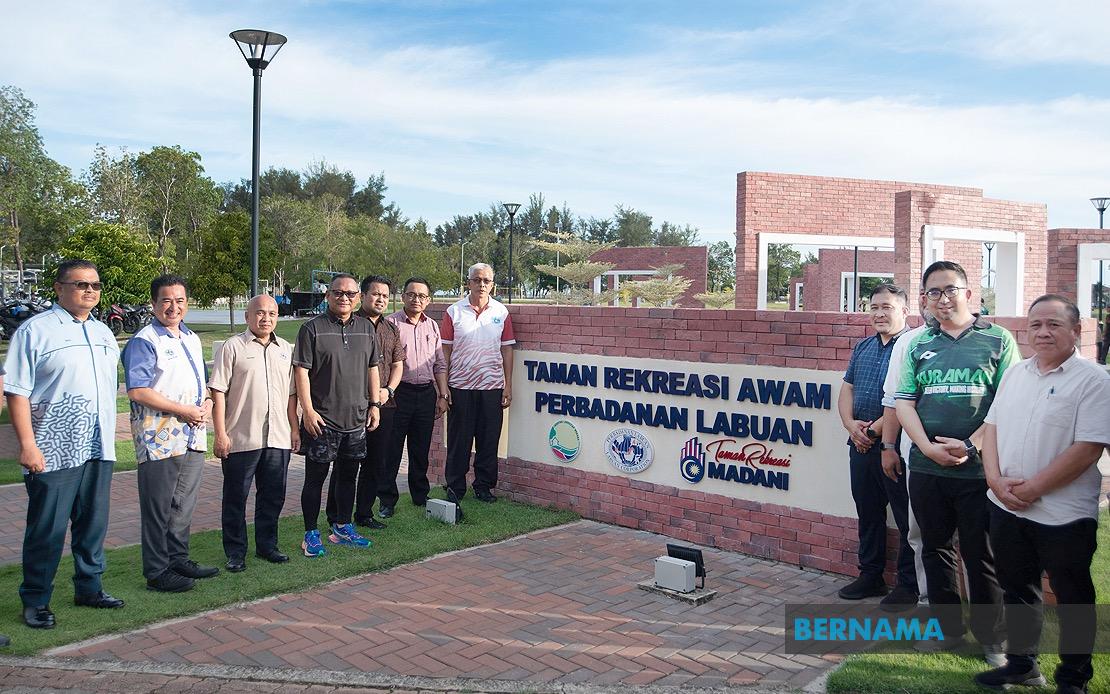
Labuan has taken a significant step toward promoting active living among its residents with the official opening of the upgraded Labuan Public Recreation Park at Tanjung Purun, positioned centrally within the bustling township. The transformation, which cost RM495,382 under the Madani Recreation Park initiative, represents a deliberate move by local authorities to inject vitality into a previously underutilised public space and create infrastructure that serves the health and wellness needs of an increasingly health-conscious community.
Rithuan Ismail, chief executive officer of Labuan Corporation, articulated the vision behind the project during the opening ceremony held on June 24. He emphasised that the park's design prioritises inclusivity, welcoming residents of all demographic groups—from young children to seniors—while establishing a venue where exercise, relaxation and communal bonding can occur naturally. This approach aligns with growing regional awareness that public recreation facilities serve not merely as exercise destinations but as social anchors that strengthen neighbourhood cohesion and collective wellbeing.
The National Landscape Department, operating under the purview of the Ministry of Housing and Local Government (KPKT), funded the undertaking in 2024 as part of broader efforts to revitalise urban landscapes across Malaysia. The selection of Tanjung Purun proved strategic on multiple fronts: the downtown location ensures accessibility for working adults and families without private transport, the land size accommodates diverse recreational activities, and crucially, the absence of ownership disputes eliminated bureaucratic obstacles that frequently delay such developments. These pragmatic considerations reveal how successful public infrastructure projects often hinge on foundational planning beyond mere construction design.
The original condition of the site—formerly known as the LDA Field—underscored why intervention was necessary. Inadequate outdoor lighting had rendered the area unsafe during evening hours, the recreational facilities available were sparse and outdated, and ageing casuarina trees created genuine hazard risks for visitors. Despite its privileged central position, the space had slipped into neglect, a cautionary reminder that proximity to urban centres does not automatically translate to vibrant public use without proper maintenance and thoughtful amenities.
The reimagined facility now encompasses several key features designed to cater to different recreational preferences and fitness levels. An 800-metre jogging track provides cardiovascular exercise options for joggers and speed-walkers, while concrete benches scattered throughout encourage social gathering and rest. The installation of outdoor fitness gym equipment democratises access to strength training—a growing priority across Southeast Asia where urban gym memberships remain financially inaccessible for many working-class residents. The welcoming garden component adds aesthetic value, transforming the space into somewhere people want to linger rather than merely pass through.
Local authorities have recognised that the initial phase represents merely the foundation. Rithuan signalled that three additional courts for pickleball and sepak takraw will be completed by year-end, addressing gaps in facility provision. Pickleball, a paddle sport gaining substantial traction across Malaysia and the region, appeals to mixed-age groups and requires minimal athletic specialisation, while sepak takraw preserves cultural sporting heritage. This dual approach—catering to emerging recreational trends whilst anchoring traditional pastimes—demonstrates sensitivity to community identity and evolving leisure preferences.
The evening period has emerged as a critical usage window for the facility, reflecting patterns observed across Southeast Asian cities where tropical heat drives activity toward cooler hours. The provision of improved lighting transforms what was once a security liability into an asset, enabling safe evening recreation and potentially extending social engagement into the night. This scheduling consideration carries implications for urban planning across the region, where climatic constraints demand different solutions than temperate counterparts.
Yet infrastructure alone cannot guarantee success. Rithuan issued a pointed appeal to residents, framing park preservation as a collective responsibility. Public facilities across Southeast Asia frequently deteriorate rapidly once operational, whether through vandalism, poor maintenance or user apathy. The Labuan Corporation's proactive messaging—positioning community stewardship as integral to the park's longevity—suggests recognition that sustainable public amenities depend on cultivating user investment beyond passive consumption.
The Labuan project holds relevance extending beyond the federal territory itself. As Malaysian towns increasingly compete for resident retention and quality-of-life improvements, accessible public recreation infrastructure has become a differentiator. For smaller urban centres and peripheral regions, investment in such facilities signals commitment to amenity parity with major metropolitan areas, potentially influencing residential and business location decisions. The success or underperformance of Labuan's initiative will inevitably inform future allocation decisions across similar communities seeking enhanced recreation offerings.
From a regional perspective, the park exemplifies how medium-sized Southeast Asian cities are addressing lifestyle health challenges without requiring massive expenditure. The RM495,382 investment, modest by major infrastructure standards, yields measurable quality-of-life improvements. This cost-effectiveness makes the model replicable across the broader region, where budget constraints frequently limit ambition. The initiative also demonstrates how retrofitting existing public land—rather than acquiring new parcels—can accelerate delivery while reducing acquisition complications, a lesson particularly valuable for densely settled urban environments.
The opening also reflects broader governmental prioritisation of preventive health through environmental design rather than clinical intervention alone. Creating conditions where physical activity becomes convenient and socially normalised addresses obesity and lifestyle diseases at systemic level. In Malaysia's context, where obesity prevalence has risen notably among both adults and children, such environmental interventions deserve support proportionate to their public health significance.
Moving forward, the true measure of success will emerge over subsequent months and years. Will residents utilise the facility consistently, or will initial enthusiasm fade? Will the additional courts meet genuine demand, or will they sit underused? How effectively will the community maintain the infrastructure, and will Labuan Corporation provide responsive maintenance support? These practical questions will ultimately determine whether this investment catalyses lasting behavioural change and community engagement.