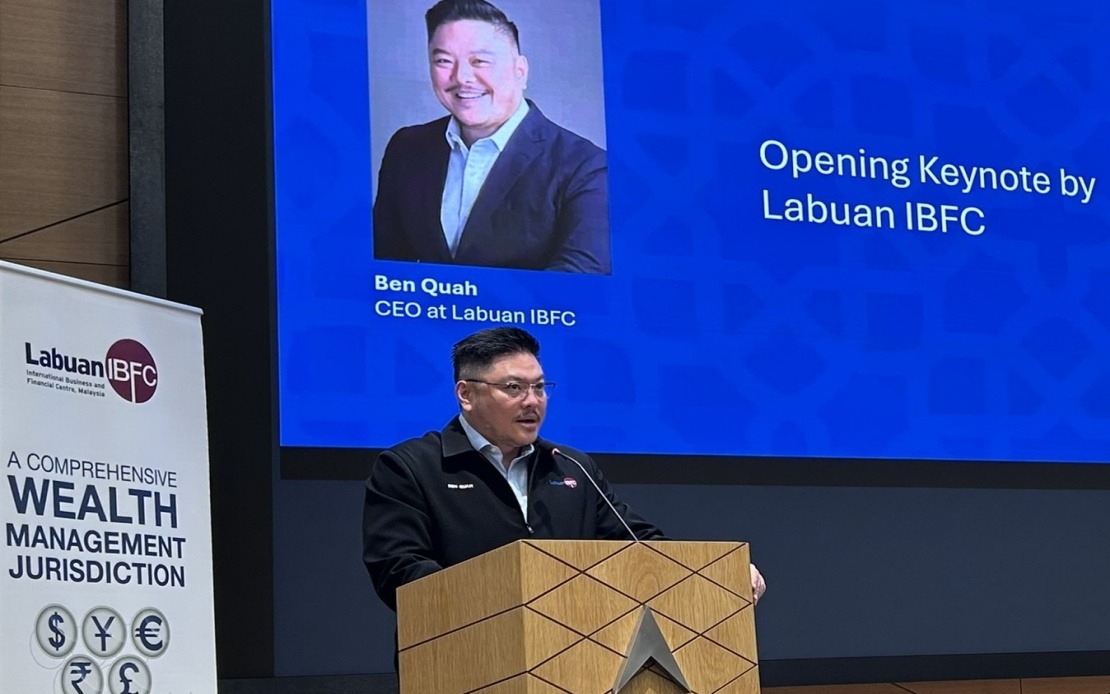
A significant convergence of Islamic finance expertise took place in Kuala Lumpur this week as Labuan IBFC Incorporated Sdn Bhd convened the Islamic Wealth & Legacy Forum 2026, bringing together practitioners, Shariah advisers and legal specialists to advance wealth planning standards across the Muslim professional community. The event, titled 'Beyond Faraid: Islamic Wealth Governance, Labuan Structures and Legacy Continuity', represents a collaborative effort between three key organisations: Labuan IBFC Inc, the Association of Shariah Advisors in Islamic Finance Malaysia (ASAS), and the Society of Trust and Estate Practitioners (STEP) Malaysia. This partnership underscores growing recognition that effective wealth preservation requires expertise spanning multiple disciplines and jurisdictions.
The forum emerged from a broader strategic realisation that traditional Islamic inheritance frameworks, while foundational, must evolve to address contemporary challenges faced by Muslim families managing increasingly complex asset portfolios across borders. Estate planning in the modern context demands solutions that balance strict adherence to Shariah principles with practical mechanisms for asset protection, liquidity management and intergenerational continuity. By convening representatives from wealth management, financial planning, estate administration and Shariah scholarship under one roof, the organisers created an environment where competing perspectives could be synthesised into actionable frameworks.
Labuan IBFC Inc chief executive officer Ben Quah positioned Labuan as a strategic platform uniquely suited to serve the evolving needs of Muslim families seeking international wealth solutions. His remarks emphasised that as family wealth increasingly transcends national boundaries, the architecture required to manage such assets must similarly transcend traditional jurisdictional limitations. Labuan's offshore financial centre status, combined with Malaysia's reputation as a global Islamic finance hub, creates distinct competitive advantages for families seeking structures that simultaneously offer international recognition, asset security and Shariah compliance. This combination proves particularly attractive for high-net-worth individuals across Southeast Asia and the broader Muslim world seeking to consolidate wealth management arrangements.
The substantive discussions throughout the forum centred on practical implementation challenges that estate planners confront when translating theoretical Islamic principles into operational wealth structures. The opening session specifically examined the real-world complexities of administering Muslim estates, moving beyond simplified applications of faraid (Islamic inheritance law) to encompass holistic succession planning. Participants explored how to bridge the gap between scriptural guidance and contemporary financial instruments, recognising that many traditional Islamic scholars never envisioned the sophisticated asset classes and jurisdictional complexities facing modern wealth holders.
A critical theme emerging from the forum discussions involved the intersection of proper governance and documentation standards with Shariah compliance requirements. Speakers highlighted that even well-intentioned wealth planning arrangements frequently falter during implementation due to inadequate legal documentation or unclear governance protocols. The dialogue sessions therefore emphasised that ensuring consistent application of Shariah principles throughout the wealth transfer process requires meticulous attention to structural detail, proper record-keeping and clear communication of intentions among all stakeholders. This operational dimension often receives insufficient attention in theoretical Islamic finance literature but proves essential in practice.
The afternoon programming shifted focus toward concrete mechanisms for implementing comprehensive wealth plans, examining the complementary roles played by takaful (Islamic insurance), trusts, and alternative structures in achieving client objectives. Panellists outlined how various instruments could be layered to address distinct goals: liquidity management through takaful products, risk distribution via trust arrangements, and asset protection through properly structured entities. This modular approach acknowledges that no single instrument serves all purposes and that sophisticated wealth plans typically integrate multiple complementary tools. For Malaysian practitioners and regional clients, understanding how to deploy these instruments across different jurisdictions while maintaining Shariah consistency represents an increasingly valuable professional capability.
Farah Deba, chair of STEP Malaysia, articulated a nuanced position regarding the relationship between traditional Islamic inheritance law and modern estate planning. Her observation that moving 'beyond faraid' does not mean abandoning Islamic principles proved particularly significant, as it reframes contemporary wealth planning not as a departure from Islamic values but rather as an extension of Shariah-compliant thinking into new contexts. This framing helps bridge potential tensions between traditionalists concerned about maintaining Islamic authenticity and modernists advocating for sophisticated financial structures. By explicitly acknowledging that comprehensive estate planning encompasses faraid as one component within a broader Islamic governance framework, the forum participants modelled intellectual flexibility that characterises mature Islamic finance practice.
The closing remarks from ASAS exco member Yusaini Yusof connected the technical discussions to broader Shariah governance principles, emphasising that proper wealth structuring serves the deeper Islamic objective of fulfilling the Maqasid Shariah (purposes of Islamic law). This theological grounding reminds practitioners that Islamic wealth planning transcends mere tax optimisation or liability management; instead, it pursues distinctly Islamic goals including justice in wealth distribution, protection of family interests and preservation of assets for beneficial community purposes. Such framing elevates professional practice beyond commercial transactions into moral and spiritual dimensions, potentially explaining the high level of engagement from the region's leading Shariah advisers.
The strategic partnership between Labuan IBFC Inc and ASAS, formalised through memorandum of understanding, signals institutional commitment to sustained collaboration rather than episodic engagement. This structural arrangement enables ongoing knowledge exchange, professional development and standard-setting within the Islamic wealth planning community. For Malaysia specifically, such partnerships reinforce the nation's positioning as a convening authority for Islamic financial excellence, particularly in private wealth management where Malaysian expertise increasingly serves clients throughout Southeast Asia, the Middle East and beyond. The involvement of STEP Malaysia further internationalises these discussions, connecting Malaysian practitioners with global trust and estate planning standards while demonstrating how such international frameworks can accommodate Islamic requirements.
The forum's significance extends beyond immediate technical discussions to reflect deeper institutional maturation within Islamic finance. The convergence of marketing entities (Labuan IBFC Inc), professional associations (ASAS and STEP Malaysia) and practitioner networks demonstrates that the sector has progressed beyond individual expertise to develop systematic approaches for knowledge preservation, standard-setting and professional development. For practitioners across Southeast Asia seeking to enhance capabilities in Islamic wealth planning, the initiatives emerging from such collaborations provide both intellectual resources and professional credibility essential for serving increasingly demanding clientele.
Looking forward, the momentum generated through this forum likely will catalyse additional professional development initiatives, potentially including certification programmes, practice standards and research projects addressing identified gaps in current capabilities. As Muslim wealth accumulation accelerates across emerging markets and diaspora communities expand their asset bases, demand for sophisticated Islamic wealth planning services will intensify substantially. Malaysian practitioners and institutions positioned at the intersection of Islamic expertise and international financial sophistication appear well-placed to capture disproportionate share of this expanding market.

