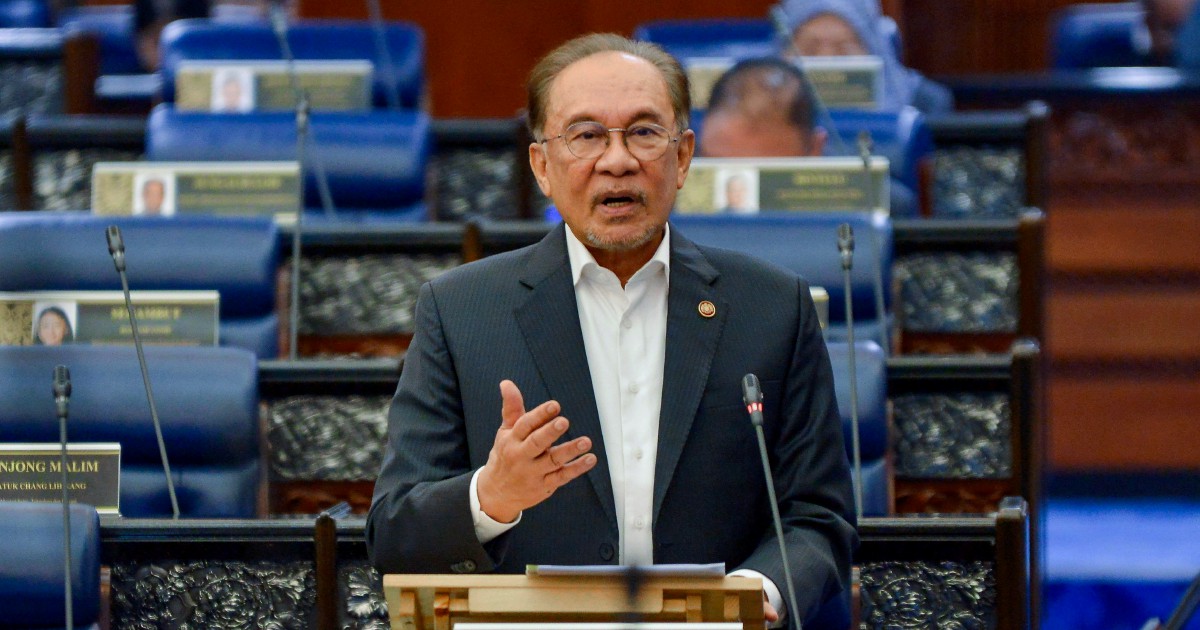
Malaysia's civil service pension system faces a widening funding gap that threatens the sustainability of one of Southeast Asia's largest public sector retirement schemes. Prime Minister Datuk Seri Anwar Ibrahim has highlighted the mathematical reality confronting the Retirement Fund Incorporated (KWAP): annual investment returns of RM12.9 billion fall substantially short of the government's pension payment obligations, which have ballooned to nearly RM45 billion annually. This nearly 3.5-times disparity underscores a structural imbalance that policymakers must urgently address to prevent future fiscal strain on the nation's already stretched public finances.
KWAP manages pension entitlements for Malaysia's federal civil servants, a demographic group that includes hundreds of thousands of current retirees and active government employees. The fund operates on principles of pooled investments, with contributions from both the government and employees generating returns that ideally should supplement government budget allocations for pension payments. The stark gap between earnings and obligations signals that the investment performance of KWAP, while respectable in absolute terms at over RM12 billion annually, operates in an entirely different scale from the liabilities the fund must ultimately service. This structural mismatch reflects broader demographic and economic pressures facing developed and developing nations alike as populations age and retirement systems mature.
The pension bill of nearly RM45 billion represents a substantial portion of Malaysia's annual federal budget expenditure. This figure encompasses not only pension payments to retired civil servants but also healthcare and other benefits associated with long service in government. The magnitude of this obligation has grown steadily over decades as Malaysia's civil service expanded and as successive governments enhanced pension benefits to remain competitive in attracting qualified professionals to public sector employment. Without active management of these liabilities, pension costs could consume an ever-increasing share of government revenue, crowding out spending on infrastructure, education, and healthcare that contribute to broader economic development.
Prime Minister Anwar's public acknowledgment of this funding gap signals a recognition within Malaysia's highest political leadership that the issue demands transparent discussion and practical solutions. Government officials have increasingly moved away from downplaying structural challenges, instead framing them as problems requiring comprehensive policy response. This shift in tone may reflect lessons learned from other nations where delayed action on pension reform ultimately forced more drastic interventions that disrupted retirees' expectations and public employee morale. By speaking candidly about the RM32.1 billion annual shortfall between KWAP's earnings and pension obligations, Anwar appears to be laying groundwork for future policy adjustments.
The Retirement Fund Incorporated has pursued active investment strategies to maximize returns, allocating resources across domestic equities, bonds, property, and international markets. However, even with competent asset management, the fund faces constraints inherent to any investment portfolio. Asset allocation must balance growth objectives against risk tolerance appropriate for a scheme serving vulnerable retirees who depend on reliable pension income. Aggressive strategies that might generate higher returns expose retirees to greater volatility and potential losses. Consequently, KWAP's investment approach reflects prudent stewardship of beneficiaries' interests rather than pursuit of maximum returns at any cost, explaining why even substantial annual earnings cannot bridge the pension funding gap.
Regional context illuminates Malaysia's particular challenges. Singapore's Central Provident Fund, while operating on different principles emphasizing individual savings rather than pure defined-benefit pensions, has managed retirement financing through mandatory contributions and conservative investment returns. Thailand and Indonesia face even more acute pension sustainability issues as their public systems mature. Malaysia's ability to confront these challenges early and implement evidence-based solutions positions the country favourably compared to regional peers who may face more severe fiscal disruptions later. However, comparative advantage remains limited; the underlying demographic and economic forces generating pension pressure affect all Southeast Asian nations.
Several policy options merit consideration by Malaysian policymakers. Parametric reforms—adjusting contribution rates, retirement ages, or benefit formulas—represent standard tools employed by governments managing defined-benefit pension systems. Malaysia's civil service retirement age currently stands at 60 for most employees, potentially extended to 65 in certain circumstances. Incremental increases in this threshold, phased in gradually to minimize disruption, could modestly improve system sustainability by lengthening working careers and reducing the accumulation of retirees drawing benefits simultaneously. Similarly, modest adjustments to contribution rates or benefit accrual rates might distribute the funding burden more broadly across current workers and future retirees.
Government budget allocations represent another avenue for addressing the funding gap. Currently, the federal government supplements KWAP earnings with general treasury funds to meet annual pension payments. Increasing the explicit budget allocation for pensions, while fiscally demanding, represents one transparent approach to acknowledging and managing the liability. Alternatively, the government could explore whether some pension obligations might be restructured, perhaps through partial conversion of defined-benefit provisions to defined-contribution arrangements for future entrants. Such changes typically face strong resistance from unions and employee associations, yet gradual implementation for new civil service cohorts might prove politically more acceptable than retroactive adjustments affecting current workers.
The investment performance of KWAP itself warrants scrutiny. While RM12.9 billion in annual returns represents solid performance by many standards, opportunities may exist to enhance returns through improved asset allocation, reduced management costs, or enhanced portfolio diversification. Benchmarking KWAP's performance against comparable pension funds in developed markets could identify whether current strategies fully optimize risk-adjusted returns. Additionally, governance structures ensuring accountability and minimizing operational costs deserve continuous review. Even modest improvements in net investment returns—perhaps 50 or 100 basis points annually—would meaningfully reduce the funding gap over time through compounding effects.
The sustainability of Malaysia's civil service pension system ultimately depends on decisions made in the coming years. Demographic trends are largely immutable; the workforce supporting retirees will grow older, and life expectancy will continue rising, extending the period during which pensions must be paid. Economic growth rates, while somewhat more controllable through policy, remain subject to global conditions beyond Malaysia's immediate influence. Consequently, structural reforms to pension parameters, whether through contribution rates, benefit levels, or retirement ages, appear inevitable. The question confronting policymakers is whether Malaysia will implement gradual, manageable adjustments proactively, or whether delayed action will eventually necessitate more painful, disruptive reforms. Prime Minister Anwar's public candor suggests acknowledgment that decisive action cannot be indefinitely postponed.

