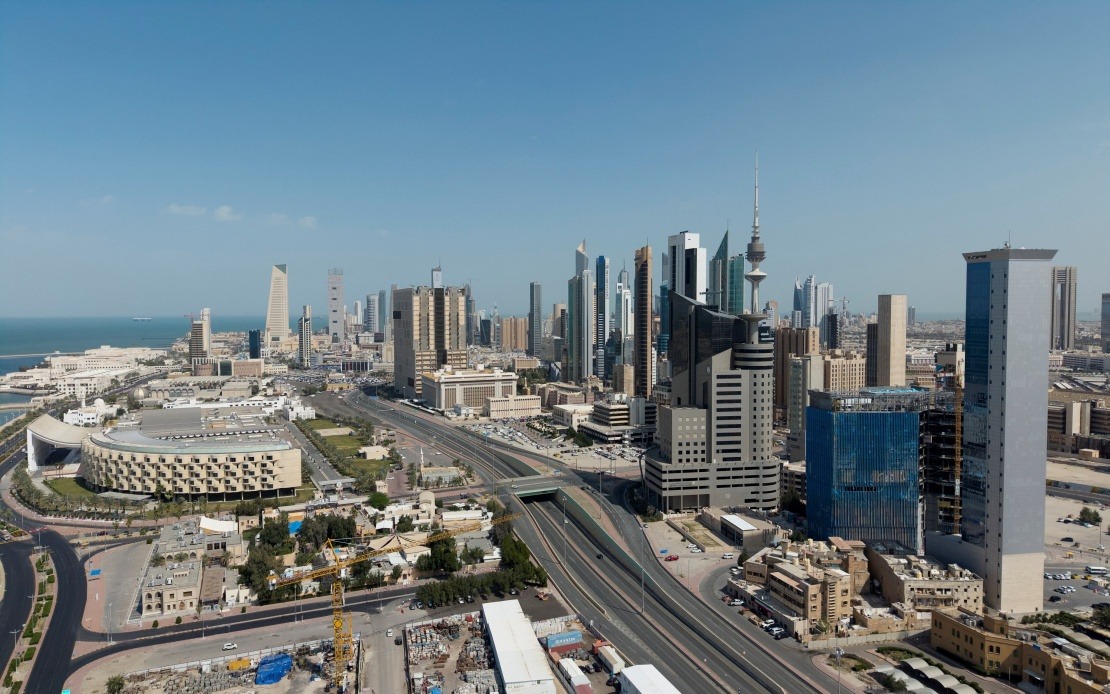
Kuwait's government announced the establishment of a dedicated emergency response fund on Sunday, pledging an initial US$100 million in capital to address extensive infrastructure damage resulting from escalating tensions in the region. The Kuwait Emergency Response Fund, created under the auspices of the Kuwait Fund for Arab Economic Development (KFAED), represents an official acknowledgement of the material costs incurred by the Gulf state from months of regional military confrontation and represents a significant policy response to the crisis.
Foreign Minister Sheikh Jarrah Jaber Al-Ahmad Al-Sabah unveiled the initiative at a press conference, framing it as a comprehensive mechanism to strengthen Kuwait's capacity for emergency crisis management. Beyond the immediate practical objective of financing repairs, the fund signals the government's determination to establish formal institutional structures for responding to future security emergencies. The announcement suggests that Kuwaiti policymakers view the current situation not as a temporary disruption but as part of an evolving security environment requiring permanent institutional adaptation.
The minister explicitly attributed the infrastructure damage to what he characterised as Iranian aggression, reflecting Kuwait's geopolitical positioning in the ongoing regional dispute. Kuwait's geographic proximity to both Iran and Iraq, combined with its significant oil infrastructure and strategic importance as a US military hub, has made it particularly vulnerable to spillover effects from broader Middle Eastern conflicts. The government's public framing of responsibility serves both a domestic political function and signals Kuwait's alignment with Western and Gulf Cooperation Council partners in the dispute.
Waleed Al-Bahar, the Acting Director General of KFAED, provided operational details about the fund's structure and governance. He noted that the cabinet had previously authorised the fund's creation, indicating this was a coordinated governmental decision rather than an emergency improvisation. The KFAED will maintain oversight responsibility for evaluating funding applications and determining project priorities, ensuring that limited resources are allocated according to strategic national interests rather than distributed haphazardly.
The fund's establishment requires participation from both governmental agencies and private sector entities, representing an attempt to mobilise national resources across institutional boundaries. Kuwait's private sector, comprising significant commercial enterprises and investment firms, possesses capital reserves that could substantially augment the initial US$100 million commitment. This appeal for broad-based financial contribution reflects the scale of damage assessment and indicates that government planners anticipate reconstruction costs exceeding the initial allocation.
The immediate trigger for these tensions traces to late February when the United States and Israel conducted coordinated military strikes targeting Iranian positions. Iran's subsequent response involved sustained barrages of ballistic missiles and unmanned aerial vehicles directed at Israeli territory and American military installations throughout the broader region, including bases in neighbouring countries hosting US forces. These exchanges demonstrated that regional military escalation risks direct consequences for smaller Gulf states caught in the conflict's geographic radius.
Kuwait's particular vulnerability stems from its history as a battleground during the 1990-1991 Gulf War and its current role as home to significant American military infrastructure. The country hosts forward-operating bases supporting US regional operations and maintains strategic importance for Western military strategy in the Persian Gulf. Any direct or indirect military action targeting these installations or regional adversaries creates potential collateral damage affecting Kuwaiti civilian and commercial infrastructure.
The establishment of this emergency fund carries implications extending beyond Kuwait's immediate reconstruction needs. For Southeast Asian nations with investments in Gulf economies and shipping interests dependent on regional stability, the announcement underscores the continuing volatility affecting global energy markets and trade routes. Malaysian companies operating across the Gulf region or holding energy sector investments face ongoing uncertainty regarding asset security and operational continuity, making regional stabilisation efforts directly relevant to Malaysian economic interests.
The KFAED's historical role as a development financing institution lending to Arab states across Africa and Asia gives the new emergency fund potential broader significance. Should the fund expand substantially beyond its initial US$100 million allocation, it could reshape development lending patterns and establish precedents for emergency financing mechanisms within Arab institutions. This development model might offer templates for other developing nations facing climate-related or conflict-induced infrastructure damage.
Kuwait's proactive approach to formalising emergency response mechanisms contrasts with reactive governance patterns common in developing economies facing security crises. By establishing transparent evaluation criteria and institutional oversight before reconstruction pressures mount, Kuwaiti policymakers have created a framework potentially more efficient than ad hoc damage assessments conducted under crisis conditions. This institutional innovation may influence how other vulnerable states address conflict recovery planning.
The fund's effectiveness will depend significantly on the speed with which the KFAED can process applications, approve projects, and disburse capital to reconstruction initiatives. Bureaucratic delays could undermine the emergency response objective and frustrate private sector partners expecting rapid capital deployment. International experience with emergency reconstruction financing demonstrates that institutional capacity rather than nominal fund size frequently determines reconstruction outcomes.
Longer-term implications for Kuwait's economic resilience remain uncertain. The country's oil-dependent economy requires stable infrastructure and predictable business environments to attract investment and maintain production efficiency. Repeated rounds of conflict-related damage could gradually erode economic competitiveness and force reallocation of development capital away from growth-oriented projects toward defensive infrastructure hardening and redundancy.
Regional powers will monitor Kuwait's response closely, as it establishes expectations for how Gulf states should manage conflict-related economic disruption. Should Kuwait's approach prove effective in rapid recovery, neighbouring states may adopt similar frameworks. Conversely, should reconstruction encounter obstacles, the failure could reinforce perceptions of institutional weakness affecting broader Gulf economic cooperation mechanisms.

