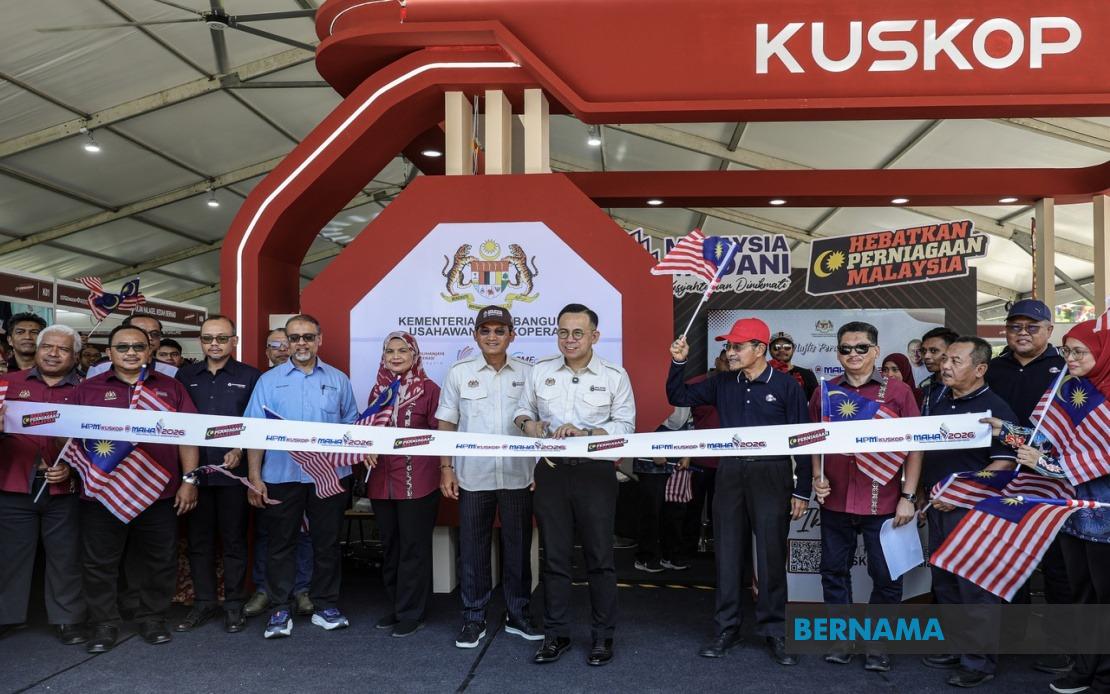
The Ministry of Entrepreneur and Cooperatives Development (KUSKOP) is capitalising on strong early momentum at MAHA 2026, where its inaugural pavilion has generated more than RM110,000 in sales and drawn crowds exceeding 100,000 visitors. The biennial agricultural showcase in Serdang has provided an unexpected platform for the ministry to connect entrepreneurs and cooperative enterprises directly with consumers, representing a significant expansion of KUSKOP's participation in major national events.
Minister Steven Sim announced the ambitious RM500,000 sales target for the pavilion during remarks at the event, emphasising the ministry's strategic commitment to supporting Malaysia's entrepreneurial ecosystem. The presence of KUSKOP's secretary-general Datuk Seri Khairul Dzaimee Daud underscored the importance the ministry places on the initiative, signalling that grassroots business development remains a priority within the government's economic agenda.
The pavilion's footprint at MAHA 2026 marks a deliberate diversification strategy for KUSKOP. By commandeering a dedicated exhibition space and recruiting approximately 66 participating entities—spanning established companies, registered cooperatives, and micro, small and medium enterprises across various sectors—the ministry has created a marketplace that extends entrepreneurial reach beyond traditional channels. This approach acknowledges that agricultural expos and rural events attract consumer demographics particularly receptive to locally-produced goods and cooperative-branded products.
The sales performance to date suggests the strategy is resonating. Recording RM110,000 within the first few days of operations indicates that visitor footfall has translated into meaningful commercial transactions. For many participating MSMEs, attendance at a national event like MAHA 2026 represents an opportunity to build brand visibility and test market demand in an environment where purchasing intent is typically high. The cumulative foot traffic of 100,000-plus visitors creates a ready audience for products ranging from food items and handicrafts to agricultural inputs and services.
For Malaysian entrepreneurs and cooperative members, KUSKOP's pavilion presence carries practical implications. The ministry's decision to bundle promotional efforts around a major event demonstrates commitment to creating visibility infrastructure that individual small businesses cannot typically afford independently. By aggregating dozens of enterprises under one roof, KUSKOP has effectively lowered barriers to participation in national showcases, allowing operators who might ordinarily lack resources or logistical capacity to reach substantial consumer bases.
The RM500,000 target, if achieved, would represent a meaningful validation of cooperative and MSME export potential within the domestic market. That figure, though substantial, remains realistic given the visitor numbers already recorded and the extended duration typical of MAHA events. For Sim and KUSKOP leadership, success here could justify expanded participation in future iterations and similar national exhibitions, potentially becoming a recurring fixture in the ministry's promotional calendar.
The broader context of this initiative reflects policy recognition that entrepreneurship and cooperative development require sustained promotional investment. MAHA 2026, traditionally a platform for agricultural businesses and food producers, has increasingly diversified to accommodate broader economic participation. KUSKOP's integration into this ecosystem signals alignment with Agriculture Minister Datuk Seri Mohamad Sabu's vision of an inclusive, multi-sectoral agricultural narrative—one that recognises the importance of value-added production, cooperative structures, and small business ecosystems to rural economic resilience.
For Southeast Asian observers, Malaysia's approach to showcasing entrepreneurial activity within a national agricultural event offers a template for balancing rural development with broader economic participation. By positioning cooperatives and MSMEs as integral to agricultural value chains rather than peripheral actors, KUSKOP reinforces policy messaging around inclusive growth and community-based enterprise development. This positioning particularly resonates in economies where cooperative structures remain underdeveloped and where small business formalisation lags behind regional benchmarks.
The attendance of over 100,000 visitors also underscores continued public engagement with MAHA as a destination event. For KUSKOP, this traffic represents verification that traditional venues remain effective for commercial outreach in Malaysia's market environment, despite digital transformation trends. The persistence of physical events as sales channels for small and cooperative enterprises suggests that direct consumer interaction, product sampling, and relationship-building remain competitive advantages that online platforms have not entirely displaced.
Looking ahead, KUSKOP's performance at MAHA 2026 may influence how the ministry allocates resources across promotional initiatives. Early success could accelerate participation in regional expos, food and beverage showcases, and trade fairs beyond agriculture-focused events. The sales data being accumulated will likely inform future assessments of which product categories and enterprise types generate strongest commercial returns, potentially shaping how the ministry curates and markets participating businesses in subsequent events.

