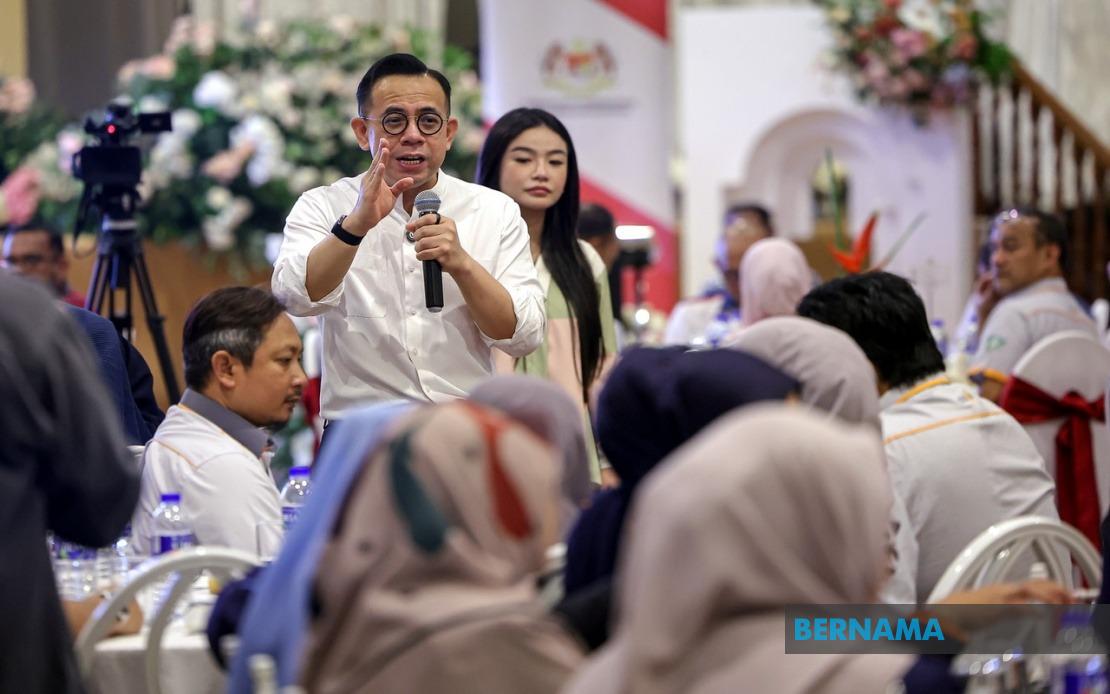
Malaysia's Ministry of Entrepreneur Development and Cooperatives (KUSKOP) has channelled nearly RM7 billion to more than 213,000 micro, small and medium enterprises across the country during the opening six months of 2026, representing substantial progress toward an ambitious full-year target. Minister Steven Sim announced the achievement at a gathering of KUSKOP staff and partner agencies in Negeri Sembilan, underscoring the government's commitment to strengthening entrepreneurship as a pillar of economic resilience.
The Power Up 10K initiative, from which these funds flow, operates through a constellation of support and financing programmes designed to fortify the domestic MSME ecosystem. The ministry's overarching objective remains to disburse a total of RM15 billion throughout 2026, meaning the first-half performance positions the initiative on track to meet or exceed its ambitious mandate. This systematic approach reflects policymakers' recognition that Malaysian entrepreneurs face mounting headwinds from volatile global economic conditions and require sustained institutional backing to maintain competitive standing internationally.
Within Negeri Sembilan specifically, the programme has injected RM345 million into the hands of more than 6,600 local business operators, demonstrating that centralised government funding mechanisms are succeeding in reaching entrepreneurs at grassroots level rather than concentrating support among larger entities or urban hubs. Sim highlighted this territorial achievement as proof that bureaucratic systems, when properly organised, can effectively translate policy intentions into real economic stimulus for ordinary business owners who form the backbone of Malaysia's entrepreneurial fabric.
The minister's emphasis on reducing compliance burdens reveals a strategic pivot within KUSKOP's operational philosophy. Rather than merely injecting capital, the ministry now recognises that entrepreneurs face cumulative pressures from regulatory obligations, local authority requirements, and administrative procedures that erode profitability and discourage business formation. While factors such as global oil price fluctuations remain beyond governmental control, Sim reasoned, authorities retain leverage over the domestic regulatory environment and can substantially ease the compliance landscape through deliberate policy review.
This reorientation toward cost reduction reflects international best practice in entrepreneurship support, where evidence consistently demonstrates that excessive bureaucratic friction dampens business dynamism and diverts management attention from productive activities. Malaysian policymakers appear increasingly cognisant that competitiveness depends not solely on capital availability but on the institutional ease with which entrepreneurs can conduct operations without drowning in procedural complexity. The KUSKOP initiative thus broadens beyond simple financing to encompass systemic reforms that reduce friction throughout the entrepreneurial lifecycle.
Sim's call for state-level agencies to engage in proactive competition represents a significant management intervention aimed at accelerating service delivery. His exhortation that local entities cease waiting passively for entrepreneurs to approach them, instead mounting intensive promotional campaigns through digital and physical channels, signals frustration with bureaucratic lethargy that permits available funds to remain undisbursed while potential beneficiaries remain unaware of opportunities. This strategic shift transfers initiative from supply-push (waiting for demand) to demand-pull (actively reaching target populations).
The expansion of outreach through social media platforms, physical roadshows, and grassroots engagement acknowledges the heterogeneity of Malaysia's entrepreneurial landscape. Many MSME operators, particularly in rural areas or among traditionally underrepresented demographics, may lack sophisticated information networks and depend on direct institutional engagement to discover available support mechanisms. By intensifying promotional activities, KUSKOP aims to democratise access to its programmes and ensure that geography, language, or social networks do not determine which entrepreneurs benefit from government support.
The Power Up 10K initiative reflects broader regional patterns in Southeast Asia, where governments increasingly prioritise MSME development as a vehicle for inclusive growth and employment creation. Thailand, Indonesia, and Vietnam operate comparable schemes channelling public resources toward small business operators, recognising that microenterprises collectively employ vastly more workers than large corporations and constitute vital engines of local economic dynamism. Malaysia's commitment to RM15 billion annual disbursement positions the country competitively within this regional context and signals sustained policy commitment to entrepreneurship beyond electoral cycles.
For Malaysian entrepreneurs navigating an increasingly complex global economy, the KUSKOP initiative provides measurable relief through accessible financing mechanisms and reduced regulatory friction. The distribution of RM7 billion in the first six months demonstrates institutional capacity to move substantial capital efficiently, while the emphasis on compliance cost reduction suggests that government is genuinely attuned to the practical challenges facing business operators. Whether these initiatives translate into sustained business expansion and employment growth, however, depends on effective implementation at state and local levels and genuine commitment to dismantling regulatory obstacles rather than merely reducing paperwork.
The minister's emphasis on competitive agency performance introduces market-like incentives into government service delivery, potentially stimulating more efficient fund deployment across Malaysia's regions. State-level KUSKOP offices that accelerate disbursements and effectively reach entrepreneurs may attract favourable performance assessments and resource allocation, creating positive feedback loops that reward effectiveness. This competitive framework contrasts with traditional bureaucratic models emphasising compliance over outcomes and may generate measurable improvements in programme efficiency and entrepreneur satisfaction.
Looking forward, KUSKOP faces the challenge of maintaining momentum while ensuring that expanded funding availability does not inflate bureaucratic burden or overwhelm institutional capacity. The RM15 billion annual target represents a substantial commitment requiring robust systems for application processing, fund disbursement verification, and entrepreneur support. Success ultimately depends not merely on the quantum of resources deployed but on their productive application by entrepreneurs translating government support into business expansion, job creation, and meaningful contribution to Malaysia's economic competitiveness.

