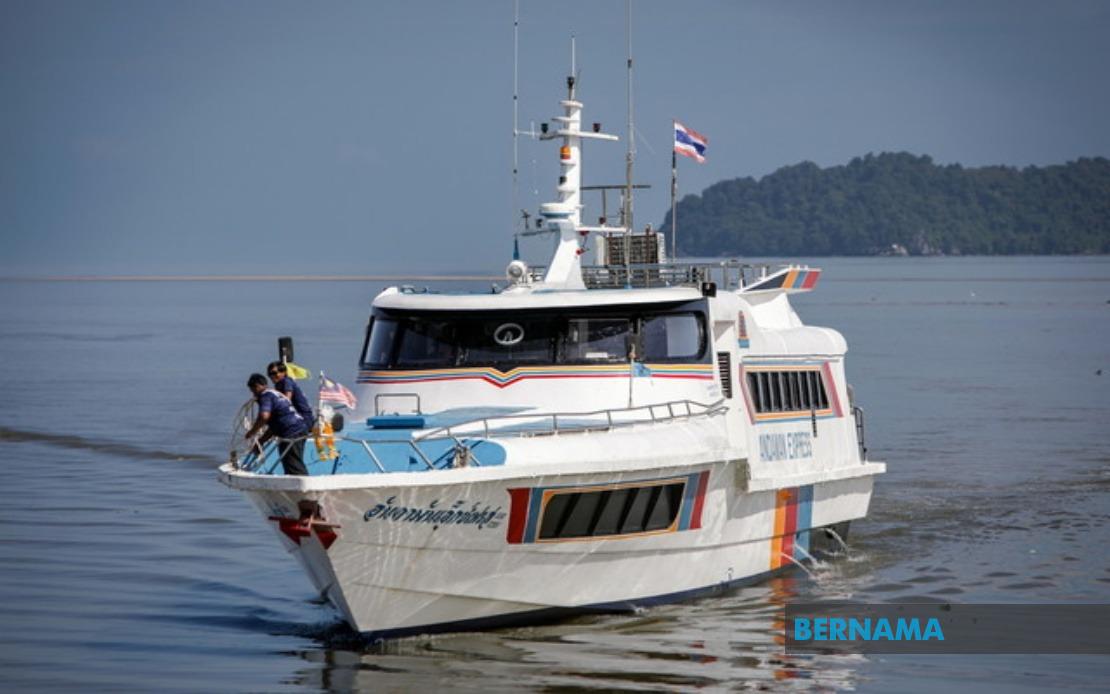
The maritime crossing between Kuala Perlis and Satun will reopen for passenger and vehicle traffic on Thursday, marking a significant milestone in regional connectivity after more than three years of disruption caused by the coronavirus pandemic. Perlis Menteri Besar Abu Bakar Hamzah announced the development following a successful operational simulation conducted at Tammalang Jetty in Satun, signalling that both Malaysian and Thai authorities have completed necessary preparations for the service to resume functioning.
The restoration of this sea route carries substantial implications for the broader Asean tourism landscape, particularly for Malaysia and Thailand's Andaman coast region. Officials view the reopened crossing as a catalyst for deepening collaboration among three UNESCO Global Geopark designations: the Perlis Geopark on the Malaysian side and the Satun UNESCO Global Geopark and Langkawi UNESCO Global Geopark. This alignment of internationally recognised geological heritage sites creates a distinctive marketing proposition for the region and positions it as a meaningful alternative to conventional beach tourism in Southeast Asia.
Abu Bakar disclosed that state authorities intend to establish a coordinating committee bringing together stakeholders from Perlis, Satun, and Langkawi to orchestrate joint tourism development initiatives. Such institutional arrangements are crucial for translating aspirational cooperation statements into tangible visitor benefits, including simplified cross-border procedures, integrated ticketing systems, and shared promotional campaigns that leverage the three locations' complementary attractions.
The service will initially operate on a once-daily schedule, with ferry operators and government officials pledging to adjust frequency based on passenger demand patterns during the critical launch phase. This measured approach reflects practical experience from similar regional ferry reopenings, where premature over-scheduling can result in operational losses and service suspension, whereas conservative scaling allows operators to refine logistics and marketing before expanding capacity.
Cost competitiveness emerged as a priority consideration for Perlis officials, who are negotiating with ferry operators to maintain reasonable fares and exploring introductory promotional pricing to stimulate initial demand. Such pricing strategies are particularly relevant given the region's sensitivity to transport costs and the availability of alternative routing options via longer land and sea combinations. Competitive fares could shift a measurable share of tourist flows toward the direct maritime route, particularly among leisure travellers and tour operators seeking convenience and time savings.
Infrastructure enhancements accompanying the service restart demonstrate commitment to operational efficiency. The Kuala Perlis Roll-on-Roll-off Terminal is undergoing comprehensive upgrades, including dedicated vehicle lanes designed to accelerate the processing of cars and commercial vehicles. These physical improvements address a persistent challenge in ferry operations across Southeast Asia, where congestion at embarkation points can undermine the time advantages that sea routes offer over land alternatives.
The simulation exercise validated key operational components spanning ferry navigation, passenger processing, vehicle loading procedures, and emergency protocols. Malaysian and Thai maritime authorities confirmed readiness across safety measures and standard operating procedures, a crucial assurance given the cross-border complexity and the involvement of commercial passenger services. The successful trial runs suggest that bureaucratic coordination between the two nations has matured sufficiently to manage routine operations without administrative friction.
Regulatory compliance has been systematically addressed through engagement with Malaysian authorities including the Royal Malaysian Customs Department, Malaysian Immigration Department, and Marine Department. Reciprocal arrangements with Thai counterparts ensure that security screening, documentation verification, and health clearance procedures function smoothly despite the international boundary context. The coordination of these parallel regulatory systems represents considerable administrative preparatory work that frequently remains invisible to end users but underpins reliable ferry operations.
The broader economic significance of this reopening extends beyond tourism statistics to encompass regional trade, cross-border commerce, and labour mobility across the Malaysia-Thailand border. The ferry service can facilitate movement of goods and workers between Perlis and Satun, potentially stimulating small-scale manufacturing, agricultural trade, and service sector activity in both localities. Rural communities in particular may benefit from improved access to employment and commercial opportunities previously constrained by distance and lengthy overland routes.
From a geopolitical perspective, the service restart demonstrates sustained commitment to transport connectivity and people-to-people exchange among Asean members despite pandemic disruptions and periodic border tensions. Such incremental infrastructure improvements strengthen regional interdependence and create constituencies—tourism operators, hospitality workers, transportation companies—with vested interests in maintaining stable cross-border relations.
The timing of the reopening aligns with growing momentum in Asean tourism recovery, as regional countries compete for market share during the post-pandemic leisure travel rebound. Malaysian tourism authorities can position the Perlis-Satun route as part of a broader circuit encompassing Langkawi, Kedah's heritage sites, and northern Perak attractions, creating multi-day itineraries that extend visitor spending and dispersed regional economic benefits beyond traditional concentration points.
Success of this initiative may influence future infrastructure decisions affecting other Malaysia-Thailand border crossings and potentially inspire similar reopening and enhancement efforts in other parts of the region. The documented experience from Kuala Perlis-Satun will provide valuable insights regarding optimal scheduling, pricing mechanisms, infrastructure requirements, and regulatory coordination applicable to analogous maritime crossings elsewhere in Southeast Asia.
As implementation proceeds beyond Thursday's launch, close monitoring of passenger volumes, operational performance, safety metrics, and stakeholder satisfaction will indicate whether this ferry service fulfils its potential as a transformative regional connectivity project or requires recalibration to address unforeseen operational or market challenges.

