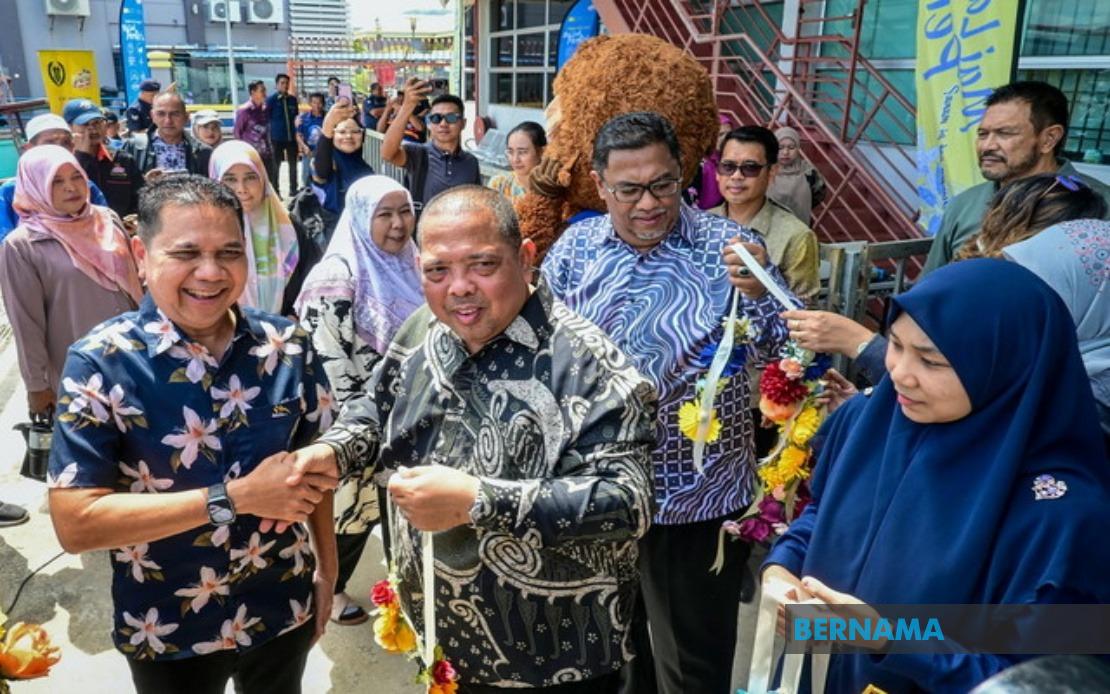
The resumption of maritime connectivity between Perlis and Thailand's Satun Province marks a symbolic turning point for the state's tourism recovery. Following today's ceremonial reopening of the Kuala Perlis-Satun ferry service, Perlis Menteri Besar Abu Bakar Hamzah has projected that the state will welcome between 5.5 million and six million visitors this year, reflecting confidence in the cross-border shipping route's potential to energise the tourism sector following its extended closure during the pandemic.
The reopening carries significance beyond mere passenger movement. Abu Bakar articulated how the restored sea link would facilitate smoother transit for travellers between the neighbouring jurisdictions while simultaneously generating economic activity within local communities. The positioning of Kuala Perlis as a gateway for Thai visitors seeking retail and cultural experiences represents a strategic recognition of the municipality's commercial potential. Thai shoppers, in particular, are expected to represent a valuable demographic, contributing to retail turnover across the state whilst bolstering the broader provincial economy.
The ferry route itself provides a distinctive travel experience that transcends conventional border crossing procedures. The approximately 40-minute journey affords passengers panoramic views of the coastal landscape, transforming transit time into a tourism experience. This scenic dimension differentiates the sea crossing from overland alternatives and appeals to travellers seeking memorable journeys rather than purely functional border transit. The aesthetic and experiential elements thus become commercial assets in the competitive regional tourism marketplace.
Beyond tourism metrics, the ferry service addresses practical transportation infrastructure challenges that have constrained the region. Abu Bakar acknowledged that the reopened route would distribute pressure away from the increasingly congested Padang Besar border crossing, particularly during festive periods when holiday migrations create bottlenecks. By providing a viable alternative corridor, the ferry potentially alleviates vehicle congestion and reduces wait times at traditional land borders, benefiting both leisure and commercial traffic flows.
The diplomatic dimensions merit consideration as well. The menteri besar explicitly framed the initiative as strengthening bilateral relations between Malaysia and Thailand, particularly at the provincial level. Cross-border cooperation in tourism infrastructure reflects broader regional integration efforts and demonstrates how practical transportation solutions can reinforce economic and cultural ties. The delegation reception ceremony at Kuala Perlis Ferry Terminal symbolised this commitment to deeper connectivity between Perlis and Satun.
However, the state government recognises that sustained success requires addressing persistent technical challenges inherent to the route. Fluctuating tidal patterns and shallow waters have historically compromised vessel operations and passenger comfort. To rectify these constraints, authorities plan implementing a floating pontoon system that can accommodate variable water depths, thereby ensuring year-round operational reliability. This infrastructure investment demonstrates proactive problem-solving rather than accepting geographical limitations.
Looking further ahead, the state's ambitions extend beyond the current ferry capacity. Discussions regarding the reactivation of the Kuala Perlis-Satun Roll-on/Roll-off service indicate intentions to accommodate vehicular traffic across the strait, expanding the route's commercial utility. More ambitiously, the government is exploring investor participation in a proposed RM500 million bridge project spanning approximately two kilometres offshore. Such a structure would fundamentally transform the region's connectivity profile, enabling unlimited vehicle crossing whilst permanently resolving navigation channel impediments.
These sequential infrastructure phases reveal a strategic vision progressing from immediate passenger service restoration toward comprehensive maritime and terrestrial linkage. The floating pontoon represents a pragmatic intermediate solution, whilst the Ro-Ro service would expand freight and vehicle capacity. The proposed bridge ultimately represents a transformative long-term commitment that would cement Kuala Perlis-Satun as a primary regional transit corridor.
The economic implications for Perlis extend across multiple sectors. Tourism operators, retail establishments, hospitality providers, and transportation services all stand to benefit from augmented visitor flows. Cross-border trade in goods and services would intensify as movement barriers diminish. Employment opportunities in port operations, tourism hospitality, and related services would expand to accommodate increased demand.
For Malaysia's broader regional position, the Kuala Perlis-Satun corridor exemplifies how decentralised cross-border cooperation can generate mutual prosperity. Rather than centralising international connectivity in major urban centres, smaller provincial jurisdictions like Perlis and Satun can develop distinctive comparative advantages in niche markets. The ferry service demonstrates that Thailand's tourism dispersal strategies complement Malaysia's regional development aspirations.
The corridor also reflects evolving travel patterns within Southeast Asia where independent and experiential tourism increasingly rivals conventional package arrangements. Travellers seeking authentic cross-border experiences and scenic transit routes represent a growing market segment, particularly among younger demographics prioritising memorable journeys. The Kuala Perlis-Satun ferry directly caters to these preferences.
Successfully implementing subsequent phases—whether Ro-Ro services or the proposed bridge—will require sustained coordination between Malaysian and Thai authorities, private sector investment, and community engagement across both jurisdictions. Political will from provincial governments proves essential when resources and cross-border complications demand collaborative problem-solving.
The ferry's inaugural departure today symbolises not merely tourism recovery but strategic repositioning of Perlis within Malaysia's decentralised development framework. By leveraging geographic proximity to Thailand and investing in regional connectivity, the state creates alternative prosperity pathways independent of peninsular economic corridors. This approach recognises that Malaysia's smallest state possesses distinctive assets capable of supporting sustainable, community-benefiting tourism growth when properly developed.

