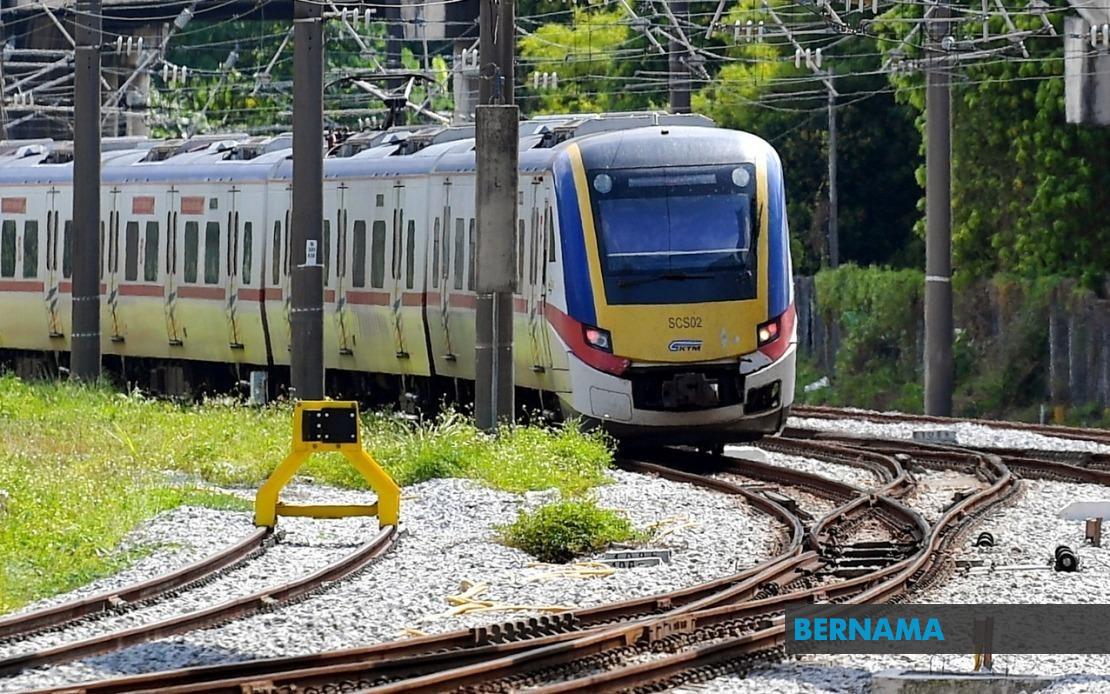
Keretapi Tanah Melayu Berhad (KTMB) is mobilising substantial extra rail capacity to handle the anticipated travel surge during Malaysia's National Day celebrations and school holidays. The operator will introduce 124 additional services across its Electric Train Service (ETS) and Electric Multiple Unit (EMU) Plus networks, making available 38,944 extra seats across multiple routes and travel windows from late August through early September. This represents a significant operational commitment to prevent overcrowding and ensure passenger convenience during one of the year's busiest travel periods.
The centrepiece of this expansion involves 100 supplementary ETS services, which will put 31,600 additional seats into circulation during three separate holiday windows: August 21 to 23, August 28 to 31, and September 4 to 6. These dates span the immediate National Day period and the school holiday breaks that Malaysian families typically use for domestic travel. The ETS operates Malaysia's premium intercity rail corridors, connecting major urban centres and handling passenger volumes that typically surge during public holidays. KTMB's decision to add such substantial ETS capacity underscores the operator's recognition that conventional service levels prove insufficient during peak demand periods.
Complementing the ETS expansion, KTMB will deploy 24 extra EMU Plus services furnishing 7,344 seats across selected dates spanning the entire holiday window from August 21 to September 6. Notably, this augmented EMU Plus service includes a geographical extension to Bandar Tasik Selatan, expanding route coverage and offering travellers from southern Selangor additional departure points. The EMU Plus service targets a market segment seeking a middle ground between the express ETS and the more frequent but slower conventional KTM Komuter, making this extension particularly valuable for commuters and holiday travellers in that corridor.
The northern rail corridor receives parallel attention through KTM Komuter reinforcements. Eight supplementary services will operate on the heavily-travelled Padang Besar-Butterworth-Padang Besar route from August 27 to 31, elevating the daily service count to 46 trains on this key northern artery. This route serves Penang and the northern border region, facilitating both domestic tourism and cross-border travel into Thailand. The addition of nearly 20 percent extra capacity on this specific route reflects passenger demand patterns in the north, where holiday periods coincide with increased leisure travel and family visits across the peninsula.
Ticketing for all supplementary services opened yesterday through KTMB's established sales infrastructure, providing travellers adequate advance booking windows. Early availability is crucial during holiday periods, when late bookings often result in traveller disappointment and uneven distribution of passenger loads across available capacity. By opening sales immediately, KTMB enables medium-term planning by Malaysian families and businesses, potentially smoothing demand distribution and optimising seat utilisation across the expanded service schedule.
Concurrently, KTMB marked the Electric Train Service's sixteenth anniversary through a week-long customer appreciation initiative running from August 10 to 14. The celebration included promotional vouchers, complimentary meals from KFC, complimentary travel tickets, and discounted fares of RM16, targeting both existing loyalists and potential new passengers. Such campaigns serve multiple strategic purposes: they acknowledge customer contribution to the ETS's operational success, generate goodwill during a period of enhanced service visibility, and provide incentives encouraging trial among price-sensitive segments who might otherwise opt for private transport or competing services.
Group Chief Executive Officer Datuk Azlan Shah Al Bakri contextualised the capacity expansion within the ETS's broader performance narrative, emphasising that sixteen years of consistent operation reflect fundamental customer confidence in Malaysia's premium rail transport infrastructure. The ETS entered service on August 12, 2010, initially serving the Kuala Lumpur-Ipoh corridor, subsequently expanding northward to Butterworth and Padang Besar in 2015, and extending southward—this expansion completing at year-end 2025. This geographical progression demonstrates how the ETS evolved from a single north-south corridor into a network serving diverse regional markets across peninsular Malaysia.
Operational statistics reveal robust recent growth trajectories that justify the holiday period capacity investments. The ETS has cumulatively transported 44.3 million passengers across its operational history. More tellingly, January-to-July 2024 figures show 3.67 million passengers, representing a 56 percent surge compared to 2.36 million passengers during the identical period in 2023. This acceleration suggests structural demand growth beyond cyclical holiday fluctuations, pointing toward sustained increases in intercity rail travel among Malaysian travellers. Such momentum indicates that capacity additions, while initially meeting holiday-specific needs, may represent prudent permanent network enhancements if the growth trajectory continues.
These capacity measures exemplify KTMB's strategic positioning within Malaysia's transport ecosystem. By proactively expanding during peak periods, the operator demonstrates commitment to service reliability and passenger experience quality—differentiation factors that influence mode choices among travellers increasingly concerned with journey comfort and schedule certainty. Enhanced capacity during holidays also reduces fare inflation pressures that might emerge from supply-demand imbalances, maintaining price accessibility for Malaysian families from middle and lower-income segments.
For regional observers, Malaysia's rail capacity expansion during holiday periods illustrates how Southeast Asian transport operators increasingly adopt dynamic scheduling strategies to manage demand volatility. This approach contrasts with static timetables common in earlier eras, reflecting operational sophistication and investment in systems enabling rapid service redeployment. As Southeast Asian middle classes expand and holiday travel normalises across the region, similar capacity-management strategies will likely proliferate among competing intercity rail operators throughout the region, setting precedents for service standards that travellers increasingly expect.

