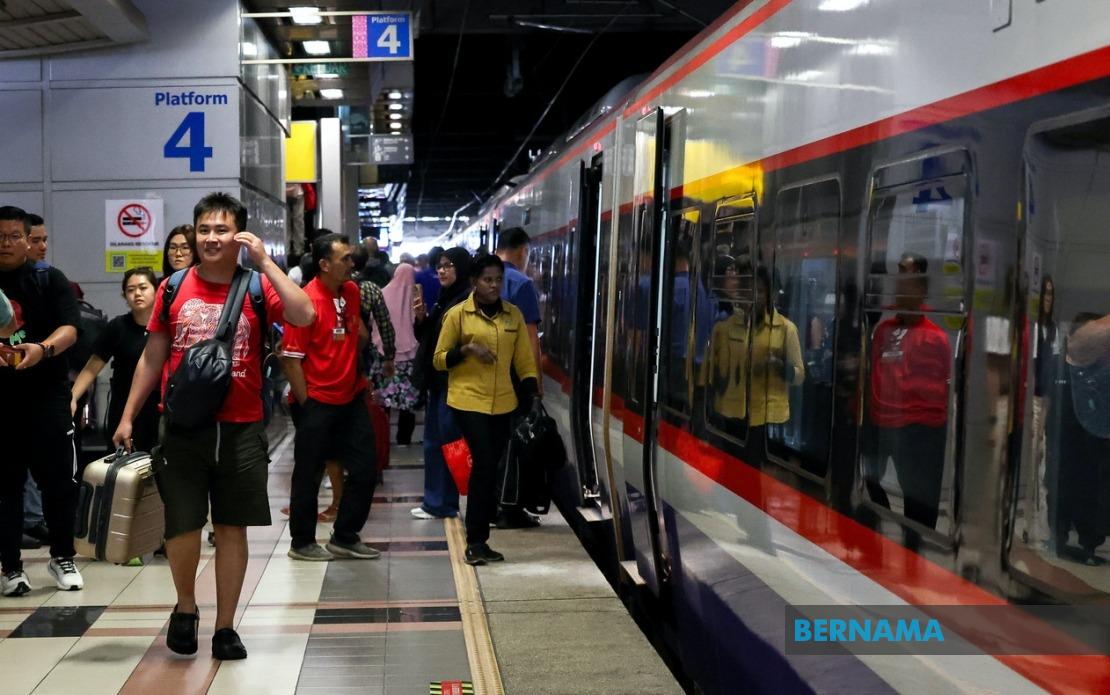
Anticipating a surge in passenger numbers during the Johor state election this weekend, Keretapi Tanah Melayu Berhad (KTMB) has mobilised additional capacity on its Electric Train Service network. The national railway company announced plans to introduce 7,464 supplementary seats spanning the critical southern rail corridor, responding directly to overwhelming demand that exhausted a previous batch of discounted tickets released in June.
The expansion represents KTMB's second phase of election-related service enhancements and targets two primary routes connecting voters to their home constituencies. Services will operate along the JB Sentral–Gemas–JB Sentral line and the KL Sentral–JB Sentral–KL Sentral corridor, the latter representing a crucial transport artery between the nation's capital and the major southern city of Johor Bahru. The railway operator is deploying eight supplementary train services in total—four per route—concentrated over a three-day window from July 10 through 12.
Capacity planning reveals the scope of expected movement: KTMB has allocated 2,488 seats daily across the operational period, indicating confidence that election-related travel will remain elevated during the polling weekend and its immediate aftermath. This scale of deployment underscores how Malaysian electoral exercises generate predictable demographic shifts as citizens prioritise returning to their registered voting locations, placing strain on transport networks designed for routine passenger loads.
To maximise uptake of rail transport over private vehicles, KTMB has implemented a 20 per cent fare reduction across all newly introduced services during the three-day window. This pricing incentive addresses both affordability concerns among voters and the state's broader objective of reducing road congestion during high-demand periods. The discount structure mirrors successful past initiatives and acknowledges that cost sensitivity influences transport modal choice, particularly among younger voters and those from lower-income backgrounds travelling longer distances.
Ticket availability commenced on a staggered basis to manage purchasing patterns. Sales for the JB Sentral–Gemas–JB Sentral route opened at 3.00 pm on July 7, while the higher-demand KL Sentral–JB Sentral–KL Sentral route ticket window commenced the following morning at 9.00 am on July 8. This phased approach allows KTMB to monitor demand trends and manage server loads on its digital ticketing platforms, preventing the system crashes that sometimes accompany large-scale simultaneous sales.
KTMB has established multiple channels for cashless ticket purchases, reflecting Malaysia's advancing digital infrastructure and the operator's digitisation priorities. The KITS Style mobile application provides the most accessible option for smartphone-enabled passengers, while the company's official website accommodates desktop users. Physical kiosk machines at designated stations serve passengers without digital access or those preferring in-person transactions. This multi-channel approach recognises the heterogeneous technology adoption patterns across Malaysia's travelling public.
The railway operator has issued explicit guidance on passenger conduct and timing to optimise operational efficiency. Commuters are urged to arrive at stations no fewer than 30 minutes before scheduled departures, acknowledging the processing time required for security screening and platform access. Critically, KTMB has stipulated that platform entrance gates will close five minutes before departure—a firm deadline designed to prevent late boardings that could delay subsequent services and cascade disruptions across the network schedule.
This proactive capacity expansion illuminates broader transport policy challenges facing Malaysia during electoral periods. State elections, particularly in populous constituencies like Johor, generate concentrated demand spikes that recur predictably every few years. The railway sector's capacity to absorb such surges without deteriorating service quality depends on advance planning and flexible resource deployment—capabilities that KTMB has progressively refined through experience. However, the near-complete sell-out of the previous June ticket allocation suggests capacity planning margins remain tight, with demand potentially outpacing supply during periods of heightened political engagement.
For Malaysian commuters, the promotion represents a rare opportunity to access premium intercity rail service at significantly reduced cost. The ETS network, operated as a higher-speed premium service between major cities, typically operates with fares substantially above conventional train alternatives. The temporary 20 per cent discount brings ETS pricing closer to competitive levels against express bus services and personal vehicle travel, potentially encouraging behavioural shifts toward rail even among price-sensitive passengers. Such temporary incentives, whilst economically suboptimal for the operator, generate network familiarity and may cultivate long-term ridership habits.
Regional observers should note that this KTMB initiative reflects how Southeast Asian democratic processes intersect with infrastructure capacity. Unlike some developed democracies with mature remote-voting systems, Malaysia maintains territorial voting requirements that necessitate physical presence in home constituencies. This model generates predictable but intense transport demand during election cycles. Other regional democracies, particularly Indonesia and the Philippines, encounter similar challenges, yet responses vary based on rail network maturity and government capacity for intervention. Malaysia's relatively developed southern ETS corridor and KTMB's organisational sophistication enable coordinated supply-side responses that may be unavailable elsewhere in the region.
Practical considerations for election-day travellers extend beyond ticketing. Journey planning assumes normal network operations, yet unexpected disruptions—mechanical issues, passenger emergencies, or weather events—could compress capacity further during the high-demand window. KTMB's Call Centre at 03-9779 1200 provides real-time information, whilst official social media platforms offer service updates. Passengers should monitor these channels closely, particularly given the three-day window's compressed timeframe and reduced ability to rebook on alternative days.

