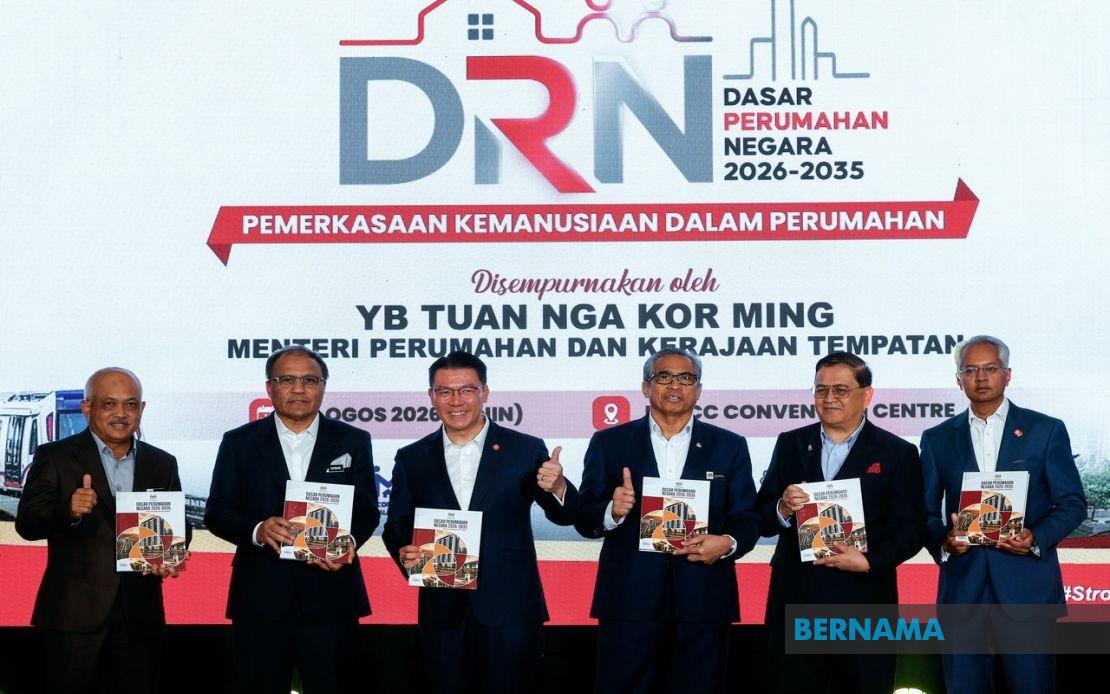
The Ministry of Housing and Local Government unveiled an ambitious legislative agenda yesterday in Kuala Lumpur, signalling a comprehensive overhaul of Malaysia's residential and property sector. Minister Nga Kor Ming announced plans to create three entirely new laws while substantially revising existing legislation, all aimed at establishing a more robust and equitable legal framework for the nation's housing market. This modernisation initiative unfolds against the backdrop of Malaysia's rapid urbanisation and the persistent challenge of housing stock that fails to meet actual demand despite decades of construction.
The legislative package includes three novel statutes: the Property Development Act, the Building Managers Act, and the Rent Tenancy Act, alongside a comprehensive amendment to the Strata Management Act 2013. The minister indicated that finalising these measures remains a top government priority. The timing of this reform agenda signals official acknowledgment that Malaysia's current housing regulations, designed in an earlier era, no longer adequately address contemporary challenges ranging from commercial property oversight to tenant protections and the management of Malaysia's burgeoning apartment sector.
The Property Development Act represents perhaps the most significant structural change. Currently, housing legislation narrowly targets residential projects, leaving a regulatory vacuum in other property categories. The new framework will extend coverage to commercial real estate including shop lots and mixed-use developments, closing a longstanding gap that has allowed certain property classes to operate with minimal statutory oversight. This expansion reflects the interconnected nature of modern real estate markets, where residential and commercial properties often share building infrastructure and management structures.
Malaysia's strata property sector has expanded dramatically, now encompassing nearly three million units distributed across more than 27,000 schemes—a figure that encompasses condominiums, SOHO units, and similar multi-ownership arrangements. The Building Managers Act responds to this growth by establishing mandatory standards for property maintenance, safety compliance, and habitability requirements. Without dedicated legislation, management standards across this vast sector remain inconsistent, creating risks for residents and complicating dispute resolution between building operators and unit owners.
The proposed Rent Tenancy Act addresses an increasingly contentious area as rental markets tighten across major urban centres. By establishing explicit protections for both landlords and tenants, the legislation aims to create transparency and fairness in contractual relationships that currently often lack standardised terms or recourse mechanisms. This dual-sided approach acknowledges that sustainable rental markets require stability for all parties, preventing the arbitrary evictions or exploitative terms that discourage property owners from entering the rental market while leaving tenants vulnerable.
Underlying these legislative initiatives is a deeper problem that Minister Nga identified with unusual candour: Malaysia does not suffer from insufficient housing construction, but rather from a profound mismatch between what developers build and what the market actually requires. This supply-demand disconnect has created significant property overhang—inventory that sits unsold because its characteristics, location, or pricing fail to align with purchaser preferences and capacity. The problem represents a massive loss of capital efficiency and represents billions in stranded investment.
To address this fundamental misalignment, KPKT plans to implement a comprehensive big data analytics system beginning next year. This platform will consolidate housing information from state governments, local authorities, and the ministry itself, organised by district and locality to provide industry participants with detailed market intelligence. Rather than mandating participation, the ministry positions the system as a voluntary subscription service, allowing developers to conduct rigorous feasibility studies before committing to projects. This approach leverages technology to improve decision-making across the sector without imposing top-down requirements.
The data analytics initiative carries particular significance for regional developers and investors throughout Southeast Asia, as it represents an early example of technology-enabled housing market transparency. Malaysian developers often operate across the region, and improved market intelligence tools could eventually provide templates for addressing similar mismatches in neighbouring jurisdictions with comparable urbanisation pressures and fragmented property information systems.
A particularly innovative aspect of the policy framework involves defining affordable housing according to local economic conditions rather than imposing nationwide standards. Using National Property Information Centre data, the ministry has identified that affordable housing in the Klang Valley averages approximately RM500,000, while equivalent housing in Kelantan costs roughly RM300,000—a difference reflecting divergent income levels and cost structures across regions. This locality-based approach abandons the fiction that housing affordability means the same thing in Bukit Bintang as it does in Kuala Krai, acknowledging that income-to-price ratios vary substantially across Malaysia's geography.
This localised definition methodology carries important implications for developers, policymakers, and residents across different income brackets. In high-cost urban areas, the approach enables more realistic assessments of what constitutes achievable affordability without requiring developers to operate at unsustainable margins. Simultaneously, it prevents the misallocation of subsidies and support mechanisms to markets where they prove unnecessary, freeing resources for regions where affordability challenges genuinely constrain homeownership.
Urbanisation trends underscore the urgency of these reforms. Malaysia's urban population share has grown from 28 percent in 1970 to 78 percent currently, with projections suggesting expansion to 85 percent by 2040. This concentration of population intensifies pressure on housing systems and requires increasingly sophisticated management of strata properties, rental arrangements, and developer accountability. The legislative and technological initiatives announced yesterday represent an attempt to create institutional capacity matching the scale and complexity of Malaysia's emerging urban reality.
The reform agenda also reflects broader regional housing challenges affecting Southeast Asia. Rising urbanisation, limited affordable housing stock, and mismatched development patterns afflict Malaysia's neighbours, positioning these policy innovations as potentially instructive for regional policymakers. As Malaysia implements these changes over the coming years, outcomes will likely influence housing policy discussions throughout the Association of Southeast Asian Nations, where similar pressures have created comparable regulatory gaps.
The involvement of senior officials including the chief secretary to the government, attorney general, and the ministry's leadership at yesterday's policy launch signals political commitment to implementation. This high-level engagement suggests the government recognises housing not merely as a sectoral concern but as a fundamental national priority affecting social stability, economic productivity, and quality of life across diverse population groups. Whether the four legislative initiatives advance rapidly through parliament, and whether the data analytics system achieves meaningful uptake among developers, will determine whether yesterday's announcement represents genuine transformation or another policy document destined for limited practical impact.

