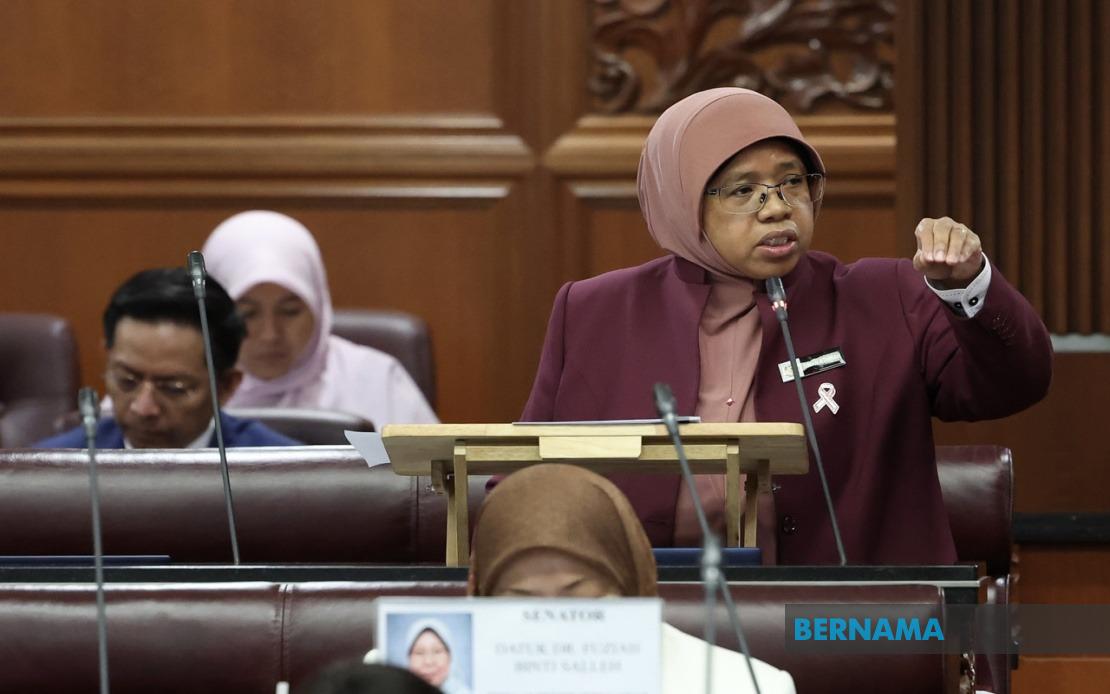
The Ministry of Housing and Local Government (KPKT) has announced a focused maintenance strategy targeting People's Housing Programme (PPR) residential blocks that have surpassed the ten-year mark, reflecting a pragmatic approach to managing infrastructure decline across Malaysia's stock of public housing. Deputy Housing and Local Government Minister Datuk Aiman Athirah Sabu outlined the initiative during parliamentary proceedings, emphasising that with finite resources, the ministry has adopted a precision-based framework concentrating on structural and mechanical failures that directly jeopardise occupant wellbeing and safety.
Under this prioritisation framework, the ministry has identified six critical intervention categories warranting immediate attention: lift systems, roof structures, water storage tanks and distribution networks, sanitary plumbing installations, electrical circuitry, and structural repairs affecting communal facilities. This tiered approach reflects accumulated experience in public housing management, where catastrophic failures in these domains pose genuine risks to thousands of residents living in high-density environments. The strategic narrowing of focus acknowledges an uncomfortable reality—that comprehensive renovation of Malaysia's ageing PPR portfolio far exceeds budgetary capacity, necessitating difficult choices about where intervention dollars deliver maximum protective value.
The budgetary constraints facing KPKT underscore broader challenges in maintaining Malaysia's public housing infrastructure as demographic and technological obsolescence converge. During the 12th Malaysia Plan cycle, the ministry channelled RM159.1 million across five rolling maintenance initiatives directed at high-rise PPR developments nationwide. Yet these outlays, substantial in nominal terms, represent partial responses to systemic maintenance backlogs. In 2026 alone, KPKT received 226 separate maintenance applications spanning ten priority repair categories, with applicants collectively requesting RM79.9 million in interventions. The ministry's approved allocation of RM44.6 million represents only 56 per cent of assessed requirements, leaving a funding gap of approximately RM35.3 million and forcing deferral of numerous legitimate repair claims.
This funding shortfall carries particular significance for Malaysian residents in PPR developments, many of whom are lower-income households with limited capacity to finance private repairs or seek alternative accommodation. The concentration of deferred maintenance compounds over time, transforming manageable deterioration into emergency situations requiring costlier interventions. Lift breakdowns in multi-storey blocks severely constrain mobility for elderly residents and those with disabilities; compromised electrical systems heighten fire risk; faulty plumbing creates sanitation hazards. The ministry's strategic focus on these domains reflects prioritisation of preventing acute crises rather than comprehensive renewal.
The procedural pathway for maintenance applications adds temporal friction to an already resource-constrained system. Applications from Joint Management Bodies and Management Corporations must first navigate Commissioner of Buildings or local authority review processes before ascending to ministry consideration. This gatekeeping function, while potentially filtering frivolous claims, introduces bureaucratic delay into infrastructure management. The KPKT timeline specifies a seven-month approval cycle: applications open August through October, followed by committee evaluations in November and December, controlling officer approval in January, local authority notification also in January, and Letters of Acceptance issuance no later than April. Only then do physical construction phases commence, pushing actual repair completion well into the latter half of each calendar year. For pressing structural or mechanical failures, this extended timeline creates anxiety among residents enduring deteriorated facilities.
The bottleneck between application volume and available funding illuminates a fundamental tension in Malaysian public policy. PPR developments house hundreds of thousands of citizens across urban centres from Kuala Lumpur to Johor Bahru, Penang, and Sabah. As these developments age—many now approaching or exceeding two decades of service—maintenance demands intensify. The original construction subsidies that enabled affordable housing for lower-income Malaysians did not establish corresponding maintenance reserves. Present-day governments therefore confront legacy obligations competing with contemporary spending priorities encompassing healthcare, education, and infrastructure development. KPKT's curated approach represents an attempt to maximise protective benefit within political and fiscal constraints.
Regional comparison provides perspective on this challenge. Singapore's Housing and Development Board manages public housing through comprehensive long-term maintenance frameworks funded via resident contributions and government subsidies, reflecting a city-state's fiscal capacity and compact geography. Within Malaysia's more dispersed settlement pattern and broader developmental needs, PPR maintenance receives proportionally lower budgetary emphasis. The 56 per cent funding approval rate suggests political acceptance of staged rather than comprehensive remediation, with annual cycles addressing the most critical failures while lesser defects accumulate. This perpetual triage becomes institutionalised, creating perennial maintenance anxiety for residents.
Deputy Minister Aiman Athirah's parliamentary explanation reveals KPKT's transparent acknowledgment of these constraints. Rather than claiming all maintenance needs receive attention, the ministry candidly outlined the selection methodology and explained why certain applications remain unfunded. This honesty, while politically uncomfortable, indicates policymakers recognise the unsustainability of present arrangements if housing demand continues without corresponding maintenance infrastructure investment. Advocacy groups representing PPR residents and civil society organisations focused on housing equity increasingly spotlight this disparity, potentially building political momentum for enhanced allocations in coming budget cycles.
The long-term implications of underfunded PPR maintenance extend beyond individual resident inconvenience. Deteriorating public housing contributes to urban decay in specific neighbourhoods, concentrating visible infrastructure failure in lower-income districts and potentially influencing property values and neighbourhood perceptions. Residents unable to achieve functional lift systems, reliable water supply, or adequate electrical safety gradually lose confidence in public institutions. These accumulated experiences shape political attitudes and social cohesion, particularly among communities already experiencing income constraints and limited policy influence. Strategic maintenance targeting critical safety systems represents damage mitigation, not genuine resolution of systemic underfunding.
Looking forward, KPKT faces intensifying pressure from multiple directions. The 12th Malaysia Plan maintenance initiatives continue through rolling cycles, but population growth and further ageing of existing stock mean application volumes will likely increase while budget growth remains constrained by competing priorities. The ministry's stated prioritisation of developments exceeding ten years old will become increasingly relevant as more PPR blocks cross this threshold. For Malaysian residents living in these developments, the explicit focus on critical systems provides some assurance that scarce resources target life-safety issues. Yet the persistent gap between application requests and funding approvals signals that comprehensive solution requires policy innovation beyond present budgetary arrangements, potentially including enhanced resident contributions, private sector partnerships, or fundamental recalibration of public housing maintenance financing models.

