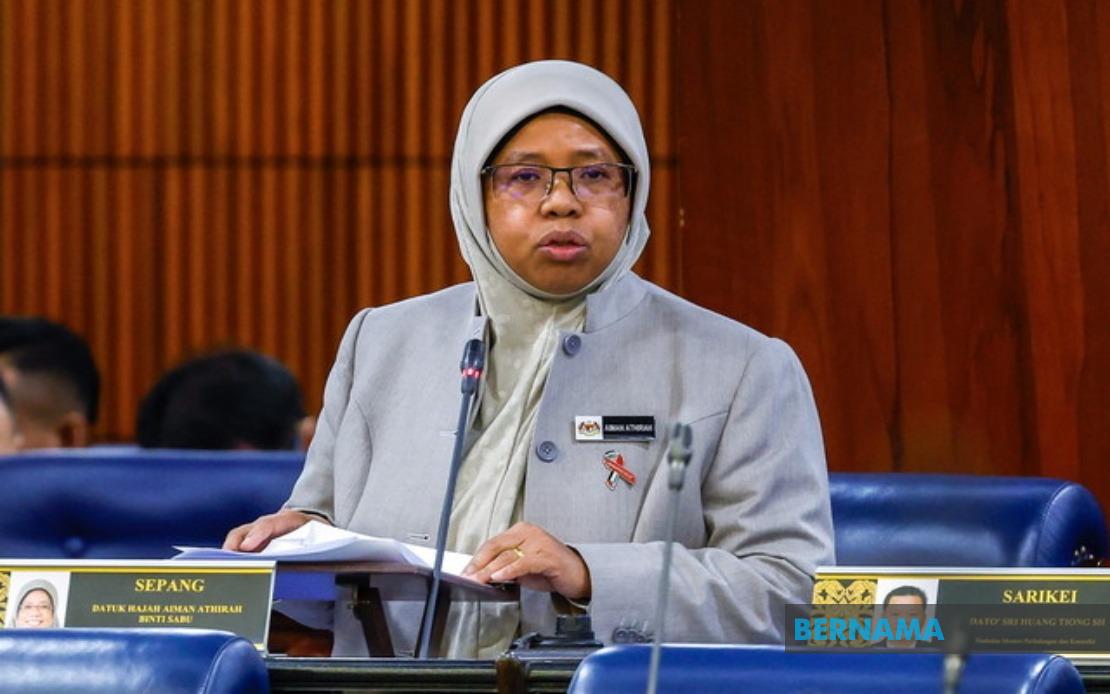
The Ministry of Housing and Local Government (KPKT) has given the green light to a substantial portfolio of community development projects, approving 573 schemes in Chinese new villages alongside 21 complementary initiatives in Indian villages. Deputy Minister Datuk Aiman Athirah Sabu revealed during parliamentary proceedings that this year's combined outlay totals RM73 million, marking a tangible commitment to upgrading living standards in historically underserved communities across the country. The announcement, delivered during question time in the Dewan Rakyat, underscores the government's continuing emphasis on equitable regional development and targeted support for demographic communities whose infrastructure requirements have long commanded policy attention.
Within the Chinese new villages initiative, infrastructure development constitutes the backbone of current activity, with 366 projects approved under this component. Progress has been measurable, though concentrated: 148 of these infrastructure schemes have reached completion, while 218 remain actively under construction or in implementation phases. This mixed completion rate reflects the staggered nature of village development, where projects frequently operate under varying timelines depending on site conditions, local coordination capacities, and funding disbursement schedules. The diversity of approved schemes spans water supply enhancements, road rehabilitation, drainage systems, and electrification work—foundational investments that directly improve daily living conditions and economic accessibility for rural residents.
A parallel housing assistance programme has emerged as the second pillar of support for Chinese new villages. The Housing Repair Assistance Programme encompasses 197 approved projects, with 47 already finished and another 150 progressing through various construction stages. This initiative targets existing housing stock, enabling residents to upgrade or restore deteriorating properties through government subsidies rather than requiring complete reconstruction. The programme addresses a critical need, as many properties in established new villages reflect decades of wear and face structural challenges that individual homeowners lack resources to remedy independently. The scale of this undertaking—nearly 200 projects—suggests systematic identification of priority areas and coordinated implementation across multiple village jurisdictions.
The third component, the New Village Housing Construction Assistance Programme, operates on a smaller but significant scale. Ten projects have secured approval under this scheme, though notably none has commenced construction as of the parliamentary update. This programme appears targeted at new builds or comprehensive housing solutions rather than repairs, making it likely that planning, land acquisition, and design phases remain underway. The slower mobilisation timeline for new construction projects is typical, as such undertakings demand extensive upfront preparation and community consultation before breaking ground.
For Indian villages, the government's engagement reflects a more recent policy orientation. A total of 18 Indian villages spread across six states—Johor, Melaka, Selangor, Kuala Lumpur, Perak, and Negeri Sembilan—have been designated for development under a RM2 million initiative focused on infrastructure, public amenities, and safety infrastructure. Current progress shows five projects completed, 13 under active construction, two in procurement stages, and one still in preliminary planning. The concentration of these 21 projects in Peninsular Malaysia's more densely populated regions reflects where Indian communities maintain significant populations, though the relatively recent launch of this dedicated funding stream—beginning only in 2025—suggests this represents a policy evolution addressing long-standing development gaps.
The broader historical context reveals substantial prior investment in Chinese new villages. Since 2023 through the previous fiscal year, the government channelled RM328.9 million toward development across 613 Chinese new villages nationwide, a figure that demonstrates the cumulative scale of commitment to these communities over a multi-year horizon. This consistent allocation suggests these villages now benefit from established budgetary frameworks and institutional mechanisms, contrasting with the nascent nature of Indian village development support.
Indian community development has emerged as a distinct priority more recently. The government commenced specially designated funding for Indian villages only in 2025, initially allocating RM15 million structured through dual mechanisms. The KPKT's direct 2025 budget initiative directs RM10 million across 54 projects benefiting identified populations in 50 Indian villages. Simultaneously, the Malaysian Indian Transformation Unit (MITRA) channels a separate RM5 million tranche through the Indian Community Socioeconomic Development Programme, creating a coordinated approach spanning both traditional housing and local government infrastructure channels as well as dedicated community development agencies.
The aggregate beneficiary figures underscore the targeted nature of these allocations. The RM15 million Indian village programme extends benefits to 22,144 individuals across the 50 villages selected, averaging approximately RM676 per beneficiary for the initial year. While modest on per-capita terms, this funding establishes foundational infrastructure and services that generate multiplier effects through improved access to amenities, enhanced property values, and strengthened community cohesion. The dual-pathway funding structure—through KPKT and MITRA—reflects recognition that housing ministry capacity, while essential, benefits from complementary engagement by agencies specifically mandated for community socioeconomic advancement.
The policy architecture surrounding these initiatives carries implications for Malaysia's broader development equity agenda. Chinese new villages, established during the emergency period as resettlement communities and numbering in the hundreds nationwide, have evolved into established settlements where second and third-generation residents maintain roots and economic activities. The sustained development investment reflects political recognition of these communities' historical significance and contemporary needs. Indian villages, by contrast, represent dispersed communities with often more diffuse institutional representation, making their recent inclusion in dedicated development frameworks potentially transformative for residents who have historically accessed public investment through less systematic channels.
Implementation challenges will likely emerge as these projects advance. Coordinating 594 simultaneous initiatives across multiple states demands sophisticated project management, particularly where local government capacity varies. The completion ratios for Chinese village projects—roughly 40 per cent for infrastructure work—suggest implementation periods extending beyond single fiscal years, requiring sustained funding commitments and protection from budget volatility. For newer Indian village initiatives, establishing effective delivery mechanisms and community engagement structures will prove equally critical, as projects launched with insufficient local coordination frequently encounter delays and quality concerns.
The regional dimension warrants attention for observers across Southeast Asia. Malaysia's approach to targeted development for historically marginalised communities, implemented through formal budgetary allocation and institutional coordination, offers a model that other pluralistic democracies in the region confront. The RM328.9 million multi-year commitment to Chinese villages and emerging parallel support for Indian communities suggests recognition that demographic diversity requires differentiated policy responses, not uniform provision. This framework, evolving gradually through parliamentary accountability mechanisms visible in the deputy minister's response, reflects incremental policy maturation rather than revolutionary intervention.
Looking ahead, the RM73 million annual commitment and the accumulating project portfolio indicate sustained governmental attention to village-level development. The completion of 48 projects annually—extrapolating from current Chinese village completion rates—means meaningful tangible improvements reach residents progressively. For Malaysian constituencies where Chinese new villages and Indian villages concentrate, these development portfolios translate directly into improved infrastructure, housing stock enhancement, and enhanced livelihood prospects. The deliberate structuring of support through distinct programmes targeting different need categories—infrastructure, housing repair, new construction—permits targeted resource allocation and outcome measurement that should ultimately improve development effectiveness compared to undifferentiated funding approaches.

