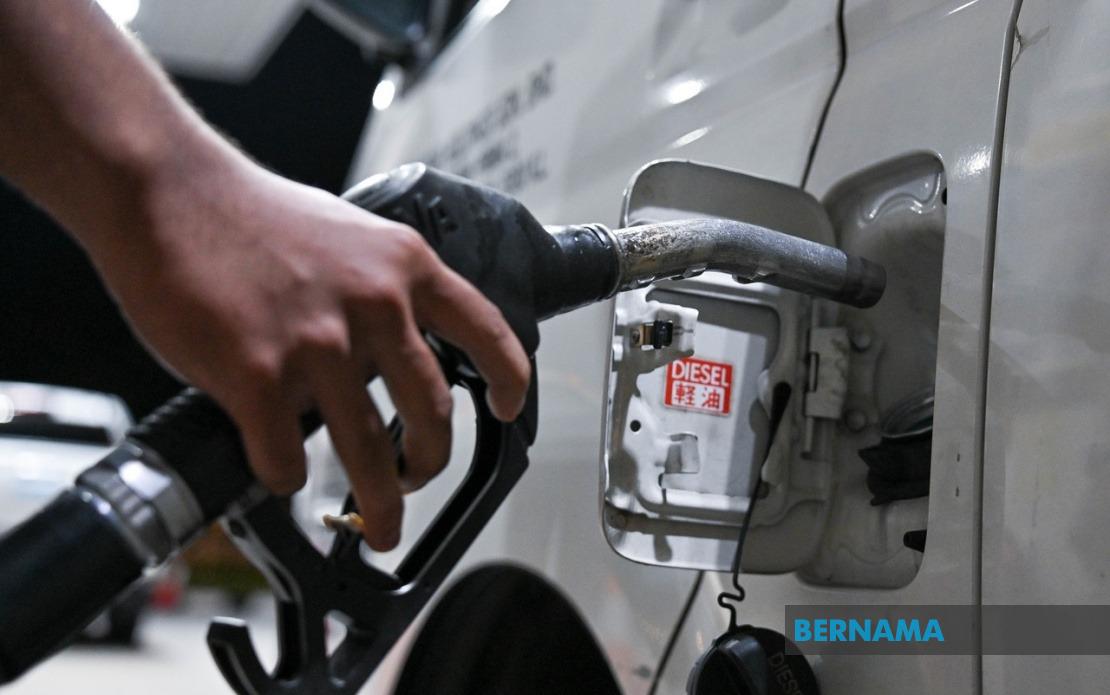
The Ministry of Domestic Trade and Cost of Living (KPDN) has formally revoked long-standing restrictions on diesel sales to commercial land transport operators in Sabah, Sarawak, and the Federal Territory of Labuan, removing purchase caps that have governed the market for the past three years. The decision takes effect on July 1, marking a significant shift in how the government manages fuel distribution across the eastern Malaysian states and the offshore jurisdiction.
According to Datuk Azman Adam, the KPDN's Director-General of Enforcement, the cancellation directly follows Prime Minister Datuk Seri Anwar Ibrahim's June 21 announcement introducing standardised subsidised diesel pricing nationwide under the BUDI Diesel Programme at RM2.10 per liter. This move represents a consolidation of pricing and distribution strategy after years of regional variations designed to manage supply and prevent cross-border diversion of cheaper fuel.
The previous framework had imposed tiered purchase restrictions on transport operators across the three regions—limiting purchases to 50 liters, 100 liters, or 150 liters depending on vehicle classification—since March 27, 2026. These caps were introduced as part of a broader government strategy to maintain subsidy efficiency and prevent fuel smuggling to neighbouring jurisdictions where prices were significantly higher. The removal of these restrictions signals confidence in the government's ability to manage fuel flows through alternative mechanisms.
Centrally, the lifting of purchase caps coincides with the rollout of a new transaction system requiring eligible diesel consumers to authenticate purchases using their MyKad national identification at participating petrol stations. This digital verification approach aims to create a more precise targeting mechanism than volume-based restrictions, ensuring that subsidised diesel reaches genuinely eligible users while reducing scope for diversion or resale.
Datuk Azman stated in a ministerial directive today that all retail fuel retailers holding scheduled controlled goods licenses in the three jurisdictions must cease enforcement of the previous restrictions. Fuel station operators face the dual responsibility of understanding the new MyKad-based system whilst dismantling compliance processes tied to volume limits that have been central to their operations for three years.
The KPDN's confidence in the new mechanism reflects broader government thinking about moving from blunt administrative controls toward technology-enabled targeting. By shifting from purchase quantity restrictions to identity-based verification, policymakers argue the system becomes more efficient—reducing queue times at pumps, lowering administrative burden on retailers, and creating clearer audit trails for compliance monitoring. The approach aligns with global trends toward digitising subsidy administration, though its effectiveness depends heavily on technological infrastructure readiness and consumer familiarity with the process.
For Malaysian transport operators, particularly those in Sabah and Sarawak where fuel costs significantly impact logistics economics, the removal of caps offers operational flexibility previously constrained. Trucking companies and bus operators can now purchase larger quantities per transaction, potentially reducing fuel procurement complexity and associated administrative costs. However, this flexibility remains contingent on maintaining MyKad eligibility status and on petrol station network capacity to serve higher individual transaction volumes without operational disruption.
The regional implications are substantial given East Malaysia's geographic isolation and historically higher fuel prices relative to peninsular Malaysia. Both Sabah and Sarawak have significant transportation sectors dependent on fuel subsidies to maintain competitive logistics costs. The transition to a unified national subsidy framework under BUDI, combined with removal of volume restrictions, suggests the government views the region as sufficiently integrated into national fuel management systems to warrant policy convergence.
Yet challenges remain in implementation. The MyKad verification system requires robust digital infrastructure at petrol stations across geographically dispersed regions. Retailers and consumers must rapidly adapt to new processes after years of volume-based purchases. Initial rollout periods often experience friction as systems stabilise and stakeholders learn new procedures. The KPDN has urged all parties to comply fully, though enforcement strategies for the new mechanism remain unclear.
The policy also reflects evolving government thinking about subsidy reform. Rather than eliminating subsidies—politically difficult given transport sector and household cost-of-living concerns—the government is restructuring how they operate. Standardised pricing across regions, combined with targeted digital verification, represents an intermediate approach attempting to balance fiscal sustainability with equitable access and operational practicality for eligible sectors.
Industry observers will watch whether the MyKad system successfully prevents leakage and maintains subsidy discipline without creating bottlenecks at fuel pumps. The transition period, typically six to twelve weeks, will reveal whether the new mechanism delivers on efficiency and targeting goals. Any significant disruptions could prompt rapid adjustments, while successful implementation may encourage similar digitised subsidy approaches across other fuel products and sectors.

