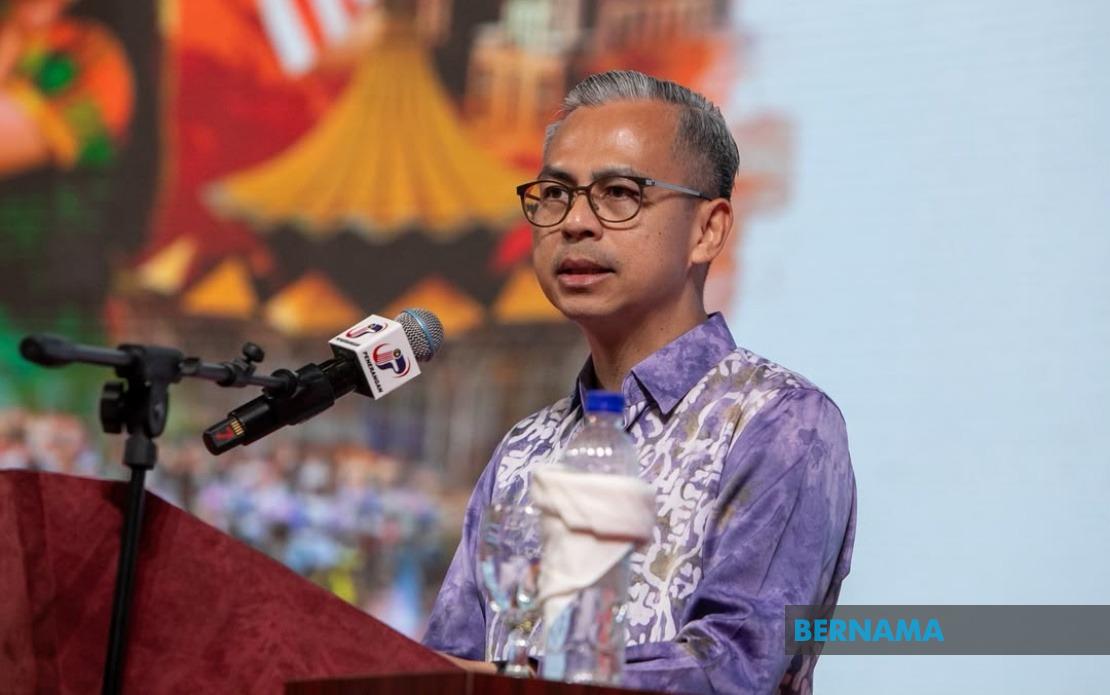
The Kembara Merdeka Jalur Gemilang convoy will persist as a flagship initiative for cultivating patriotism and deepening Malaysians' emotional connection to their nation, according to Communications Minister Datuk Seri Fahmi Fadzil. Speaking at the launch of the 2026 National Month and Fly the Jalur Gemilang campaign in Ipoh on July 19, Fahmi underscored the government's commitment to maintaining this symbolic journey as a centrepiece of the year's independence and Malaysia Day observances, even as officials navigate budgetary constraints.
The 2026 celebrations will operate under the theme 'Malaysia MADANI: Kesejahteraan Dinikmati' (Malaysia MADANI: Shared Prosperity), reflecting the government's broader socioeconomic vision. Rather than scaling back core messaging around national identity, Fahmi stressed that organisers would exercise prudent resource management while ensuring that the fundamental objectives of fostering civic pride and appreciation for the nation's sovereignty remain uncompromised. This balancing act signals an attempt to maintain the political and social value of large-scale patriotic campaigns without excessive spending.
The KMJG convoy, a mobile journey that traverses Malaysian states displaying the national flag and promoting unity, has become an established fixture in the government's annual calendar of nation-building activities. By designating it as a main highlight of the 2026 National Month and Malaysia Day festivities, the administration is signalling that such grassroots engagement and visible symbols of nationalism remain priorities in its governance agenda. The convoy's continuance reflects a calculated strategy to keep patriotism at the forefront of public discourse during a period of significant political and economic transition for the country.
Complementing the convoy initiative is the intensification of the One House, One Jalur Gemilang programme, which encourages private households to display the national flag as a tangible demonstration of sovereignty and collective pride. Fahmi positioned this household-level patriotism as integral to broadening the reach of the government's unity messaging beyond formal events and into the domestic sphere. The expansion of this initiative suggests recognition that grassroots participation—when citizens voluntarily adopt visible symbols of nationhood—can reinforce social cohesion more effectively than top-down directives alone.
The launch event was held at the Sultan Azlan Shah Ministry of Health Training Institute in Tanjung Rambutan, a venue selection that situates the patriotic campaign within a public health framework. Prime Minister Datuk Seri Anwar Ibrahim officiated the ceremony, lending executive authority and visibility to the initiative. The presence of National Unity Minister Datuk Aaron Ago Dagang and Perak Menteri Besar Datuk Seri Saarani Mohamad underscored the multi-level governmental alignment around these celebrations, reflecting coordination between federal, state, and ministerial portfolios.
For Malaysian readers, the emphasis on patriotic campaigns carries particular resonance given the country's history of using national symbolism to navigate ethnic and religious diversity. The focus on unity and shared prosperity through visible national pride—whether via the convoy or household flag displays—addresses an ongoing challenge in Malaysian society: building inclusive nationalism that resonates across different communities. The Malaysia MADANI framework itself represents an attempt to articulate a vision of development and governance that transcends traditional divisions.
The decision to proceed with full-scale celebrations despite resource constraints reveals prioritisation within government budgeting. Rather than deferring or scaling back National Month observances, officials have chosen to maintain visibility and public engagement, suggesting that the intangible benefits of patriotic mobilisation are deemed sufficiently valuable to justify continued investment. This approach may also reflect awareness that symbolic campaigns can be relatively cost-effective in generating media coverage and public participation compared to purely infrastructure-based initiatives.
Regionally, Malaysia's emphasis on patriotic campaigns and national symbolism occurs within a Southeast Asian context where governments across the ASEAN bloc employ similar strategies to reinforce state legitimacy and social cohesion. The KMJG convoy and flag initiatives represent Malaysia's variant of nation-branding activities that characterise modern governance in the region. Understanding these campaigns provides insight into how Malaysian authorities conceptualise and attempt to strengthen the affective dimensions of citizenship and national belonging.
Looking forward, the success of these 2026 initiatives will likely depend on sustained grassroots participation and the resonance of the Malaysia MADANI messaging with diverse populations. The integration of patriotic symbolism with prosperity-focused rhetoric suggests an attempt to link emotional attachment to the nation with tangible improvements in citizens' living standards. For observers tracking Malaysia's social and political trajectories, these celebrations offer indicators of how the government frames national identity and development in the coming years.

