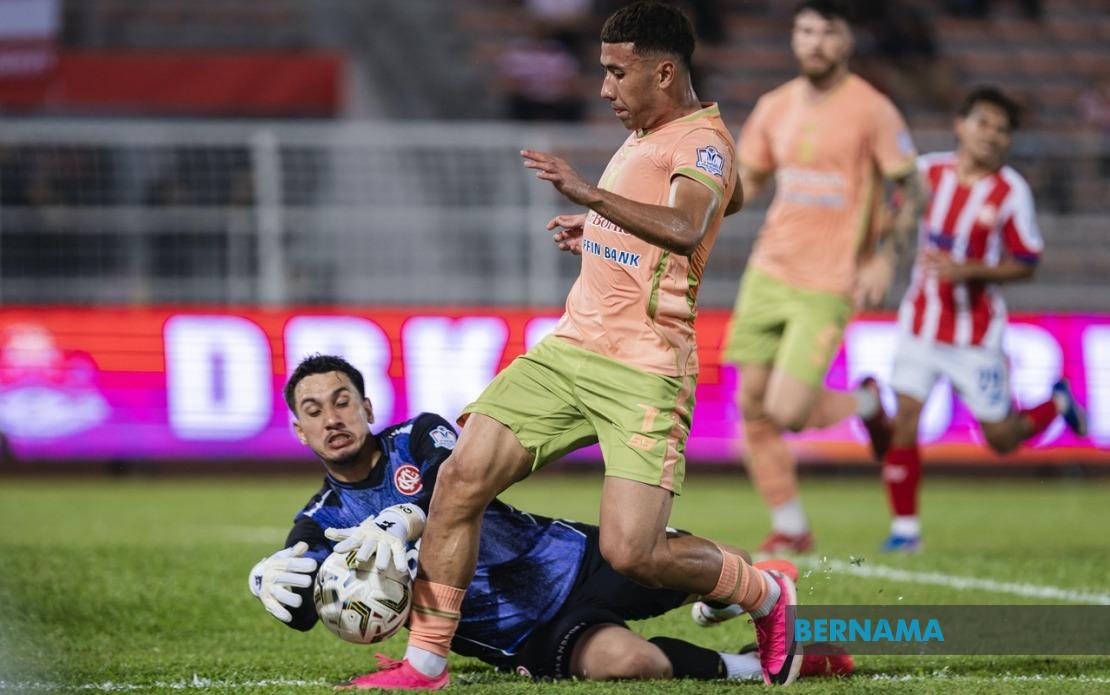
Kuala Lumpur City FC endured one of the most disastrous nights in recent Malaysian football history when they fielded just 10 players and a single substitute against Kuching City FC in their 2026-2027 Super League campaign opener. The match, played at Kuala Lumpur Football Stadium in Cheras, culminated in a catastrophic 0-6 defeat that left head coach Datuk Dollah Salleh visibly shaken at the post-match media briefing. For a coach with two decades-plus of experience at Malaysia's highest level, including previous roles with the national team, this represented an entirely novel and deeply unsettling circumstance that he admitted had caused him considerable personal distress in the preceding days.
The crisis engulfing KL City stemmed from a confluence of administrative and health complications that struck at the worst possible moment in the season. The club grappled with player registration difficulties compounded by a sudden outbreak of influenza that sidelined 13 players and two team officials simultaneously. This dual crisis left Dollah with severely limited options when the match kicked off, forcing him to deploy an undersized squad that was never equipped to compete against a full-strength opponent. The situation exemplified the vulnerability of Malaysian football clubs to operational disruptions, particularly when institutional systems falter and unforeseen health emergencies coincide.
Dollar articulated his disbelief during the press conference, emphasizing that no amount of experience could have adequately prepared him for fielding a team so depleted. His remarks reflected the psychological toll of managing such an untenable situation, acknowledging that observers around him had noticed his anxiety throughout the preceding week. The emotional weight of knowing that his players would be severely outmatched created a unique strain distinct from conventional match preparation. He contextualized the result as an inevitable consequence of structural disadvantage rather than tactical failure, noting that under normal circumstances such a scoreline would warrant substantial criticism of team performance and defensive organization.
Despite their numerical and physical disadvantage, KL City's players demonstrated resilience during the opening period, matching Kuching City when both sides operated at parity. The turning point arrived in the 44th minute when Kuching City captain James Okwuosa received a red card, theoretically equilibrating the contest. However, this brief respite proved illusory. The relentless intensity required to maintain defensive shape with reduced personnel throughout the first half had already extracted a severe physical toll. By the second half, KL City's severely fatigued players proved unable to sustain their disciplined approach, leading to the cascade of goals that defined the match.
Dollah's tactical philosophy during the latter stages prioritized damage limitation over any attempt at creating attacking opportunities. With an exhausted squad facing an energized opponent, he instructed his team to prioritize defensive compactness and resist further capitulation. He emphasized that under such extraordinary circumstances, motivating players to continue fighting rather than fracturing psychologically became the primary coaching objective. Rather than employing conventional tactical critiques, Dollah focused his post-match remarks on acknowledging his players' effort and commitment given the impossible conditions they confronted.
The institutional implications of non-participation proved equally significant in Dollah's decision-making. Withdrawing from the match entirely, despite the overwhelming disadvantage, risked serious consequences for KL City's league standing and financial position. Malaysian Football League protocols for teams unable to field competitive squads carry penalties far exceeding a single heavy defeat. The 0-6 scoreline, while painful, represented a preferable outcome to the sanctions that would attach to non-appearance. This calculation underscored how even catastrophic match results can constitute the lesser evil within Malaysian football's regulatory framework.
Prior to the Kuching encounter, KL City had already experienced severe disruption when their opening fixture against Negeri Sembilan FC failed to proceed at Stadium Tuanku Abdul Rahman, Paroi, the previous Saturday. Player registration problems prevented Negeri Sembilan from appearing, and the Malaysian Football League awarded them a 3-0 victory by default while imposing a RM50,000 fine on KL City. This sequence of two consecutive matches overshadowed by administrative chaos suggested systemic vulnerabilities in how Malaysian clubs manage player documentation and compliance with league requirements. For KL City specifically, the compounding nature of these crises raised questions about institutional capacity and governance.
A significant development emerged during Dollah's press conference when he announced that FIFA's transfer ban on KL City had been lifted following clearance from club ownership. This removal of restrictions promised to enable normal player registration procedures moving forward, ostensibly eliminating a major constraint on squad assembly. The coach emphasized that this development should provide relief from excuses that had plagued recent fixtures, signaling his expectation that operational difficulties would no longer undermine competitive preparation. With the FIFA sanction resolved, Dollah shifted his focus toward recovery and restoration of normal functioning ahead of the club's next encounter.
KL City's immediate fixture against DPMM FC scheduled for Saturday represented a critical opportunity for redemption and psychological restoration. Dollah framed this upcoming match as essential for rebuilding team morale and demonstrating that the catastrophic opening did not reflect his squad's actual capabilities or standards. The psychological dimension of recovering from such an overwhelming defeat merited serious consideration; players devastated by conceding six goals without response would require careful management to restore confidence. The coach's public call for improvement suggested his recognition that allowing the Kuching result to define the season's trajectory would prove disastrous.
The broader implications for Malaysian football extended beyond KL City's immediate circumstances. The sequence of events highlighted how quickly administrative mismanagement and health emergencies can undermine professional competition, particularly when systems lack resilience or contingency planning. For Malaysian readers following domestic football, the incident illuminated systemic challenges that clubs must address: robust player registration protocols, health and safety procedures, and financial structures that withstand unexpected disruptions. Dollah's unprecedented crisis, while unique in his personal experience, reflected vulnerabilities within Malaysian football administration that multiple clubs potentially face.

