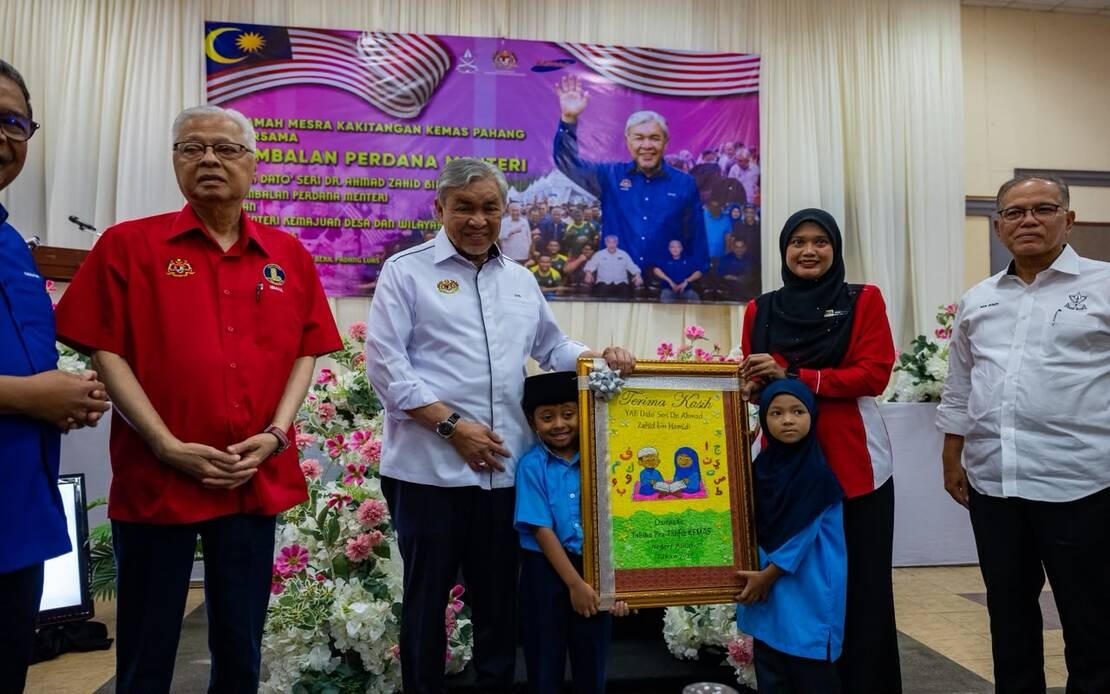
The Rural and Regional Development Ministry (KKDW) is embarking on a comprehensive modernisation of early childhood education under its Community Development Department (KEMAS), positioning the institution to meet contemporary demands whilst preserving traditional values. Speaking at the Pahang KEMAS Community Engagement Programme in Bera, Deputy Prime Minister Datuk Seri Dr Ahmad Zahid Hamidi outlined an ambitious strategy that marries religious education with digital literacy, reflecting growing concerns about balancing cultural identity with 21st-century competencies in Malaysia's education system.
The timing of this initiative aligns with significant structural changes in Malaysia's national education landscape. The government's decision to lower the school starting age from seven to six years old has elevated the role and importance of pre-school institutions, placing KEMAS kindergartens (Tabika) and childcare centres (Taska) at the forefront of foundational learning. This policy shift means that KEMAS facilities now serve as crucial entry points into the formal education system, bearing greater responsibility for shaping early childhood development across rural and urban communities.
Ahmad Zahid emphasised that KEMAS, which has operated for six decades and served approximately 8.4 million children since its inception, must evolve without abandoning its core mission of community development. The ministry's vision reflects a pragmatic acknowledgment that early education institutions cannot remain static in rapidly changing societies. By integrating Smart Class programmes and smartboards into KEMAS kindergartens, the ministry aims to ensure that children from disadvantaged backgrounds gain exposure to technology alongside their peers in better-resourced private institutions, narrowing the digital divide at the earliest educational stage.
The religious education component represents a deliberate policy choice to strengthen cultural and spiritual foundations alongside academic development. Ahmad Zahid announced plans to expand Quranic memorisation programmes beginning next year, extending beyond the traditional focus on Juzuk 30 to include Surah Yasin, Al-Waqiah, Al-Mulk and As-Sajdah. This structured approach reflects recognitions that early childhood is an optimal period for language acquisition and memory development, and that religious literacy forms part of Malaysia's broader educational objectives, particularly in a Muslim-majority nation.
Implementing these expanded religious programmes requires substantial groundwork. Ahmad Zahid stressed that KEMAS educators themselves must first master these memorisation techniques to ensure consistency and effectiveness across the network. This prerequisite highlights a broader challenge in educational transformation—that infrastructure improvements and curriculum changes depend fundamentally on teacher preparation and professional development. The ministry's willingness to invest in teacher training before rolling out new programmes suggests a thoughtful implementation approach rather than hasty policy introduction.
Cooperative governance structures will prove essential to this transformation's success. Ahmad Zahid called for closer collaboration between federal and state governments, parliamentary representatives, and state assembly members to secure the technological facilities necessary for modernised early education. Pahang's role in this initiative demonstrates practical commitment, with the state government facilitating land title security and providing grants for KEMAS facilities, alongside funding for renovation and infrastructure improvements. This multi-level governmental engagement reflects an understanding that educational transformation requires coordinated resource allocation and sustained political support.
The broader context underscores why this initiative matters for Malaysia's development trajectory. Early childhood education establishes foundations for lifelong learning, social integration, and economic participation. By ensuring that children from rural and lower-income households gain early exposure to digital tools and structured religious education, the ministry aims to enhance educational equity and social cohesion. For Southeast Asia more broadly, Malaysia's approach models how developing economies might integrate technology with cultural values in pre-school settings, a question facing many regional governments.
Ahmad Zahid's emphasis on political stability and willingness to embrace reform carries particular resonance in Malaysian context. Effective implementation of educational policy depends on consistent governmental commitment across electoral cycles and administrative transitions. The explicit acknowledgment that reform requires political will reflects understanding that institutional change often encounters resistance and requires leadership patience and persistence. This framing positions early childhood education as a strategic national priority deserving sustained investment.
The memorisation programme expansion warrants scrutiny regarding educational methodology. Whilst early childhood development benefits from rhythm, repetition, and exposure to diverse linguistic patterns, educational approaches must balance memorisation with comprehension, play-based learning, and holistic development. How KEMAS implements these programmes—whether through rote memorisation or contextualised, meaningful engagement with Islamic texts—will determine actual educational outcomes versus symbolic compliance with policy objectives.
Resourceallocation represents the ultimate test of governmental commitment. Technology implementation in early education requires not merely purchasing smartboards but ensuring reliable electricity, internet connectivity, teacher technical competency, and age-appropriate digital content. Rural communities where many KEMAS facilities operate often face infrastructural constraints that impede technology uptake. Transforming this initiative from policy aspiration into classroom reality depends on sustained funding, logistics planning, and troubleshooting beyond initial announcements.
The convergence of technology and religious education also raises questions about pedagogical coherence. How might Quranic memorisation programmes integrate with digital learning environments? Can smartboard applications meaningfully enhance religious education or do they risk commodifying spiritual instruction? These implementation details will shape whether this initiative genuinely strengthens early childhood development or represents symbolic gestures toward modernisation and cultural preservation without substantive educational impact.
Looking ahead, the success of this KEMAS transformation could influence broader Malaysian educational policy. Should KEMAS effectively demonstrate that technology and religious education can complement rather than conflict, other institutions might adopt similar integrated approaches. Conversely, implementation challenges could expose tensions between rapid modernisation and thoughtful pedagogical development, informing more realistic policy design. For Malaysian educators, policymakers, and parents, this initiative represents a critical test of whether government can authentically serve children's developmental needs whilst navigating competing national priorities.

