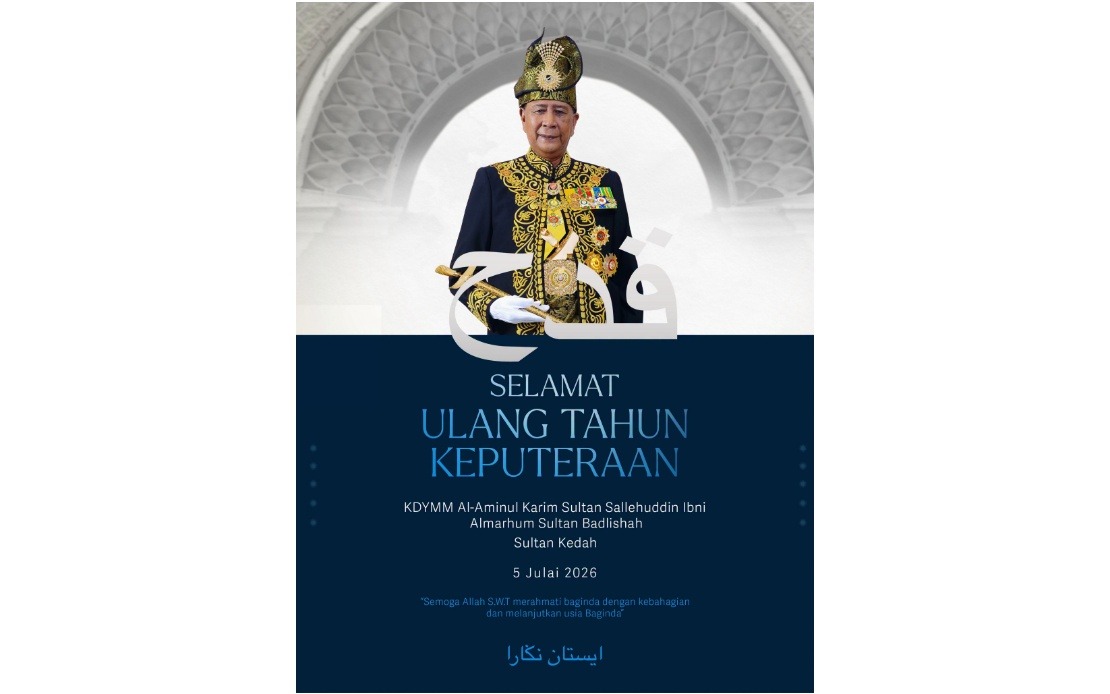
His Majesty Sultan Ibrahim, King of Malaysia, has extended birthday greetings to the Sultan of Kedah, Al-Aminul Karim Sultan Sallehuddin Sultan Badlishah, marking the royal dignitary's 84th birthday. The gesture underscores the bonds of fellowship that characterise relationships among Malaysia's sultans, a cornerstone of the country's constitutional monarchy framework. Through an official social media announcement, the King conveyed his well-wishes to one of the nation's most senior rulers, reflecting the ceremonial protocols and personal regard that define interactions within the royal hierarchy.
In his message shared via the official Facebook platform of Sultan Ibrahim Sultan Iskandar, His Majesty offered prayers for Sultan Sallehuddin's continued blessing with joy, robust health, and longevity. The phrasing employed—invoking divine mercy through Islamic invocations—carries cultural and religious significance within Malaysian royal tradition, demonstrating how contemporary communication channels are employed to maintain time-honoured courtesies. Such public expressions of goodwill serve multiple purposes, reinforcing both personal relationships and institutional continuity across the federation's varied sultanates.
Prime Minister Datuk Seri Anwar Ibrahim similarly seized the occasion to honour the Kedah ruler, demonstrating the government's respect for the constitutional role of the sultanate. The Prime Minister's message extended beyond Sultan Sallehuddin himself, encompassing the Sultanah of Kedah, Sultanah Maliha Tengku Ariff, and the broader royal family unit. This inclusive approach acknowledges the collective nature of royal institutions and their broader family networks, which carry symbolic weight within Malaysian governance structures.
The Prime Minister's felicitations, delivered through the medium of a Facebook post, incorporated the traditional Malay salutation "Daulat Tuanku. Dirgahayu Tuanku," language choices that bridge contemporary digital platforms with classical expressions of loyalty and respect. His invocation of Allah SWT's mercy, guidance, and blessings for the royal household reflects the integration of Islamic principles within Malaysia's constitutional monarchy, an element that distinguishes the nation's governance model from purely secular systems.
Sultan Sallehuddin's tenure as Sultan of Kedah spans decades of significant national development. At 84 years old, he represents an elder generation of Malaysian rulers who have witnessed the country's evolution from post-independence consolidation through periods of rapid modernisation. His continued presence within the royal establishment provides institutional continuity and embodied historical memory of the federation's formative years.
The exchange of birthday greetings at this level reflects broader protocols governing relations between Malaysia's federal government and the state sultanates. While the Yang di-Pertuan Agong serves as constitutional monarch representing the federation, the individual sultanates retain ceremonial and symbolic importance. Such courtesies maintain the delicate constitutional balance that has characterised Malaysian governance since independence, whereby sultans exercise influence through their institutional roles while the prime minister heads the executive government.
Kedah's position as one of Malaysia's northern states carries both historical and contemporary significance. The sultanate's governance, economic development, and social programmes intersect with broader national concerns, making gestures of respect between federal leadership and state rulers matters of political as well as personal importance. When national figures acknowledge milestone moments for senior state rulers, they affirm the federation's commitment to federalism and the constitutional status of the sultanates within Malaysia's political architecture.
The timing and public nature of these birthday greetings also underscore how modern digital platforms facilitate the rapid dissemination of official messages. Facebook posts enable direct communication with wider audiences than traditional press releases alone might reach, allowing citizens to witness their leaders' observance of royal protocols and courtesies. This transparency in ceremonial matters contributes to public awareness of the ongoing functioning of constitutional institutions and the respect accorded to their various components.
For residents of Kedah and neighbouring states, such acknowledgments from national leadership carry local resonance. They signal federal recognition of the sultanate's continued relevance and its ruler's standing within national councils, whether formal or informal. These symbolic gestures, though seemingly routine, reinforce the legitimacy and significance of state-level institutions during periods when federal authority has expanded considerably across modern Malaysia's developed governance infrastructure.
The celebration also provides context for understanding how Malaysia's unique constitutional arrangements balance centralised national authority with federalised respect for historical sultanates. Unlike purely unitary states or federal systems where regional leaders possess primarily executive functions, Malaysia's sultans carry ceremonial weight, constitutional roles in their respective states, and symbolic representation of continuity with pre-colonial polities. Birthday acknowledgments from the highest national authorities affirm this particular constitutional settlement.
As Malaysia continues to navigate contemporary challenges ranging from economic restructuring to technological transformation, institutions and figures representing historical continuity gain additional salience. Senior rulers like Sultan Sallehuddin embody the stability and institutional memory that societies undergoing rapid change often value, making gestures of respect from contemporary leadership more than mere formality—they represent deliberate affirmations of the legitimacy of established constitutional and traditional frameworks within modern Malaysia.

