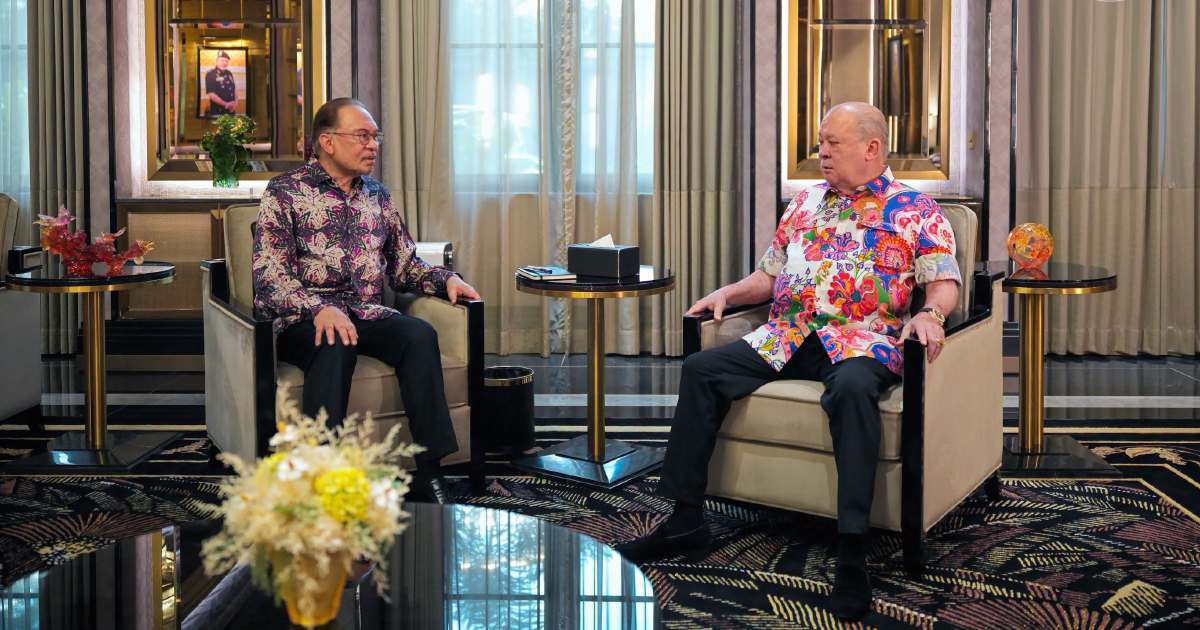
The King of Malaysia, His Majesty Sultan Ibrahim, welcomed Prime Minister Datuk Seri Anwar Ibrahim for a formal audience at Istana Bukit Tunku in Kuala Lumpur, underscoring the constitutional protocol that precedes significant national commemorations. The gathering took place on the eve of the nation's 69th National Day, one of Malaysia's most important annual observances that celebrates the country's independence and unity as a sovereign nation.
The audience between the monarch and the head of government represents an important constitutional moment in Malaysia's parliamentary democracy. Under the Malaysian constitution, the King exercises a ceremonial and advisory role while the Prime Minister leads the executive branch, and their regular consultations form a crucial aspect of institutional governance. Such meetings are particularly meaningful before major national occasions, as they allow for dialogue between these two highest offices of state.
The timing of this audience demonstrates the formal preparation that precedes Malaysia's National Day celebrations. The 69th iteration of this annual commemoration marks nearly seven decades since the nation achieved independence on August 31, 1957, a watershed moment that established Malaysia as a self-governing nation. The occasion typically involves nationwide festivities, official ceremonies, and expressions of national pride across all states and federal territories.
For Malaysian citizens, National Day represents more than a historical milestone—it embodies the social contract that binds the diverse population together. The annual celebration serves to reinforce the founding principles upon which the nation was built, including the constitutional monarchy as the head of state and the rule of law. These values remain central to Malaysia's identity and institutional framework, even as the country navigates contemporary economic and social challenges.
The audience also carries symbolic weight regarding governmental continuity and stability. By publicly receiving the Prime Minister before a major national occasion, the King demonstrates the functioning of Malaysia's constitutional arrangements and the coordination between the palace and the executive branch. This visible engagement between institutions helps reassure citizens of orderly governance and institutional health during periods of political or economic transition.
For regional observers, such interactions illustrate how Malaysia maintains its distinctive system of constitutional monarchy combined with parliamentary democracy. Unlike purely republican systems, Malaysia's arrangement places significant emphasis on the role of the Yang di-Pertuan Agong, or King, as both a symbol of national unity and a constitutional guardian. This system has remained relatively stable throughout the nation's post-independence history, surviving various political challenges and transitions of power.
The preparation for National Day celebrations involves multiple government agencies, state governments, and community organizations working in concert to ensure the commemorations reflect the nation's diversity and shared heritage. The royal audience with the Prime Minister signals that the highest levels of government are engaged and coordinated in these efforts. Such orchestration is particularly important given Malaysia's multicultural and multi-religious composition, where national celebrations must resonate across different communities and regions.
In recent years, Malaysia's National Day observances have adapted to include contemporary themes while preserving traditional elements. The 69th National Day will likely emphasize current governmental priorities alongside historical reflection. The Prime Minister, in his capacity as chief executive, would typically brief the King on the government's plans for the celebrations and potentially seek royal guidance on matters of national importance that may arise during this significant period.
The meeting between Sultan Ibrahim and Datuk Seri Anwar Ibrahim comes as Malaysia continues to navigate economic recovery and political stability following various challenges in recent years. National Day provides an opportunity for the government to communicate its vision and achievements to citizens, and having secured the royal audience beforehand ensures that state institutions are aligned in their messaging and priorities.
Historically, Malaysia's National Day celebrations have served as occasions for national reflection and renewal, allowing citizens across different states and backgrounds to participate in shared commemoration. The formal engagement between the King and Prime Minister before these celebrations reinforces the institutional framework that supports such collective observances. This constitutional coordination between the monarchy and the elected government remains a distinctive feature of Malaysia's approach to national identity and governance.
The audience also underscores the continuing relevance of Malaysia's constitutional arrangements in the modern era. While many Commonwealth nations have evolved their relationships between monarchs and prime ministers, Malaysia's system maintains robust traditional elements alongside contemporary governance practices. For Malaysians and regional observers, this balance represents a conscious choice to preserve institutional heritage while adapting to present-day administrative requirements.

