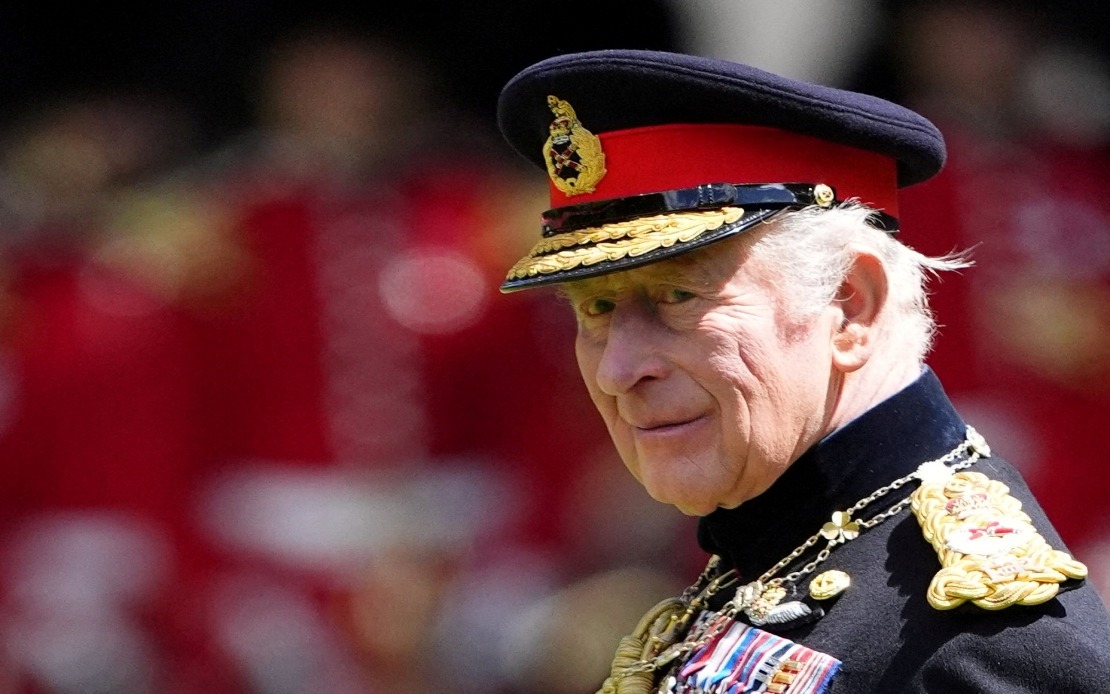
King Charles III has made history by becoming the first reigning British sovereign to publicly disclose his personal tax contributions, a watershed moment for royal transparency in the United Kingdom. Buckingham Palace revealed on Thursday that the monarch paid £12.9 million in personal taxes during the 2024-2025 fiscal year, marking a significant departure from centuries of royal financial secrecy. This voluntary disclosure represents a fundamental shift in how the Crown approaches public accountability regarding its finances, an issue that has long generated debate among taxpayers and constitutional observers across the Commonwealth.
The revelation came alongside a comprehensive statement from the Royal Household detailing the various streams of royal revenue, demonstrating a deliberate effort to demystify how the monarchy funds itself in the modern era. The palace specifically highlighted that this transparency initiative was designed to provide citizens with greater clarity about the sources and uses of royal income, addressing longstanding public curiosity about the financial mechanics of Britain's constitutional arrangements. For Malaysian observers of Commonwealth affairs, this development underscores how even the most venerable institutions are adapting to contemporary demands for governmental and institutional accountability.
The figures disclosed paint a picture of substantial royal income and corresponding tax obligations. In the preceding 2023-2024 tax year, King Charles paid £11.7 million in personal taxes, meaning his cumulative tax contributions since ascending the throne in September 2022 have exceeded £30 million. These sums are drawn primarily from the king's personal investments and his privately held estates, particularly Balmoral in Scotland and Sandringham in Norfolk, which generate considerable revenue independent of the state-funded Civil List or Sovereign Grant that covers the Crown's official functions.
Crucially, it bears noting that British monarchs operate under a unique legal framework that exempts them from income tax, capital gains tax, and inheritance tax obligations. This constitutional privilege, inherited from centuries of royal prerogative, remains technically intact. However, since the 1990s, successive monarchs have voluntarily entered into tax arrangements with Her Majesty's Revenue and Customs, effectively choosing to contribute as if the exemptions did not exist. This voluntary compliance represents a significant constitutional convention, though one that relies on royal goodwill rather than legal compulsion, a nuance often misunderstood by the public.
The practice of royal tax transparency is not entirely new, as King Charles initiated disclosure of his personal tax payments during his tenure as Prince of Wales, a practice that spanned decades. What distinguishes the current disclosure is that it now applies to a reigning monarch rather than a senior royal, crossing a threshold that no previous British sovereign has voluntarily breached. This progression suggests that King Charles views transparency as integral to the Crown's legitimacy and public support in an age when institutional trust requires demonstrable accountability. The decision reflects broader global trends wherein even the most powerful and traditionally insulated institutions are compelled to operate under public scrutiny.
James Chalmers, the keeper of the Privy Purse—the senior financial official of the Royal Household—offered a formal justification for these disclosures, noting that while royal finances may sometimes appear bewildering to outsiders, the underlying system is grounded in legal frameworks and refined through generations of refinement. His statement emphasised that the present arrangements are structured to enable the monarch to serve with genuine independence while simultaneously maintaining accountability and advancing the long-term interests of the nation. This formulation suggests that the palace views transparency not as a diminishment of royal authority but as a necessary safeguard for the institution's continued relevance and public acceptance.
The disclosure carries significant implications for Southeast Asian monarchies and other Commonwealth realms that occasionally face similar questions about royal finances. Malaysia, with its own constitutional monarchy and rotating royal system among the Malay rulers, operates under different financial arrangements than the British Crown, yet the principle of public transparency regarding state-funded institutions resonates across Commonwealth jurisdictions. King Charles's approach offers a template for how traditional monarchies might address public demands for financial accountability without fundamentally altering their constitutional status or independence.
From a broader constitutional perspective, this transparency initiative reflects evolving standards for institutional governance in democratic societies. The voluntary nature of the tax payments and their disclosure demonstrates that even institutions with ancient privileges can adapt to contemporary expectations regarding openness and accountability. Rather than waiting for legislation to compel disclosure, King Charles has chosen to establish norms of transparency proactively, potentially forestalling future criticism or demands for statutory regulation of royal finances. This strategic approach may ultimately strengthen public confidence in the monarchy by demonstrating that the institution willingly submits to scrutiny.
The sums involved—£12.9 million in annual payments—are substantial in absolute terms but represent a relatively modest proportion of the total resources flowing to the Crown through various channels, including parliamentary grants and estate revenues. This context matters for public understanding, as the headline figures might otherwise suggest that the monarchy is straining under an excessive tax burden. In reality, the tax payments represent a modest contribution from considerable personal wealth, illustrating how even voluntary compliance by the wealthiest figures in society generates significant revenue for public coffers. For Malaysian taxpayers and citizens across the Commonwealth, the disclosure implicitly reinforces that contributions from high-income earners, whether voluntary or compulsory, remain important to public finances.
The timing of this disclosure, coinciding with broader discussions about the future of the monarchy in an increasingly republican-minded age, suggests that palace officials recognise transparency as a crucial tool for preserving public support. By demonstrating that the Crown contributes meaningfully to the tax system that supports public services, rather than merely benefiting from constitutional privilege, the monarchy presents itself as aligned with rather than separated from the interests of ordinary citizens. This rhetorical positioning has particular resonance in an era when anti-establishment sentiment remains potent across many democracies.

