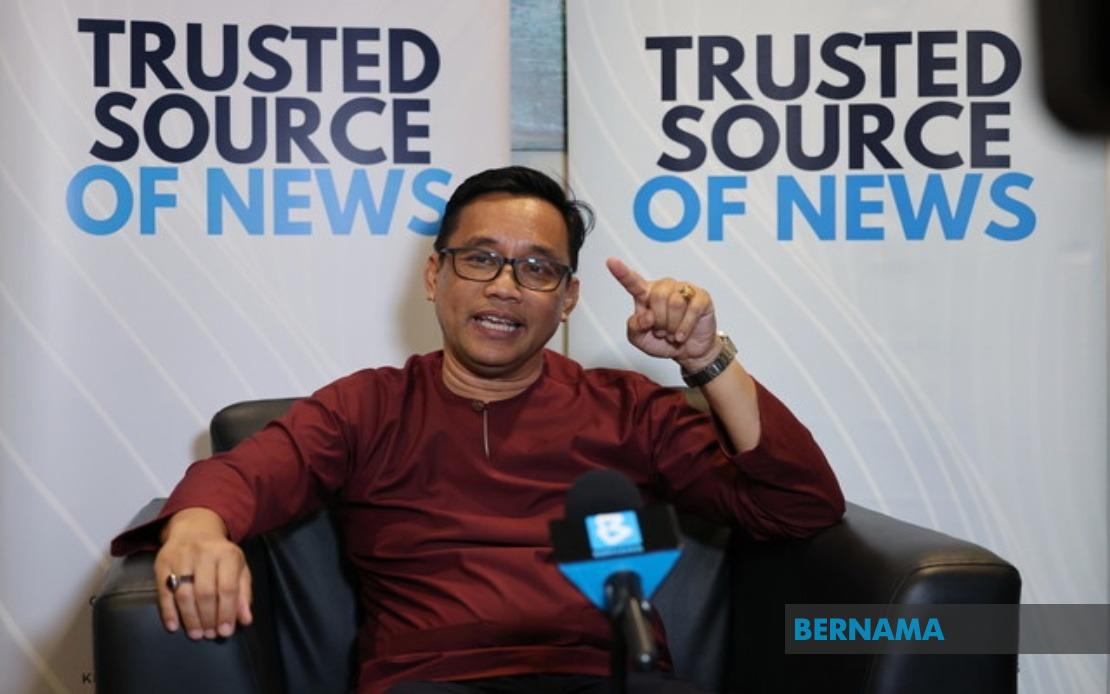
Pakatan Harapan candidate Mohd Khuzzan Abu Bakar is seeking to reclaim the Semerah state seat in the 16th Johor state election scheduled for July 11, framing his return not as a bid to overturn his previous loss but as an opportunity to resurrect development programmes that stalled when the opposition coalition exited the state government four years ago. The 58-year-old, who previously held the position of Johor Youth, Sports, Culture and Heritage Committee chairman, contends that his electoral defeat in 2022 interrupted a slate of commitments that remain unfulfilled for the constituency's residents.
The Semerah race carries particular weight as it represents territory where PH once held sway before the political realignment of 2020 reshaped Johor's governance landscape. Khuzzan's decision to contest again reflects broader PH strategies across the state, where the coalition is attempting to recapture constituencies lost during the previous election cycle. His personal narrative—born in Batu Pahat, married to a woman from Semerah—underscores the localism that increasingly characterises electoral competition in Malaysian constituencies, where community rootedness carries measurable political currency.
Among Khuzzan's stated development priorities is the restoration of the Taman Sri Sulong Youth Mini Complex, a project that appears emblematic of the broader infrastructure backlog he attributes to the change in administration. Beyond physical infrastructure, he emphasises addressing the mundane but consequential issues that directly affect daily living standards: chronic water supply problems plaguing Semerah and recurring flash flooding in adjacent areas including Batu Pahat and Tanjung Laboh. These infrastructure grievances—unglamorous but persistent concerns—often determine electoral outcomes in peripheral constituencies where basic service delivery remains inconsistent.
Economic opportunity constitutes another pillar of Khuzzan's platform, particularly youth employment in a state economy that he characterises as increasingly oriented toward investment and technology sectors. This framing reflects contemporary Malaysian political discourse, where candidates across the spectrum invoke technological transformation and digital economy participation as solutions to youth underemployment. Khuzzan's background as a former banking officer informs his specific approach to economic development: he advocates strengthening small and medium enterprises through enhanced financial management support rather than additional capital provision alone.
His proposal to complement existing financing schemes such as TEKUN Nasional and Amanah Ikhtiar Malaysia with structured financial guidance represents a technocratic approach to poverty alleviation that differs from both subsidy-centric and purely market-driven alternatives. This positioning appeals particularly to urban-aspirational voters and young entrepreneurs sceptical of conventional patronage politics yet unconvinced by laissez-faire approaches. The emphasis on financial literacy and sustainable business practices aligns with international development orthodoxy while remaining domestically intelligible.
Khuzzan's campaign methodology reveals significant evolution in Malaysian electoral competition, particularly the sophisticated integration of digital platforms with traditional ground mobilisation. His deployment of social media across TikTok, Instagram and Threads reflects not mere technological adoption but generational shift in political communication. His observation that senior citizens comprise a meaningful portion of his TikTok following suggests that digital divides previously imagined as age-determined have substantially narrowed, creating new constituencies for online political engagement.
The campaign's youth-focused activities—incorporating e-sports tournaments, sepak takraw competitions and carrom championships alongside artificial intelligence and digital technology exposure programmes—represent a hybrid approach combining traditional recreational engagement with forward-looking economic preparation. This methodology addresses both immediate voter mobilisation needs and longer-term structural concerns about youth preparedness for evolving labour markets. Such initiatives implicitly acknowledge that campaigns serve dual functions: immediate electoral advantage and deeper repositioning of party brand and policy orientation.
The Semerah constituency presents a demographic profile advantageous for parties emphasising youth engagement and technological innovation. With 47,431 registered voters according to Election Commission statistics, approximately 37.4 per cent fall within the 18 to 39 age bracket. This youthful demographic composition mirrors broader Malaysian population trends while exceeding national youth percentages, creating constituencies where technology-savvy campaigning and forward-looking policy messaging carry disproportionate electoral weight. Young voters' engagement and turnout will substantially determine outcomes not merely in Semerah but across multiple state seats.
Khuzzan's confidence regarding electoral prospects is anchored partly in perceived sentiment shifts among lower-income constituencies. His references to positive reception among B40 group members and e-Kasih scheme beneficiaries suggest that PH messaging emphasising development completion and infrastructure investment resonates with economically vulnerable populations. This constituency's voting behaviour has proven volatile across recent electoral cycles, making their engagement or disengagement potentially decisive for state-level outcomes.
The broader competitive context matters considerably. The Johor state election features 172 candidates contesting across 56 seats, indicating intensified competition that extends beyond traditional two-coalition frameworks. In the 2022 polling, Semerah returned Barisan Nasional's Mohd Fared Mohd Khalid with a majority of 4,041 votes—a margin suggesting the seat remains genuinely competitive rather than securely held. This relatively narrow winning margin invites opposition efforts at recapture, particularly when combined with perceived unpopularity of incumbent state administrations or favourable national political momentum.
The election's timing and structure merit consideration. Early voting on July 7 preceded polling on July 11, ostensibly expanding franchise accessibility whilst potentially concentrating turn-out among more mobilised constituencies. Khuzzan's expectations that this election will generate stronger voter participation than the 2022 cycle—particularly among Johoreans employed in Singapore—suggests PH believes structural or sentiment changes favour their cause. Cross-border workers' participation and voting patterns have received insufficient scholarly attention despite their potential significance in constituencies proximate to Singapore borders.
Khuzzan's campaign ultimately represents microcosmic illustration of contemporary Malaysian electoral competition: candidates balancing development delivery narratives with digital-age engagement strategies, emphasising youth economic participation while addressing persistent infrastructure deficits, and leveraging personal localism within increasingly professionalised campaign infrastructures. Whether such positioning proves electorally sufficient remains contingent upon broader state and national political currents, but the Semerah race exemplifies the granular contestation determining state government composition.

