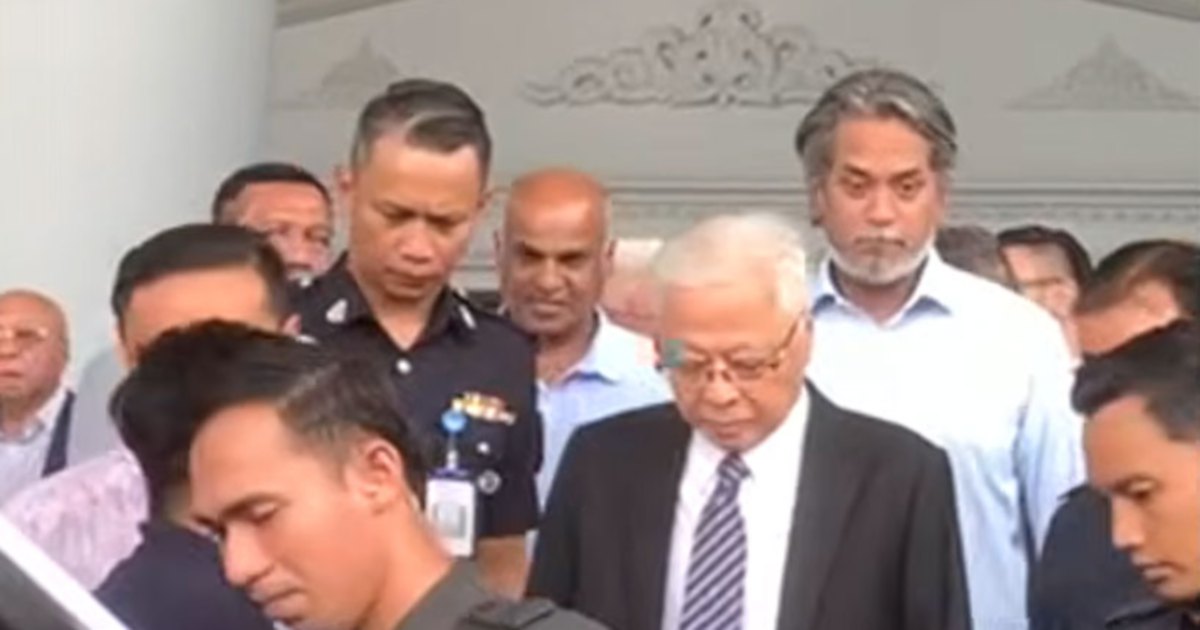
The arrival of Khairy Jamaluddin at the Kuala Lumpur Court Complex yesterday to witness charge proceedings against former Prime Minister Datuk Seri Ismail Sabri Yaakob has set tongues wagging among political observers, suggesting deeper currents within Malaysia's ruling coalition. The former Umno Youth chief's presence at the hearing represented a notable public display of support for his party colleague, an act unlikely to go unnoticed by those tracking the intricate power dynamics that continue to reshape the country's political landscape.
Khairy's courtroom appearance carries symbolic weight within Umno's internal hierarchy, particularly given the fractious state of the party in recent years. As a senior figure with substantial grassroots support and parliamentary clout, his decision to attend the proceedings was interpreted by many as a calculated gesture of backing for Ismail Sabri during a legally challenging period. Such public shows of solidarity have become increasingly rare among top-tier Umno politicians, making the timing and optics of Khairy's appearance worthy of close examination.
The dynamics at play reflect the ongoing restructuring of factional interests within Umno, where senior members continue to navigate complex relationships with one another while managing their broader roles within the Barisan Nasional coalition government. Ismail Sabri, who served as Prime Minister from August 2021 to November 2022, has faced heightened scrutiny in recent months, and the legal proceedings have inevitably drawn attention from party figures keen to signal their position on internal matters.
Court support has become a rather delicate political manoeuvre in Malaysia, where attendance at a colleague's legal hearing can be read as endorsement, calculated neutrality, or tacit distance depending on the broader context. Khairy's choice to attend suggests a willingness to stand publicly alongside Ismail Sabri, a stance that carries implications for how other Umno members might assess factional loyalties. The absence of other prominent party figures at such proceedings has often been notable in its own right, making those who do attend all the more conspicuous.
The former youth chief's political trajectory has been marked by several reinventions and strategic repositioning. From his earlier work in international advocacy through his tenure leading the youth wing to his current role as a senior parliamentarian and government figure, Khairy has demonstrated an ability to remain relevant across different political configurations. His appearance yesterday reinforces his position as an independent operator within the party machinery, someone willing to make moves that reflect his own political calculus rather than following predictable factional scripts.
Within the broader Malaysian political ecosystem, such gestures often carry meaning beyond the immediate context. Umno's dominance within Barisan Nasional continues to be central to the coalition's electoral viability, yet internal divisions have repeatedly threatened cohesion. The party has faced sustained pressure following electoral setbacks and ongoing corruption investigations affecting multiple senior members. Against this backdrop, visible shows of solidarity among leading figures can either project strength through unity or expose fractures that opponents might exploit.
Ismail Sabri's legal situation has inevitably raised questions about the party's response and how different factions within Umno might use the situation to advance their respective positions. Government operations have continued uninterrupted during this period, but the underlying question of internal party support networks has remained alive. Khairy's courtroom presence provides a data point for those analysing how the party's leadership ecosystem is currently configured.
The implications for Southeast Asia's broader political stability should not be entirely discounted. Malaysia's coalition government remains significant for regional stability and economic integration efforts including those involving Asean. Any perceptible realignment of internal forces within Umno could eventually have downstream effects on policy coherence and continuity. The region has experienced enough political volatility in recent years that observers of Malaysian politics are understandably attentive to signals of institutional strain or renewal.
Other Umno members will likely interpret Khairy's action through their own strategic lenses, potentially influencing their own decisions about public engagement with party colleagues facing legal challenges. Such moments become reference points for assessing where various players stand relative to one another, and they accumulate over time to either reinforce or reshape perceptions of factional strength and individual positioning.
Looking forward, whether Khairy's appearance represents a durable shift in Umno's internal coalition-building or a more transient gesture will become clearer over time. The political value of such symbolic acts depends heavily on consistency and follow-through. For now, his presence yesterday serves as a reminder that Umno's internal machinery continues to operate according to unwritten rules and calculated gestures, with every courtroom appearance carrying potential significance beyond the legal proceedings themselves.

